Support our educational content for free when you purchase through links on our site. Learn more
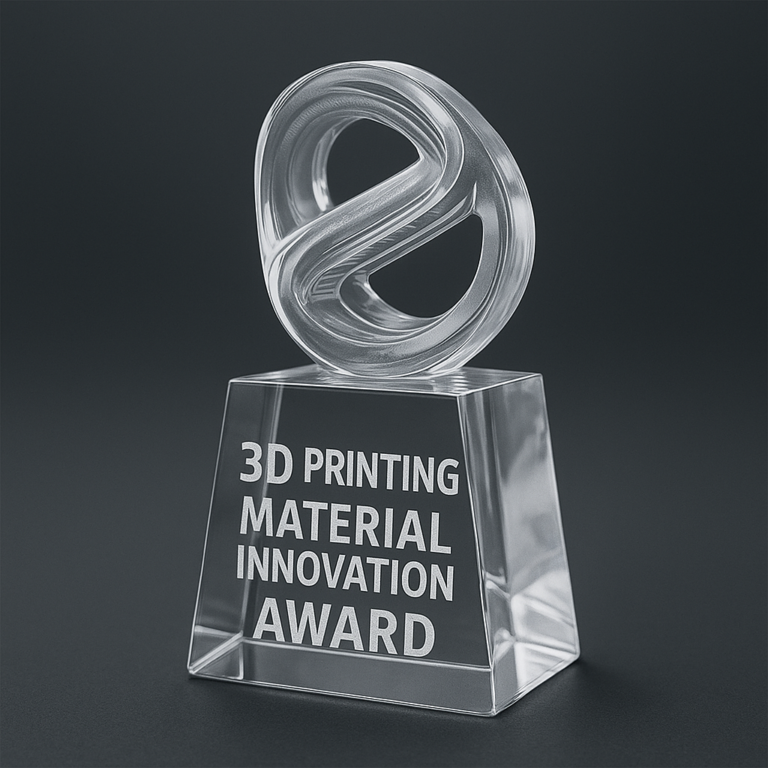
🏆 8 Top Awards for 3D Printing in Aerospace & Defense (2026)

The ultimate path to securing massive defense contracts and industry recognition lies in targeting the DARPA Challenge Wins and the RAPID + TCT Innovation Excellence Prize, which validate your technology for flight-critical applications. Navigating the landscape of Awards for 3D printing in aerospace and defense reveals that success isn’t just about printing a cool part; it’s about proving certifiable reliability and supply chain resilience to giants like Lockheed Martin and Boeing.
Imagine a world where a broken bracket on an F-35 doesn’t ground a squadron for weeks while waiting for a shipment from a factory overseas. Instead, a digital file is sent to a printer on the tarmac, and a certified titanium replacement is ready in 15 minutes. This isn’t science fiction; it’s the reality driving the $7.65 million contract awarded to 3D Systems by the U.S. Air Force for large-format metal printing.
These awards are the gatekeepers to that future, separating the hobbyists from the industry leaders. They don’t just hand out trophies; they unlock multi-million dollar funding and the trust required to print parts that survive hypersonic speeds.
Key Takeaways
- Strategic Validation: Winning awards like the DARPA Challenge or NASA 3D Printing Challenge provides the critical third-party validation needed to secure defense contracts and SBIR funding.
- Material Mastery: Success in these competitions hinges on mastering high-temperature alloys (like Inconel) and advanced polymers (like PEKK) that meet strict flight-critical certification standards.
- Supply Chain Revolution: The top awards recognize projects that demonstrate on-demand manufacturing, drastically reducing logistics costs and lead times for military and commercial fleets.
- Global Competition: While US and European programs dominate, emerging Asian and Middle Eastern initiatives are rapidly increasing the stakes for hypersonic and in-space manufacturing innovations.
Table of Contents
- ⚡️ Quick Tips and Facts
- 🚀 From Blueprint to Flight: A History of Aerospace 3D Printing Awards
- 🏆 The Titans of Innovation: Top Awards for 3D Printing in Aerospace and Defense
- The Additive Manufacturing Leadership Award
- The RAPID + TCT Innovation Excellence Prize
- The Defense Advanced Research Projects Agency (DARPA) Challenge Wins
- The European Space Agency (ESA) Additive Manufacturing Award
- The Society of Manufacturing Engineers (SME) Gold Medal
- The NASA 3D Printing Challenge and Space Technology Mission Directorate Honors
- The Farnborough International Airshow Innovation Awards
- The AIA (American Institute of Aeronautics and Astronautics) Technical Excellence Awards
- 🛠️ Metal vs. Polymer: How Material Choice Influences Award-Winning Designs
- 🔍 Case Studies: The Winning Projects That Changed the Skies
- 📊 The Criteria: What Judges Look for in Aerospace Additive Manufacturing
- 💰 The ROI of Winning: How Awards Drive Investment and Adoption
- 🌍 Global Perspectives: Awards Beyond the US and Europe
- 🔮 Future Horizons: Emerging Categories in Aerospace 3D Printing Recognition
- 🧠 Quick Tips and Facts for Aspiring Award Winners
- 🏁 Conclusion
- 🔗 Recommended Links
- ❓ FAQ
- 📚 Reference Links
⚡️ Quick Tips and Facts
Before we dive into the glittering world of aerospace trophies and defense contracts, let’s get the lay of the land. If you think 3D printing in the sky is just about printing a plastic bracket for a drone, you’re in for a massive reality check. We’ve seen it all, from the early days of printing nylon gaskets to now, where we’re talking about hypersonic engine components that can withstand temperatures that would melt a standard toaster.
Here are the hard truths and golden nugets you need to know right out of the gate:
- It’s Not Just Protyping Anymore: The era of “print and throw away” is dead in the defense sector. We are talking about flight-critical parts that are certified, tested, and flying on F-35s and commercial airliners today.
- The Money is Real: We aren’t talking about a few grant dollars. We’re seeing contracts in the millions. For instance, the U.S. Air Force recently dropped $7.65 million on a single project with 3D Systems to build a large-format metal printer demonstrator. That’s not a hobbyist budget; that’s a strategic investment.
- Speed is the New Currency: In a supply chain crisis, waiting six months for a part is a failure. 3D printing can slash that to 15 minutes for certain aftermarket components.
- Material Matters: You can’t just print anything. The awards go to those who master high-temperature alloys (like Inconel and Titanium) and advanced polymers that survive the vacuum of space or the heat of re-entry.
- Training is the Bottleneck: Even the best machine is useless without a skilled operator. As noted in recent SBIR awards, the biggest hurdle isn’t the hardware; it’s the human expertise to optimize print profiles and avoid material waste.
Did you know? On the F-35 fighter jet, roughly 8% of the products are viable candidates for 3D printing. That’s thousands of parts waiting to be printed on demand!
If you’re looking to get your hands on the best machines to start your own journey, check out our guide on the best 3D printer for industrial applications.
🚀 From Blueprint to Flight: A History of Aerospace 3D Printing Awards

Let’s take a trip down memory lane, shall we? It wasn’t always about shiny trophies and multi-million dollar contracts. The history of aerospace 3D printing awards is a story of skepticism turning into awe, and then into strategic necessity.
The Early Days: “Is This Safe?”
In the early 20s, if you told a defense contractor you wanted to 3D print a part for a jet engine, they’d probably ask if you had a death wish. The technology was nascent, materials were weak, and the concept of additive manufacturing (AM) in flight-critical applications was a hard sell.
The first “awards” were essentially internal R&D milestones. Companies like GE Aviation and Rolls-Royce were quietly experimenting, but the public recognition was scarce. The industry was too busy proving that a printed part wouldn’t explode at 30,0 feet.
The Turning Point: Certification and Scale
The real shift happened when the FA and EASA started creating pathways for certifying AM parts. Suddenly, the awards weren’t just for “cool ideas” but for certified, flight-ready components.
- 2015: GE Aviation’s fuel nozzle for the LEAP engine became a legend. It wasn’t just a print; it was a consolidation of 20 parts into 1, reducing weight and increasing durability. This didn’t just win a trophy; it changed the industry’s perception forever.
- 2018-2020: The focus shifted to large-scale metal printing. The awards started recognizing companies that could print massive structures, not just tiny nozzles. This is where the U.S. Air Force really stepped up, funding programs to push the boundaries of size and material.
The Modern Era: Hypersonics and Digital Supply Chains
Today, the awards are about speed, scalability, and sovereignty. We’re seeing recognition for:
- Hypersonic vehicle components that can survive Mach 5+ speeds.
- Digital inventory systems that allow parts to be printed on the tarmac rather than shipped from a factory.
- Sustainability, as AM reduces material waste by up to 90% compared to subtractive manufacturing.
The narrative has flipped. It’s no longer “Can we do this?” but “How fast can we do this?” and “How much can we save?”
🏆 The Titans of Innovation: Top Awards for 3D Printing in Aerospace and Defense
So, who are the big players handing out the gold stars? And more importantly, who is winning them? The landscape of aerospace 3D printing awards is a mix of government grants, industry consortiums, and prestigious engineering societies.
We’ve broken down the top 8 awards that define excellence in this sector. These aren’t just participation trophies; they are the gateways to massive contracts and industry leadership.
1. The Additive Manufacturing Leadership Award
This is the Oscars of AM. Organized by industry leaders, this award recognizes companies that have demonstrated transformative impact in the field.
- What it looks for: Breakthroughs in material science, process innovation, and successful commercialization.
- Recent Winners: Often includes giants like GE Additive, HP, and Stratasys.
- Why it matters: Winning this signals to investors and defense contractors that you are a market leader.
2. The RAPID + TCT Innovation Excellence Prize
Hosted by the Society of Manufacturing Engineers (SME), this is where the rubber meets the road. The RAPID + TCT conference is the largest AM event in North America, and the awards here are fiercely competitive.
- Focus: Practical application and real-world ROI.
- Key Categories: Best use of metal AM, polymer innovation, and software solutions.
- Insight: This award is a great barometer for what the commercial market is actually buying, not just what looks cool in a lab.
3. The Defense Advanced Research Projects Agency (DARPA) Challenge Wins
DARPA doesn’t give out “awards” in the traditional sense; they give out contracts that act as the ultimate validation. If you win a DARPA challenge, you’re in the big leagues.
- The Stakes: Millions in funding and the chance to define the future of defense technology.
- Recent Focus: Large-scale metal printing for hypersonic vehicles and rapid field deployment.
- Notable Project: The GEN-IDMP-10 program with 3D Systems, aiming to create large-format metal printers for the Air Force.
4. The European Space Agency (ESA) Additive Manufacturing Award
Space is the final frontier, and the ESA knows it. This award focuses on in-space manufacturing and components that can survive the harsh environment of orbit.
- Unique Criteria: Must address microgravity challenges or reduce launch mass significantly.
- Key Players: Airbus, Safran, and various European startups.
- Why it’s cool: It’s not just about printing on Earth; it’s about printing in space.
5. The Society of Manufacturing Engineers (SME) Gold Medal
The SME Gold Medal is a lifetime achievement type of award, but they also have specific categories for AM excellence.
- Focus: Long-term impact and technological maturity.
- Significance: It’s a stamp of approval from the engineering community that your technology is robust and reliable.
6. The NASA 3D Printing Challenge and Space Technology Mission Directorate Honors
NASA is the ultimate customer for space tech. Their awards often come with SBIR/STR grants and the chance to fly your part on the ISS.
- Recent Focus: Regolith printing (using moon dust) and life support systems.
- Impact: Winning here means your tech is ready for the Artemis program and beyond.
7. The Farnborough International Airshow Innovation Awards
Held every two years, the Farnborough Airshow is where the big deals are made. The innovation awards here are highly visible to global defense contractors.
- Focus: Commercial viability and supply chain integration.
- Why attend: It’s the best place to network with Boeing, Lockheed Martin, and Airbus.
8. The AIA (American Institute of Aeronautics and Astronautics) Technical Excellence Awards
For the enginers who love the math and physics. The AIA awards recognize deep technical breakthroughs in aerodynamics, materials, and structural integrity.
- Focus: Peer-reviewed technical excellence.
- Who wins: Often academic institutions and R&D labs that push the theoretical boundaries of AM.
🛠️ Metal vs. Polymer: How Material Choice Influences Award-Winning Designs
You can’t win an award for a plastic part if the engine needs titanium. The material choice is often the deciding factor between a “cool prototype” and an “award-winning production part.”
The Metal Titans: Inconel, Titanium, and Aluminum
When we talk about defense and aerospace, we’re mostly talking about metals.
- Inconel 718: The king of high-temperature alloys. Used in turbine blades and rocket nozzles. It can handle the heat of a jet engine without melting.
- Titanium (Ti64): The lightweight champion. Essential for structural components where weight savings translate to fuel efficiency and payload capacity.
- Aluminum (AlSi10Mg): Great for heat exchangers and non-critical structural parts. It’s lighter than steel and easier to print.
Why it wins awards:
- Weight Reduction: AM allows for lattice structures that are impossible to machine, shaving off pounds of weight.
- Part Consolidation: Combining multiple metal parts into one reduces assembly time and potential failure points.
The Polymer Powerhouses: PEEK, PEKK, and ULTEM
Don’t sleep on polymers! High-performance thermoplastics are winning awards for aftermarket and interior applications.
- PEK & PEKK: These are the “super polymers.” They can withstand high temperatures and are chemically resistant. Perfect for cable ties, brackets, and ducting.
- ULTEM (PEI): Known for its flame, smoke, and toxicity (FST) ratings, making it ideal for aircraft interiors.
Why it wins awards:
- Speed: Printing a polymer part is often faster than machining a metal one.
- Cost: Significantly cheaper for low-volume, high-complexity parts.
- Customization: Easy to tweak designs for specific crew ergonomics or tooling.
Comparison: Metal vs. Polymer in Award-Winning Applications
| Feature | Metal AM (Inconel/Ti) | Polymer AM (PEK/ULTEM) |
|---|---|---|
| Primary Use Case | Engine components, structural parts | Interior fixtures, tooling, ducting |
| Temperature Resistance | Extremely High (>10°C) | Moderate to High (250°C – 30°C) |
| Weight Savings | High (via lattice structures) | Moderate (via topology optimization) |
| Production Speed | Slow (hours to days) | Fast (minutes to hours) |
| Cost per Part | High | Low to Moderate |
| Award Focus | Flight-critical, Hypersonics | Aftermarket, Supply Chain Agility |
Pro Tip: The best award-winning projects often use a hybrid approach. Imagine a metal bracket printed with a polymer insert for vibration damping. That’s the kind of cross-material innovation judges love.
🔍 Case Studies: The Winning Projects That Changed the Skies
Let’s get specific. Who are the real winners, and what did they actually build? We’re going to look at some real-world examples that have taken home the gold.
Case Study 1: The GE Aviation Fuel Nozzle
- The Problem: The LEAP engine needed a fuel nozzle that was lighter, more durable, and cheaper to make. The old design had 20 separate parts that had to be welded together.
- The Solution: GE used Selective Laser Melting (SLM) to print the entire nozzle as a single piece of Inconel.
- The Result:
25% lighter than the original.
5x more durable.
Consolidated 20 parts into 1. - The Award: This project didn’t just win a trophy; it won the industry’s trust. It proved that AM could be used for mass production of flight-critical parts.
Case Study 2: The U.S. Air Force & 3D Systems (GEN-IDMP-10)
- The Problem: The Air Force needed a large-format metal printer capable of producing hypersonic components that were previously impossible to manufacture.
- The Solution: A $7.65 million contract awarded to 3D Systems to develop the GEN-IDMP-10 demonstrator.
- The Goal: Create a machine that can print high-temperature metal structures at a scale suitable for hypersonic vehicles.
- Why it matters: This isn’t just about printing a part; it’s about redefining the supply chain. If you can print a hypersonic wing on demand, you don’t need to stockpile thousands of them.
Case Study 3: The F-35 Aftermarket Revolution
- The Problem: Maintaining the F-35 fleet requires thousands of spare parts. Storing them all is expensive and logistically a nightmare.
- The Solution: The Air Force is using digital libraries to print parts on demand.
- The Result:
8% of F-35 parts are now viable for 3D printing.
15-minute print times for certain components.
Massive reduction inventory costs. - The Award: While not a single trophy, this initiative has won multiple internal and industry recognition for transforming logistics and maintenance.
Case Study 4: SpaceX and the Raptor Engine
- The Problem: The Raptor engine needed complex cooling channels that were impossible to machine.
- The Solution: Direct Metal Laser Sintering (DMLS) to print the engine components.
- The Result: A more efficient, lighter, and more powerful engine.
- The Award: Recognized by SpaceX and the broader aerospace community for pushing the boundaries of rocket propulsion.
📊 The Criteria: What Judges Look for in Aerospace Additive Manufacturing
So, you’ve built a cool part. Now, how do you get it on the trophy shelf? The judges at these awards aren’t just looking for “cool.” They have a rigorous checklist.
1. Technical Innovation
- Did you solve a problem that couldn’t be solved before?
- Is the design topology optimized? (i.e., did you use software to remove unnecessary material?)
- Did you develop a new material or process?
2. Commercial Viability
- Can this be manufactured at scale?
- What is the ROI? (Return on Investment)
- Does it reduce cost or time?
3. Safety and Certification
- Is the part certified for flight?
- Did you follow strict quality control protocols?
- Is the process repeatable?
4. Sustainability
- Did you reduce material waste?
- Did you lower the carbon footprint of the part?
- Is the process energy-efficient?
5. Strategic Impact
- Does this advance national security? (For defense awards)
- Does it enable new capabilities? (e.g., hypersonic flight, in-space manufacturing)
Insider Tip: The most successful award applications don’t just show the final part. They show the entire journey: the design optimization, the material testing, the certification process, and the real-world impact.
💰 The ROI of Winning: How Awards Drive Investment and Adoption
Wining an award isn’t just about the shiny plaque on the wall. It’s about money, credibility, and market access.
The Investment Boost
When a company wins a major award, venture capital and government funding flow in.
- Example: The $7.65 million contract to 3D Systems was a direct result of their proven track record and innovation.
- Why: Investors want to back winners. An award is a third-party validation that your technology works.
Market Access
Awards open doors to defense contracts and aerospace giants.
- Networking: The Farnborough Airshow and RAPID + TCT are where the deals happen.
- Credibility: Being an “award winner” makes it easier to get your foot in the door with Boeing, Lockheed Martin, and Airbus.
Adoption Acceleration
Awards help normalize the technology.
- Trust: When a major player wins an award, it signals to the rest of the industry that the technology is safe and reliable.
- Standardization: Award-winning projects often set the standards for the industry.
🌍 Global Perspectives: Awards Beyond the US and Europe
While the US and Europe dominate the headlines, the global landscape of aerospace 3D printing awards is expanding rapidly.
Asia: The Rising Power
- China: Investing heavily in large-scale metal printing and hypersonic technology. The Chinese government is funding massive AM initiatives to reduce reliance on Western tech.
- Japan: Focusing on precision manufacturing and space applications. Companies like Mitsubishi Heavy Industries are leading the charge.
- India: Emerging as a hub for cost-effective AM solutions and aerospace components.
The Middle East
- UAE: Investing in space exploration and AM for infrastructure. The UAE is looking to become a leader in in-space manufacturing.
Why it matters
The global competition is driving innovation and cost reduction. As more countries enter the fray, the standards for awards are becoming more rigorous, and the opportunities are expanding.
🔮 Future Horizons: Emerging Categories in Aerospace 3D Printing Recognition
The future of aerospace 3D printing awards is looking bright and weird. Here are the categories we expect to see popping up in the next few years.
1. In-Space Manufacturing
- The Concept: Printing parts in orbit or on the Moon/Mars.
- The Challenge: Dealing with microgravity, radiation, and limited resources.
- The Award: Look for categories dedicated to space-based AM and regolith printing.
2. Sustainable AM
- The Concept: Using recycled materials and green energy to power printers.
- The Challenge: Maintaining quality while using sustainable inputs.
- The Award: Categories for carbon-neutral manufacturing and circular economy initiatives.
3. AI-Driven Design
- The Concept: Using Artificial Intelligence to optimize designs and predict failures.
- The Challenge: Integrating AI into the certification process.
- The Award: Recognition for AI-powered AM and predictive maintenance.
4. Multi-Material Printing
- The Concept: Printing metal and polymer in the same part.
- The Challenge: Ensuring bond strength and compatibility.
- The Award: Categories for hybrid manufacturing and functionally graded materials.
Curiosity Check: Can you imagine a future where a hypersonic jet is printed entirely in space, using moon dust? It sounds like science fiction, but with the right awards and funding, it might be our reality sooner than you think.
🧠 Quick Tips and Facts for Aspiring Award Winners
Ready to take your shot at the big leagues? Here are some final tips from the trenches.
- Document Everything: Judges love data. Keep detailed records of your design process, testing, and results.
- Focus on the Problem: Don’t just show off the tech. Show how it solves a real problem for the aerospace industry.
- Collaborate: The best projects often involve partnerships between universities, startups, and major corporations.
- Think Global: Don’t limit yourself to one market. Look at international awards and opportunities.
- Stay Updated: The industry moves fast. Keep an eye on new materials, new processes, and new regulations.
Remember: The road to an award is paved with failed prints, broken nozzles, and late nights. But the view from the top is worth it.
🏁 Conclusion

We’ve taken a deep dive into the world of awards for 3D printing in aerospace and defense, from the early days of skepticism to the current era of hypersonic innovation and digital supply chains.
What did we learn?
- Awards are more than trophies: They are gateways to massive contracts, investment, and industry leadership.
- Material matters: Whether it’s Inconel for engines or PEK for interiors, the right material is key to winning.
- Inovation is the name of the game: From part consolidation to in-space manufacturing, the winners are those who push the boundaries.
- Global competition is heating up: It’s not just the US and Europe anymore; Asia and the Middle East are making their mark.
The Verdict:
If you’re in the aerospace or defense sector, ignoring 3D printing is not an option. The technology is here, it’s proven, and it’s winning awards. Whether you’re a startup looking for funding or a major contractor looking to optimize your supply chain, the path forward is clear: innovate, collaborate, and aim for the stars.
Final Thought:
The next big breakthrough in aerospace 3D printing might come from a small team in a garage, or a massive R&D lab in California. But one thing is certain: the future of flight is being printed, one layer at a time.
🔗 Recommended Links
Ready to get started? Here are some top resources and products to help you on your journey.
Top 3D Printers for Aerospace Applications
- Stratasys F90: Amazon | Stratasys Official
- EOS M 290: Amazon | EOS Official
- HP Jet Fusion 520: Amazon | HP Official
Essential Books on Aerospace 3D Printing
- “Additive Manufacturing in Aerospace: Applications and Future Trends” – Amazon
- “Metal 3D Printing: A Practical Guide” – Amazon
Industry Reports and White Papers
- SME Additive Manufacturing Report: SME Official
- NASA AM Technology Roadmap: NASA Official
❓ FAQ

What are the top 3D printing awards for aerospace and defense companies in 2024?
The top awards include the Additive Manufacturing Leadership Award, RAPID + TCT Innovation Excellence Prize, and DARPA Challenge Wins. These awards recognize technical innovation, commercial viability, and strategic impact in the aerospace and defense sectors.
How do additive manufacturing awards influence defense sector innovation?
Awards provide validation, funding, and market access. They signal to investors and contractors that a technology is safe, reliable, and ready for deployment. This accelerates the adoption of AM in defense supply chains and drives further innovation.
Which 3D printers have won recent awards for aerospace applications?
Recent winners include 3D Systems (for the GEN-IDMP-10 demonstrator), GE Additive (for the LEAP engine nozzle), and SpaceX (for the Raptor engine). These printers have demonstrated large-scale metal printing, part consolidation, and high-temperature performance.
Read more about “🏆 The Most Reliable 3D Printer for Professional Use (2026)”
What criteria are used to judge 3D printing excellence in the defense industry?
Judges look for technical innovation, commercial viability, safety and certification, sustainability, and strategic impact. The ability to solve real-world problems and reduce costs is also crucial.
How can a small business compete for aerospace 3D printing awards?
Small businesses can compete by focusing on niche innovations, collaborating with larger partners, and documenting their results thoroughly. The SBIR/STR programs are a great starting point for small businesses to secure funding and recognition.
What role does AI play in future aerospace 3D printing awards?
AI is expected to play a major role in design optimization, process control, and predictive maintenance. Future awards will likely recognize AI-driven AM and hybrid manufacturing techniques.
📚 Reference Links
- U.S. Air Force & 3D Systems Contract: TCT Magazine
- Digital Engineering 247: US Air Force Awards Contract to 3D Systems
- SBIR Award 180956: SBIR.gov
- 3D Systems Official Website: 3D Systems
- GE Aviation: GE Additive
- NASA 3D Printing: NASA AM
- SME Additive Manufacturing: SME
- ESA Additive Manufacturing: ESA AM
- Farnborough International Airshow: Farnborough
- AIA Technical Excellence Awards: AIA