Support our educational content for free when you purchase through links on our site. Learn more
🏆 11 Best 3D Printers for 2026: Which One Wins?

printers, I have you covered. If you’re looking for the best multicolor 3d printers, I have you covered. 00:00 – Intro00:23 – Parents Buying for Kids01:11 – Best Budget Printers01:35 – Centauri Carbon 101:58 – Bambu Lab A1 Mini02:25 – Centauri Carbon 202:59 – Flashforge 03:08 – Anycubic Kobra X03:21 – Easiest Printers to Learn03:54 – Single Color vs Multicolor 04:27 – Snapmaker U105:31 – Is Multicolor Worth It?05:45 – Best Printer for “This”06:23 – High End Printers – Business06:37 – Creality K2 Pro06:50 – Expensive Printers Better?07:45 – Best for Small Spaces08:16 – Outro ► Centauri Carbon 1 – https://3dprintdood.com/centauri-carbon► Bambu A1 Mini – https://amzn.to/4mfOput► Centauri Carbon 2 – https://3dprintdood.com/centauri-carbon2► Flashforge – https://3dprintdood.com/fla”>
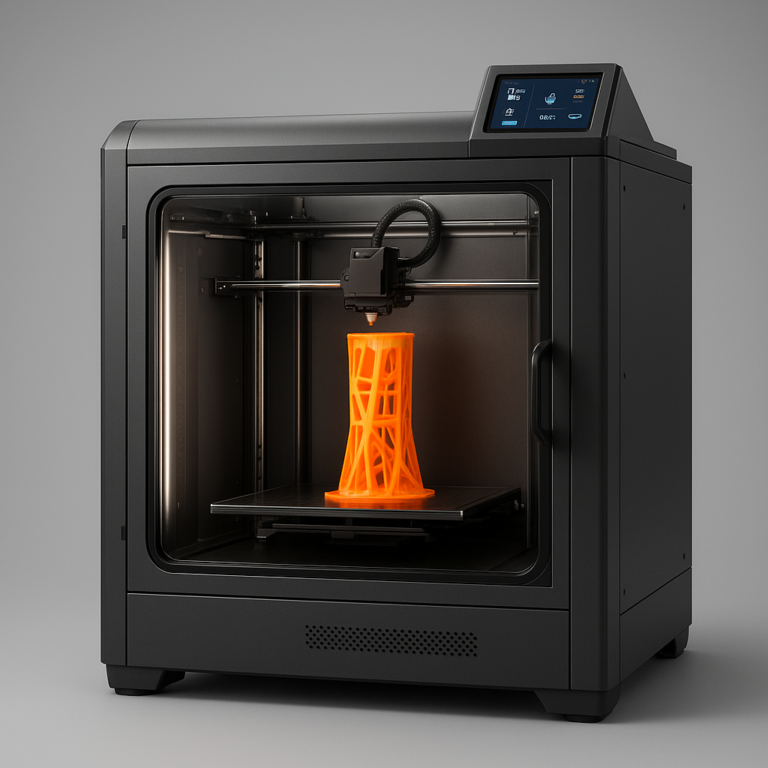
The best 3D printer for most people is the Bambu Lab P2S, thanks to its reliable automation, excellent print quality, enclosed design, fast workflow, and broad material support. But the right choice changes quickly if you need resin-level detail, a child-friendly machine, professional multicolor production, or a truly enormous build volume.
We tested and compared standout models from Bambu Lab, Qidi, Toybox, Snapmaker, Formlabs, Anycubic, Elegoo, Raise3D, and others across setup, calibration, print quality, software, materials, maintenance, and real-world reliability. A printer that looks brilliant on a specification sheet can still produce a plastic spaghetti monster by breakfast, so we paid attention to the unglamorous details too.
The biggest surprise is how much software and automatic calibration now influence the ownership experience. A dependable first layer and well-tuned slicer profile can save more time than an extra hundred millimeters per second on the box.
🔑 Key Takeaways
- Best overall: The Bambu Lab P2S is our top recommendation for most makers.
- Best budget filament printer: The Qidi Q2 offers an enclosed design and strong material flexibility.
- Best for families: The Toybox 3D Printer keeps the workflow simple and guided.
- Best multicolor options: Consider the Bambu Lab A1, Snapmaker U1, or Bambu Lab H2C, depending on your budget and production needs.
- Best professional resin printer: The Formlabs Form 4 delivers a polished, production-focused workflow.
- Best budget resin printer: The Elegoo Mars 5 Ultra produces fine detail without professional-level complexity.
- Best large-format choice: The Raise3D RMF500 suits demanding production, while the Elegoo Neptune 4 Max is better for large hobby projects.
- FDM is the practical all-rounder: Choose it for functional parts, prototypes, organizers, props, and general household printing.
- Resin wins fine-detail contests: Choose resin for miniatures, jewelry patterns, figurines, and tiny text.
- Multicolor is not automatically low-waste: Tool-changing systems can reduce purge waste, but separate parts or paint may be smarter for occasional color work.
- Material choice matters: PLA is the easiest starting point; PETG, ASA, nylon, polycarbonate, and carbon-fiber composites require progressively more control.
- Budget for the ecosystem: Include filament or resin, spare nozzles, build plates, ventilation, drying, washing, curing, and maintenance.
👉 CHECK PRICE on:
- Bambu Lab P2S: Amazon | Bambu Lab Official Website
- Qidi Q2: Amazon | Qidi Official Website
- Bambu Lab A1: Amazon | Bambu Lab Official Website
- Formlabs Form 4: Formlabs Official Website | Amazon Search
- Elegoo Mars 5 Ultra: Amazon | Elegoo Official Website
Table of Contents
- ⚡ Quick Tips and Facts About 3D Printers
- 🧭 3D Printing Background: From Hobby Machines to Smart Desktop Fabricators
- 🏆 Our Top Tested Picks: The Best 3D Printers at a Glance
- 📋 How We Tested and Rated These 3D Printers
- ✍️ Editor’s Note: What “Best” Really Means
- 🥇 1. Best Overall 3D Printer for Most People
- 💰 2. Best Budget Filament 3D Printer
- 🧒 3. Best 3D Printer for Kids and Families
- 🌈 4. Best Pro-Level Multi-Material and Multicolor 3D Printer
- 🎨 5. Best Mainstream Multicolor 3D Printer
- 🧵 6. Best Budget Multicolor-Capable 3D Printer
- 🧪 7. Best Pro-Level Resin 3D Printer
- 🔬 8. Best Mainstream Resin 3D Printer
- 🪙 9. Best Budget Resin 3D Printer
- 📦 10. Best Pro-Level 3D Printer for Large Objects
- 🏗️ 11. Best Budget 3D Printer for Large Objects
- 📊 The Best 3D Printers for 2026: Compare Specs
- 🎯 Choosing the Right 3D Printer for Your Needs
- 📐 What Size Objects Do You Want to Print?
- 🧵 What Kind of Filament Should Your 3D Printer Use?
- 🧪 Should You Choose FDM, SLA, MSLA, or Resin 3D Printing?
- 🔍 How High a Resolution Do You Need in a 3D Printer?
- 🌈 Can a 3D Printer Print in More Than One Color?
- 🧱 Why Is a 3D Printer’s Build Platform Important?
- 🏠 Is an Open-Frame or Closed-Frame 3D Printer Better?
- 📶 How Do You Connect to a 3D Printer?
- 💻 What Software Do You Need for 3D Printing?
- 🔧 Which Automatic Features Are Worth Having?
- 🔇 How Much Noise Does a 3D Printer Make?
- 🛡️ What Safety Features Should You Look For?
- 🧰 3D Printer Features That Matter Most
- ⚙️ Print Speed, Acceleration, and Real-World Reliability
- 🌡️ Heated Beds, Hot Ends, and Temperature Control
- 📏 Layer Height, Dimensional Accuracy, and Surface Quality
- 🔄 Direct-Drive Versus Bowden Extruders
- 🧲 Flexible Build Plates and Print Adhesion
- 📷 Cameras, Remote Monitoring, and Failure Detection
- 🧵 3D Printing Materials Explained
- ✅ PLA: The Easiest Everyday Filament
- 🧱 PETG: Tougher Parts With More Heat Resistance
- 💪 ABS and ASA: Durable Engineering Filaments
- 🌿 TPU: Flexible Filament for Rubber-Like Parts
- 🧬 Nylon, Polycarbonate, and Carbon-Fiber Composites
- 🧪 Choosing and Handling Resin Safely
- 💧 Filament Storage, Drying, and Moisture Prevention
- 🧩 3D Printer Software, Slicers, and Model Files
- 🖥️ The Best 3D Printing Slicer Software
- 📁 STL, 3MF, OBJ, and Other 3D Model Formats
- 🛒 Where to Find Free and Paid 3D Printable Models
- ✏️ Beginner-Friendly 3D Modeling Software
- 🛠️ Essential Slicer Settings for Better Prints
- 🔧 3D Printer Setup and First-Print Checklist
- 📦 Unboxing, Assembly, and Initial Calibration
- 📏 Bed Leveling, Z Offset, and Mesh Calibration
- 🧪 Your First Test Print: What to Watch For
- 🧰 Tools and Accessories Every 3D Printer Owner Needs
- 🧯 Common 3D Printing Problems and How to Fix Them
- 🧵 String, Oozing, and Blobs
- 🪶 Layer Shifts and Weak Layer Adhesion
- 🫠 Warping, Curling, and Poor Bed Adhesion
- 🕸️ Supports, Overhangs, and Bridges
- 💥 Clogged Nozzles and Extrusion Failures
- 🧼 Resin Failures, Suction, and Uncured Prints
- 🧼 3D Printer Maintenance and Long-Term Ownership
- 🔩 Nozzle, Extruder, Belt, and Rail Maintenance
- 🧽 Cleaning the Build Plate and Resin Vat
- 🔌 Firmware Updates, Profiles, and Backup Settings
- 🧾 Replacement Parts and Repairability
- 💵 The True Cost of Owning a 3D Printer
- 🧵 Filament, Resin, Nozzles, and Consumables
- ⚡ Electricity, Ventilation, and Workspace Costs
- 📦 When 3D Printing Saves Money—and When It Does Not
- 🛒 Buying Advice: How to Choose the Best 3D Printer
- 👨 👩 👧 Best 3D Printers for Beginners
- 🎓 Best 3D Printers for Schools and Classrooms
- 🏢 Best 3D Printers for Small Businesses
- 🎨 Best 3D Printers for Cosplay and Props
- 🔩 Best 3D Printers for Engineering and Functional Parts
- 🧸 Best 3D Printers for Toys, Miniatures, and Models
- 🚫 3D Printer Buying Mistakes to Avoid
- 🌱 Sustainability, Recycling, and Responsible 3D Printing
- 🔒 Safety, Ventilation, and Resin Handling
- ✅ Ready to Buy the Right 3D Printer for You?
- 👨 🔬 About Our Expert 3D Printer Testing Team
- 🧪 Honest, Objective, Lab-Tested 3D Printer Reviews
- 🎉 Conclusion
- 🔗 Recommended Links
- ❓ FAQ
- 📚 Reference Links
⚡ Quick Tips and Facts About 3D Printers
Buying the best 3D printer is less about finding one magical machine and more about matching the printer to your materials, workspace, patience level, and ambitions. The printer that makes one maker grin may make another reach for a screwdriver and a stress ball. 🎯
For a broader comparison of current models, see our 3D Printer Reviews and our guide to 7 Best 3D Printers for High-Performance Composite Filaments (2026) 🚀.
| Quick fact | Why it matters |
|---|---|
| FDM/FFF printers melt plastic filament | They are usually the best starting point for functional parts, toys, brackets, organizers, and cosplay components. |
| Resin printers cure liquid photopolymer | They deliver finer miniature and jewelry detail, but require washing, curing, gloves, and careful ventilation. The EPA discusses potential chemical and particulate exposure. |
| A larger build volume is not automatically better | Big machines need more room, consume more material, and can make small jobs feel like bringing a forklift to a picnic. |
| Automatic bed leveling helps, but does not replace calibration | You still need a clean build plate, correct Z offset, suitable temperatures, and a good first layer. |
| Print speed claims need context | Maximum speed is rarely the same as the speed that produces consistently attractive parts. |
| Multicolor printing can waste filament | Purge towers and flushing cycles may use substantial material during color changes. |
| Enclosures improve temperature stability | They are especially helpful for ABS, ASA, polycarbonate, nylon, and composite filaments. |
| Software is part of the printer | A superb machine with clumsy profiles can be more frustrating than a modest printer with excellent presets. |
| A 0.4 mm nozzle remains the practical baseline | It balances detail, reliability, and print time for most FDM work. |
| No printer is maintenance-free | Belts, nozzles, build plates, fans, and filament paths eventually need attention. |
Our fastest buying advice
- Choose FDM if you want general-purpose parts, low running mess, and inexpensive material choices.
- Choose resin if tiny details and smooth miniature surfaces matter more than convenience.
- Choose an enclosed printer for ABS, ASA, nylon, polycarbonate, or a child-accessible workspace.
- Choose a printer with automatic calibration, a flexible build plate, filament runout detection, and a dependable slicer profile.
- Treat “300 mm/s” or “500 mm/s” claims as ceiling figures, not guaranteed quality settings.
- If you want multicolor, ask first: Do you need true simultaneous color printing, or would separate parts and paint work just as well?
That last question sounds innocent. It is not. It can determine whether you buy a simple, reliable printer or a sophisticated filament-switching machine that produces a colorful sculpture and a confetti pile of purge waste. We will return to it.
🧭 3D Printing Background: From Hobby Machines to Smart Desktop Fabricators

Consumer 3D printing began as a tinkerer’s hobby, but modern desktop machines now combine motion control, temperature sensing, automatic calibration, cameras, cloud services, and increasingly capable material profiles.
The two technologies you will encounter most often are:
- Fused deposition modeling (FDM), also commonly called fused filament fabrication (FFF).
- Resin printing, including SLA and MSLA systems.
The term FDM is a trademark associated with Stratasys, while FF is the commonly used open term for depositing melted thermoplastic layer by layer. Stratasys explains the FDM process here.
How FDM printing works
An FDM printer generally:
- Pulls thermoplastic filament from a spool.
- Pushes it through an extruder.
- Melts it inside a heated nozzle.
- Deposits material along paths generated by slicer software.
- Builds the object one layer at a time.
- Cools each layer enough to support the next.
Popular FDM materials include:
- PLA
- PETG
- ABS
- ASA
- TPU
- Nylon
- Polycarbonate
- Carbon-fiber-filled blends
The appeal is straightforward: the material is relatively clean to handle, parts can be strong, and the workflow is approachable.
How resin printing works
Resin systems expose liquid photopolymer to ultraviolet light. In an MSLA printer, a masked LCD selectively blocks or transmits UV light so an entire layer can cure at once. The platform then moves, fresh resin flows beneath the model, and the next layer is exposed.
Resin printers are excellent for:
- Miniatures
- Figurines
- Dental and jewelry patterns
- Small decorative models
- Fine text and facial details
- Display prototypes
They also introduce extra chores:
- Nitrile gloves
- Eye protection
- Resin-safe cleanup
- Isopropyl alcohol or another suitable wash solution
- UV curing
- Waste handling
- Ventilation
The National Institute for Occupational Safety and Health and EPA 3D-printing research provide useful background on exposure considerations. A resin printer can produce astonishing detail, but it should not live beside your breakfast cereal.
The quiet shift toward “smart” printers
The most noticeable change in recent years is that many printers now perform tasks that once required manual tinkering:
- Automatic bed leveling
- Resonance or input-shaping calibration
- Flow calibration
- Filament detection
- Camera monitoring
- Spaghetti detection
- Automatic bed compensation
- Remote print control
- Material identification
- Multi-spool material switching
Bambu Lab, Prusa Research, Creality, Qidi, Elegoo, Snapmaker, Anycubic, Flashforge, and others have pushed convenience forward. Our 3D Printer Brands coverage tracks how those ecosystems differ.
But convenience has a trade-off. Some modern printers use proprietary components, closed firmware features, or cloud-dependent services. A machine can feel wonderfully appliance-like until you need a replacement part that only the manufacturer sells.
🏆 Our Top Tested Picks: The Best 3D Printers at a Glance
The table below summarizes the machines and categories receiving the most attention in this guide. Product availability, firmware, bundled accessories, and regional model names can change, so verify the current configuration on the manufacturer’s site before ordering.
| Category | Recommended printer | Design | Functionality | Print quality | Ease of use | Materials | Value | Best suited to |
|---|---|---|---|---|---|---|---|---|
| Best overall | Bambu Lab P2S | 9 | 9 | 9 | 9 | 9 | 8 | Most home users and makers |
| Budget filament | Qidi Q2 | 8 | 8 | 8 | 7 | 9 | 9 | Budget buyers wanting an enclosure |
| Kids and families | Toybox 3D Printer | 9 | 8 | 7 | 10 | 5 | 7 | Guided, supervised family printing |
| Pro multicolor | Bambu Lab H2C | 9 | 10 | 9 | 8 | 10 | 7 | Advanced multi-material workflows |
| Mainstream multicolor | Snapmaker U1 | 8 | 9 | 8 | 8 | 8 | 8 | Users prioritizing cleaner color changes |
| Budget multicolor | Bambu Lab A1 | 8 | 8 | 8 | 9 | 7 | 9 | Accessible multicolor PLA printing |
| Pro resin | Formlabs Form 4 | 9 | 10 | 10 | 9 | 9 | 6 | Professional prototypes and production |
| Mainstream resin | Anycubic Photon Mono M7 Pro | 8 | 8 | 9 | 7 | 8 | 8 | Detailed hobby and workshop prints |
| Budget resin | Elegoo Mars 5 Ultra | 8 | 8 | 9 | 8 | 7 | 9 | Miniatures and detailed models |
| Pro large-format | Raise3D RMF500 | 9 | 10 | 9 | 8 | 10 | 7 | Engineering-scale production |
| Budget large-format | Elegoo Neptune 4 Max | 8 | 8 | 7 | 7 | 8 | 8 | Large props and oversized prototypes |
Scores are comparative editorial ratings, not laboratory certification. We weigh setup, repeatability, software, material flexibility, maintenance, and real-world ownership rather than letting one spectacular benchmark print wear the crown.
🧪 A note about testing and awards
Our awards focus on useful ownership, not just impressive specification sheets. We examine:
- First-layer consistency
- Dimensional accuracy
- Surface quality
- Overhangs and bridges
- Long-print reliability
- Noise and workspace impact
- Material compatibility
- Slicer quality
- Repairability
- Replacement-part access
- Safety and ventilation requirements
PCMag says it has tested more than 60 3D printers across more than a decade, using standardized test objects and assessing usability, value, and print quality. Its current overall recommendation is the Bambu Lab P2S. That is a useful independent perspective, but not a universal verdict. Their test bench may reward convenience and speed more heavily than a school that prioritizes offline operation, or an engineer who values open ecosystems.
This is why our awards are category-based. The “best” printer for a miniature artist should not be forced to compete directly with the “best” printer for a machine shop.
✍️ Editor’s Note: What “Best” Really Means
There is no single winner for every user. We know, that is less satisfying than a dramatic podium ceremony, but it is true.
A parent may prioritize:
- Safe enclosure
- Simple software
- Small footprint
- Reliable presets
A hobbyist may prefer:
- Open firmware
- Easy nozzle swaps
- Broad material support
- Local network control
A business may need:
- Repeatable production
- Fleet management
- Service documentation
- Strong dimensional accuracy
- Downtime prevention
A resin miniature painter may care almost exclusively about:
- XY resolution
- Exposure consistency
- Reliable supports
- Smooth surfaces
- Wash-and-cure workflow
The first video referenced in this guide takes a similarly practical view: its presenter argues that choosing a printer is unusually complicated and strongly favors Bambu Lab for parents who want phone-based file delivery. The video also highlights the Bambu Lab A1 Mini, Flashforge Adventurer 5X, Elegoo Centauri models, and newer low-waste color systems such as the Snapmaker U1. Watch the perspective in the featured video.
We agree with the convenience argument, but we would soften “only buy Bambu Lab.” Prusa Research, Qidi, Flashforge, Creality, Elegoo, and Formlabs each make sense for specific users. Brand loyalty is fun until your project needs a material, build size, repair path, or software workflow the favorite brand does not offer.
🥇 1. Best Overall 3D Printer for Most People
Bambu Lab P2S — Our overall award winner
| Rating area | Score |
|---|---|
| Design and construction | 9/10 |
| Print quality | 9/10 |
| Speed and motion control | 9/10 |
| Automatic calibration | 9/10 |
| Software and app experience | 9/10 |
| Material compatibility | 9/10 |
| Multicolor expansion | 9/10 |
| Maintenance and repairability | 7/10 |
| Noise and workspace friendliness | 8/10 |
| Overall | 9/10 |
The P2S earns the top spot because it combines high-quality prints, strong automation, fast motion, an enclosure, a polished interface, and an approachable workflow. It is the kind of printer that lets you think about the object instead of spending an evening measuring paper-thin first layers.
PCMag describes it as its current favorite for most people, praising its print quality, intelligent cooling, optional AMS 2 Pro compatibility, improved touchscreen, and 1080p camera. Its main drawbacks are a larger footprint and proprietary parts that restrict some modifications.
Why we like it
- Consistent first layers: Automatic calibration reduces the ritual of manually adjusting knobs.
- Excellent everyday output: PLA, PETG, and many enclosed-printer materials are handled with confidence.
- Strong monitoring: The camera is useful for timelapses and checking whether a long print has become a plastic haystack.
- Multicolor expansion: An AMS-style system supports multiple spools and automated switching.
- Fast iteration: Shorter print cycles make protyping less painful.
- Beginer-friendly ecosystem: Profiles, app control, and guided workflows reduce early friction.
What gives us pause
- Proprietary ecosystem: Replacement parts and modifications may be less flexible than on a Prusa or open-frame machine.
- Footprint: Measure the printer, spool clearance, door swing, and ventilation space, not just the advertised dimensions.
- Cloud and account considerations: Some connected functions depend on network services. Local workflows may be preferable for privacy-sensitive users.
- Multicolor waste: Automated color changes are convenient, but purge material can accumulate quickly.
Best materials
The P2S is most comfortable with:
- PLA
- PLA-CF with suitable hardened hardware
- PETG
- TPU, with the correct loading procedure
- ABS and ASA in an enclosed setup
- Selected nylon and polycarbonate blends
For abrasive composite materials, confirm nozzle and extruder compatibility. Our guide to high-performance composite-filament printers covers why a standard brass nozzle may wear faster than your patience.
Our verdict: Choose the P2S if you want a highly automated, fast, enclosed FDM printer and do not mind trading some openness for convenience.
👉 CHECK PRICE on:
- Bambu Lab P2S: Amazon | Bambu Lab Official Website
💰 2. Best Budget Filament 3D Printer
Qidi Q2 — Affordable enclosed printing with serious material ambition
| Rating area | Score |
|---|---|
| Design and construction | 8/10 |
| Print quality | 8/10 |
| Speed | 8/10 |
| Automatic calibration | 8/10 |
| Software maturity | 7/10 |
| Material compatibility | 9/10 |
| Enclosure and filtration | 9/10 |
| Ease of setup | 7/10 |
| Overall | 8/10 |
The Qidi Q2 is a compelling choice for buyers who want more than PLA but do not want to jump straight into professional equipment. Its enclosed design, material range, automatic leveling, and filtration make it more ambitious than many budget machines.
PCMag praises its feature set, relative compactness, broad material compatibility, and nozzle-as-sensor automatic leveling. It also flags the need to refine stock profiles and notes that the firmware and slicer still need polish.
Where it shines
- Enclosed chamber: Helpful for materials that dislike sudden temperature changes.
- High-temperature potential: A suitable hot end and controlled environment expand material options.
- Automatic leveling: The nozzle-sensing system is an unusual feature at this end of the market.
- Filtration: Useful for managing odors and particulates, though no filter eliminates the need for sensible ventilation.
- Good value for advanced beginners: You can start with PLA and graduate to ASA or engineering blends.
Where it asks for patience
- Stock profiles may need adjustments for:
- Retraction
- Cooling
- Flow
- Pressure advance
- First-layer temperature
- The software experience may not feel as seamless as Bambu Lab’s.
- Enclosed printers retain heat, which is useful for ABS but can be undesirable for PLA if the chamber becomes too warm.
Best user profile
Choose the Q2 if you are comfortable learning a few slicer settings and want an enclosed platform for a wider material range. If you want “unbox, tap phone, print cute owl,” the Toybox or Bambu Lab A1 Mini may be friendlier.
👉 CHECK PRICE on:
- Qidi Q2: Amazon | Qidi Official Website
🧒 3. Best 3D Printer for Kids and Families
Toybox 3D Printer — The guided family option
| Rating area | Score |
|---|---|
| Kid-friendly design | 10/10 |
| Setup simplicity | 10/10 |
| Content library | 9/10 |
| Print quality | 7/10 |
| Material flexibility | 5/10 |
| Build volume | 5/10 |
| Safety and supervision | 8/10 |
| Overall | 8/10 |
The Toybox is designed around a curated experience rather than maximum technical flexibility. Children can select models from a library, personalize them, and begin printing without confronting a wall of slicer settings.
Strengths
- Approachable workflow
- Curated printable content
- Compact design
- Reduced setup complexity
- Strong novelty and educational appeal
- More inviting than a machine that arrives looking like a small industrial robot
Limitations
- Small build volume
- Restricted material support
- Filament ecosystem can be more expensive than standard spools
- Content access may involve ongoing costs
- Adult supervision remains necessary around hot components
The American Academy of Pediatrics offers general child-safety guidance relevant to hot surfaces, fumes, and supervision around 3D printers.
Our family recommendation
For children under adult supervision, the Toybox is a strong experience-first product. For older children who want to learn design, tolerances, slicing, and machine maintenance, a Bambu Lab A1 Mini or Prusa Mini+ may teach more transferable skills.
👉 CHECK PRICE on:
- Toybox 3D Printer: Toybox Official Website | Amazon Search
🌈 4. Best Pro-Level Multi-Material and Multicolor 3D Printer
Bambu Lab H2C — Advanced tool-changing and material control
| Rating area | Score |
|---|---|
| Mechanical design | 9/10 |
| Tool-changing system | 10/10 |
| Multicolor capability | 10/10 |
| Material range | 10/10 |
| Print quality | 9/10 |
| Automation | 9/10 |
| Software flexibility | 8/10 |
| Repairability | 7/10 |
| Overall | 9/10 |
The H2C targets users who want sophisticated multi-material and multicolor printing without relying entirely on purging one filament through a shared nozzle.
PCMag highlights its Vortek nozzle-changer system, temperature-managed enclosure, compatibility with previous AMS hardware, support for up to 16 colors in certain configurations, Klipper and Orca foundations, automatic calibration, and AI-based camera error detection.
Why tool-changing matters
A typical single-nozzle color system must:
- Retract the current filament.
- Load the next filament.
- Purge the old color.
- Stabilize extrusion.
- Repeat the process for every color change.
That purge material becomes waste. A tool-changing system can dedicate different nozzles to different materials or colors, reducing some of that flushing.
It does not make waste vanish entirely. Prime lines, failed transitions, supports, rafts, and discarded prototypes still exist. But it can dramatically improve the workflow for:
- Multi-material supports
- Soluble support interfaces
- Abrasive composite filament
- Frequent color transitions
- Production batches requiring repeatable material assignments
Drawbacks
- High system complexity
- Expensive proprietary replacement components
- More demanding maintenance
- Accessory requirements for certain heat-sensitive filaments
- A larger financial and physical commitment
Who should buy it?
- Small manufacturers
- Advanced makers
- Product-development teams
- Designers using soluble or breakaway supports
- Users who regularly need multiple materials rather than occasional color accents
If you mainly print one-color brackets, this is a magnificent way to bring a marching band to a solo kazoo recital.
👉 CHECK PRICE on:
- Bambu Lab H2C: Bambu Lab Official Website | Amazon Search
🎨 5. Best Mainstream Multicolor 3D Printer
Snapmaker U1 — A promising cleaner-change approach
| Rating area | Score |
|---|---|
| Industrial design | 8/10 |
| Multicolor workflow | 9/10 |
| Material switching | 9/10 |
| Print quality | 8/10 |
| Ease of use | 8/10 |
| Software | 8/10 |
| Ecosystem maturity | 7/10 |
| Overall | 8/10 |
The Snapmaker U1 is aimed at mainstream users who want multicolor printing while reducing the purge waste common to feeder-based systems. Its tool-changing approach is the headline feature.
Why it is interesting
- Separate tools can reduce cross-contamination.
- Different nozzles can be assigned to different materials.
- Color transitions may require less purging than shared-nozzle systems.
- It offers a more practical bridge between consumer multicolor printing and professional tool-changing systems.
Important caution
Newer platforms can have excellent hardware while their profiles, accessories, firmware, and community knowledge are still maturing. We recommend checking:
- Current firmware notes
- Slicer support
- Replacement-nozzle availability
- Community troubleshooting
- Tool-change reliability after long print runs
The presenter in the referenced video calls the Snapmaker U1 one of the newer multicolor systems with close to zero waste. We would phrase that more carefully: its design aims to reduce purge waste substantially, but “zero waste” should not be interpreted literally for every model, support strategy, or print job.
👉 CHECK PRICE on:
- Snapmaker U1: Snapmaker Official Website | Amazon Search
🧵 6. Best Budget Multicolor-Capable 3D Printer
Bambu Lab A1 — Accessible color printing for everyday makers
| Rating area | Score |
|---|---|
| Design | 8/10 |
| Print quality | 8/10 |
| Multicolor expansion | 9/10 |
| Setup | 9/10 |
| Software | 9/10 |
| Material range | 7/10 |
| Maintenance | 8/10 |
| Overall | 8/10 |
The A1 is a strong mainstream choice for users who primarily print PLA, PETG, and similar materials and want a simple route into multicolor projects.
Best features
- Automatic calibration
- Straightforward setup
- Excellent software integration
- Optional AMS Lite multicolor expansion
- Strong first-layer performance
- Accessible interface for beginners
Where it is less suitable
- Open-frame design is not ideal for ABS, ASA, or many high-temperature engineering materials.
- The build volume is smaller than that of enclosed professional machines.
- Color changes can produce purge waste.
- Flexible filament requires more care than rigid PLA.
A practical multicolor alternative
If you only need occasional color accents, consider printing components separately and assembling them. For many toys, logos, signs, and cosplay details, this approach:
- Reduces waste
- Simplifies slicing
- Improves color boundaries
- Avoids long filament-switching cycles
- Makes troubleshooting easier
We have used this strategy for parts that looked complicated in the slicer but became wonderfully simple when split into three printable pieces. Sometimes the cleverest multicolor printer is a bottle of acrylic paint.
👉 CHECK PRICE on:
- Bambu Lab A1: Amazon | Bambu Lab Official Website
🧪 7. Best Pro-Level Resin 3D Printer
Formlabs Form 4 — Professional resin production
| Rating area | Score |
|---|---|
| Build quality | 9/10 |
| Surface finish | 10/10 |
| Dimensional consistency | 10/10 |
| Workflow automation | 10/10 |
| Material ecosystem | 9/10 |
| Software | 10/10 |
| Maintenance support | 9/10 |
| Material openness | 7/10 |
| Overall | 9/10 |
The Form 4 is designed for professional teams that care about repeatable production, predictable workflows, and an integrated resin ecosystem.
Why professionals choose systems like Formlabs
- Strong process control
- Validated material profiles
- Automated resin handling
- Professional support
- Consistent surface quality
- Integrated washing and curing options
- Production-oriented software
The trade-offs
- Proprietary resin cartridges and ecosystem costs
- Smaller build volume than some large-format hobby resin machines
- Higher overall ownership commitment
- Less freedom to experiment with every third-party resin
For product-development teams, the reduced labor and failed-print rate may justify the ecosystem. For hobbyists printing occasional miniatures, it may be more machine than needed.
👉 CHECK PRICE on:
- Formlabs Form 4: Formlabs Official Website | Amazon Search
🔬 8. Best Mainstream Resin 3D Printer
Anycubic Photon Mono M7 Pro — High-detail resin printing for serious hobbyists
| Rating area | Score |
|---|---|
| Design | 8/10 |
| Detail quality | 9/10 |
| Print speed | 9/10 |
| Resin management | 8/10 |
| Ease of setup | 7/10 |
| Software | 8/10 |
| Build volume | 8/10 |
| Overall | 8/10 |
The Photon Mono M7 Pro is aimed at users who want detailed resin output, higher productivity, and more automation than entry-level resin hardware typically offers.
Best uses
- Tabletop miniatures
- Figurines
- Small mechanical prototypes
- Detailed decorative parts
- Jewelry and casting patterns
- Fine embossed lettering
What to budget in time, not money
Resin printing involves a chain:
- Prepare the model.
- Add supports.
- Hollow large objects if appropriate.
- Add drainage holes.
- Slice and expose.
- Print.
- Remove the model.
- Wash it.
- Dry it.
- Cure it.
- Clean the platform and vat.
- Dispose of contaminated waste correctly.
That workflow can produce extraordinary results, but it is not “press print and forget.” The Formlabs resin safety guide offers useful handling principles that apply beyond Formlabs products.
👉 CHECK PRICE on:
- Anycubic Photon Mono M7 Pro: Amazon | Anycubic Official Website
🪙 9. Best Budget Resin 3D Printer
Elegoo Mars 5 Ultra — Sharp detail without professional complexity
| Rating area | Score |
|---|---|
| Design | 8/10 |
| Resolution and detail | 9/10 |
| Automatic leveling | 8/10 |
| User interface | 7/10 |
| Build volume | 7/10 |
| Resin workflow | 7/10 |
| Value | 9/10 |
| Overall | 8/10 |
PCMag selects the Mars 5 Ultra as a budget resin recommendation, emphasizing its high-resolution output and value. Its 9K LCD is well suited to detailed small models.
Strengths
- Crisp miniature detail
- Automatic leveling
- Accessible entry point to MSLA printing
- Strong value for detailed objects
- Large community of profiles and troubleshooting advice
Weaknesses
- Resin cleanup remains messy
- Small-to-medium build volume
- Interface may be less friendly to absolute newcomers
- Lid hinges and resin-protection accessories could be more refined
- Automatic build-plate systems can create a mess if handled too quickly
Resin beginner rule
Buy the wash-and-cure workflow at the same time as the printer, even if it is not in the same box. A resin printer without a cleanup plan is like a puppy without a floor.
👉 CHECK PRICE on:
- Elegoo Mars 5 Ultra: Amazon | Elegoo Official Website
📦 10. Best Pro-Level 3D Printer for Large Objects
Raise3D RMF500 — Industrial-minded large-format FF
| Rating area | Score |
|---|---|
| Construction | 9/10 |
| Build volume | 9/10 |
| Material capability | 10/10 |
| Reliability | 9/10 |
| Temperature control | 10/10 |
| Software | 8/10 |
| Production suitability | 10/10 |
| Overall | 9/10 |
Large-format printing introduces stresses that are easy to underestimate. A large bed takes longer to heat, a tall part amplifies vibration, and a small first-layer error can become a very large failure.
The RMF500 is designed for professional use with demanding materials and production-oriented requirements.
Why large-format users value it
- Strong thermal management
- Industrial material support
- Large build area
- More suitable for production work than many hobbyist “big bed” machines
- Better control over repeatability and process conditions
What to consider before buying
- Doorways and elevator access
- Dedicated electrical requirements
- Ventilation
- Bed-heating time
- Material drying
- Post-processing space
- Replacement-part logistics
- Whether your parts can be split into smaller sections more economically
A large printer is not always the most efficient printer. Sometimes three interlocking parts on a smaller machine are faster, easier, and stronger than one giant print that spends two days nervously wobling.
👉 CHECK PRICE on:
- Raise3D RMF500: Raise3D Official Website | Amazon Search
🏗️ 11. Best Budget 3D Printer for Large Objects
Elegoo Neptune 4 Max — Big build volume for props and prototypes
| Rating area | Score |
|---|---|
| Design | 8/10 |
| Build volume | 10/10 |
| Print quality | 7/10 |
| Speed | 8/10 |
| Material flexibility | 8/10 |
| Calibration | 7/10 |
| Workspace demands | 6/10 |
| Overall | 8/10 |
The Neptune 4 Max provides the space needed for helmets, costume components, signage, large organizers, and oversized prototypes without entering industrial territory.
Advantages
- Large build volume
- Fast motion system
- Broad filament compatibility
- Useful for props that would otherwise require extensive splitting
- Good community support
Limitations
- Requires a sturdy table
- Large beds magnify adhesion problems
- Tall prints are more sensitive to vibration
- Manual tuning may be needed for the best results
- Open-frame construction is less suitable for warping-prone materials
Large-print survival checklist
- Clean the build plate thoroughly.
- Use a brim for wide or tall models.
- Reduce acceleration if the model is narrow and tall.
- Dry filament before starting a long print.
- Confirm the bed mesh across the entire surface.
- Keep spare nozzles and adhesive supplies nearby.
- Avoid starting your first 20-hour print five minutes before bedtime.
👉 CHECK PRICE on:
- Elegoo Neptune 4 Max: Amazon | Elegoo Official Website
📊 The Best 3D Printers for 2026: Compare Specs
| Printer | Technology | Build volume class | Enclosure | Multicolor option | Best materials | Automation | Main compromise |
|---|---|---|---|---|---|---|---|
| Bambu Lab P2S | FDM/FFF | Medium | Yes | AMS 2 Pro | PLA, PETG, ABS, ASA, selected composites | High | Proprietary parts |
| Qidi Q2 | FDM/FFF | Medium | Yes | Limited or accessory-dependent | PLA, PETG, ABS, ASA, nylon blends | High | Profiles need tuning |
| Toybox | FDM/FFF | Small | Partially enclosed design | Ecosystem-dependent | Guided low-temperature materials | Very high | Small build area |
| Bambu Lab H2C | FDM/FFF tool-changing | Large | Yes | Advanced | Broad engineering materials | Very high | Complexity and ownership cost |
| Snapmaker U1 | FDM/FFF tool-changing | Medium | Varies by configuration | Native multicolor focus | PLA, PETG, selected engineering materials | High | Newer ecosystem |
| Bambu Lab A1 | FDM/FFF | Medium | No | AMS Lite | PLA, PETG, TPU with care | High | Not ideal for high-temperature materials |
| Formlabs Form 4 | SLA/resin | Medium | Professional enclosure | Resin/material workflow | Validated professional resins | Very high | Proprietary ecosystem |
| Anycubic Photon Mono M7 Pro | MSLA | Medium | Resin cover | Resin color swaps | Standard and specialty resins | Medium-high | Resin cleanup |
| Elegoo Mars 5 Ultra | MSLA | Small-medium | Resin cover | Manual resin changes | Standard hobby resins | Medium | Smaller build volume |
| Raise3D RMF500 | FF | Large | Professional enclosure | Multi-material options | Engineering thermoplastics | High | Workspace and infrastructure |
| Elegoo Neptune 4 Max | FDM/FFF | Very large | No | Manual or accessory options | PLA, PETG, TPU, some ABS with care | Medium | Large open-frame thermal limits |
Specification labels that deserve skepticism
- “Resolution” may refer to layer height, XY pixel size, nozzle diameter, or a marketing maximum.
- “Speed” may refer to a movement limit rather than a high-quality print profile.
- “Build volume” does not include clearance for the spool, door, cables, or ventilation.
- “Automatic leveling” does not guarantee perfect adhesion.
- “AI failure detection” can help, but cameras may miss failures hidden behind the model or misclassify unusual geometries.
🎯 Choosing the Right 3D Printer for Your Needs
The most useful buying question is not “Which printer is the best?” It is:
What will you print repeatedly, and what kind of annoyance are you willing tolerate?
📐 What Size Objects Do You Want to Print?
Build volume is expressed as width × depth × height. A printer with a 256 × 256 × 256 mm volume can theoretically print a cube of that size, but practical limits include:
- Brims and skirts
- Model orientation
- Nozzle clearance
- Bed clips or edge zones
- Warping risk
- Support structures
- Door and cable clearance
| Intended project | Sensible build-volume class |
|---|---|
| Miniatures and desk toys | Small |
| Household parts and organizers | Small to medium |
| Helmets and cosplay panels | Large |
| Multiple production parts | Medium to large |
| Architectural models | Medium to large |
| Industrial prototypes | Large or specialized |
PCMag notes that common consumer printers often offer build areas around 6–9 inches square, while larger machines can exceed two feet per side. More volume is useful, but it also increases heating time, print duration, and the consequences of a failed first layer.
🧵 What Kind of Filament Should Your 3D Printer Use?
| Material | Advantages | Common drawbacks | Printer requirements |
|---|---|---|---|
| PLA | Easy, low warp, broad color selection | Can be brittle and soften with heat | Almost any FDM printer |
| PETG | Tough, moisture-resistant, useful for functional parts | String and surface defects | Heated bed recommended |
| ABS | Durable and heat-resistant | Warping and fumes | Enclosure and ventilation preferred |
| ASA | UV-resistant and durable outdoors | Warping and fumes | Enclosure and ventilation preferred |
| TPU | Flexible, impact-resistant | Slower and more difficult to feed | Direct drive helps |
| Nylon | Strong and wear-resistant | Absorbs moisture quickly | Dryer, hot end, enclosure often needed |
| Polycarbonate | High strength and heat resistance | Demanding temperatures and warping | High-temperature hot end and enclosure |
| Carbon-fiber blends | Increased stiffness and reduced warping in some blends | Abrasive; can wear brass nozzles | Hardened nozzle recommended |
The Prusa material guide provides useful material-specific information, while the UltiMaker materials knowledge base explains how temperature, moisture, and print conditions affect results.
The practical material rule
Start with PLA, learn your printer, then move to PETG. Try ABS, ASA, nylon, or polycarbonate only when the project actually benefits from them. Advanced filament is not a personality test.
🧪 Should You Choose FDM, SLA, MSLA, or SLS 3D Printing?
| Technology | Best for | Advantages | Drawbacks |
|---|---|---|---|
| FDM/FFF | Functional parts, prototypes, props | Affordable materials, simpler cleanup, larger objects | Visible layers, lower tiny-detail performance |
| SLA/MSLA | Miniatures, jewelry, detailed models | Excellent surface detail and fine features | Resin handling, washing, curing, waste |
| SLS | Professional nylon parts and complex geometries | No support structures in the same way as FDM, strong functional parts | Industrial equipment and higher operating complexity |
| DLP | Detailed resin production | Efficient projected exposure and fine detail | Specialized ecosystem and material requirements |
For most home users, the decision is between FDM and resin. FDM is the better general-purpose tool; resin is the better detail specialist.
🔍 How High a Resolution Do You Need in a 3D Printer?
Layer height is only one part of resolution. Other factors include:
- Nozzle diameter
- XY pixel size on resin printers
- Motion rigidity
- Extrusion consistency
- Cooling
- Material behavior
- Slicer path planning
- Mechanical backlash
- Support strategy
Typical FDM layer heights include:
- 0.28 mm for faster draft parts
- 0.20 mm for general printing
- 0.12 mm for finer surfaces
- 0.08 mm or lower for selected details
Halving layer height can approximately double the number of layers, though total print time varies with speed, infill, travel, and geometry.
For small lettering, the Prusa Forum study found Overpass Bold at 16 pt particularly effective with a 0.4 mm nozzle and 0.2 mm layer height, with approximately 15.25 pt suggested as a practical lower limit in that test. It also identified Osifont at 24 pt as another strong option. Read the small-font study on the Prusa Forum.
🌈 Can a 3D Printer Print in More Than One Color?
Yes, using:
- Manual filament swaps
- Dual or independent extruders
- Automatic material systems
- Tool-changing systems
- Separate printed parts
- Painting after printing
The trade-off table
| Method | Color flexibility | Waste | Complexity | Best use |
|---|---|---|---|---|
| Manual pause and swap | Low-medium | Low | Low | Simple color bands |
| Shared-nozzle feeder | High | Medium-high | Medium | Convenient multicolor models |
| Dual extruder | High | Medium | Medium-high | Two materials or support interfaces |
| Tool changer | High | Low-medium | High | Frequent material changes |
| Separate parts | High | Low | Low-medium | Toys, logos, props |
| Paint | Unlimited | Very low | Low | Decorative models |
The first video’s presenter correctly points out that multicolor printing is still a compromise: feeder systems can create considerable waste, while tool-changing solutions are newer and more expensive. Our advice is to calculate how often you need color changes. If the answer is “once every few weeks,” separate parts or paint may be the more sensible solution.
🧱 Why Is a 3D Printer’s Build Platform Important?
The build platform determines whether your first layer behaves like a loyal dog or a cat that has just discovered your favorite chair.
Important platform features include:
- Surface coating
- Flexibility
- Magnetic attachment
- Flatness
- Heating performance
- Wear resistance
- Compatibility with adhesives
- Ease of cleaning
Common surfaces include:
- Smooth spring steel
- Textured PEI
- Glass
- Garolite
- Specialty resin build plates
A heated bed improves adhesion and can reduce corner lifting, especially with materials such as ABS. However, temperature alone cannot fix:
- Oil contamination
- Incorrect Z offset
- Excessive cooling
- Wet filament
- Drafts
- A warped plate
- Incorrect first-layer speed
🏠 Is an Open-Frame or Closed-Frame 3D Printer Better?
| Factor | Open-frame | Enclosed |
|---|---|---|
| Visibility | Excellent | Good |
| Access | Easy | More restricted |
| PLA cooling | Usually easy | May require door opening |
| ABS/ASA suitability | Limited | Better |
| Child and pet protection | Lower | Higher |
| Noise containment | Lower | Better |
| Footprint | Often smaller | Larger |
| Ventilation control | More exposed | Easier to manage |
Choose an open-frame printer for PLA-focused work, easy access, and a well-ventilated maker area. Choose an enclosed printer for temperature-sensitive materials, safety around children, and improved environmental stability.
No enclosure replaces ventilation. A sealed-looking box is not a magic force field.
📶 How Do You Connect to a 3D Printer?
Most modern printers offer one or more of:
- USB flash drive
- microSD card
- Wi-Fi
- Ethernet
- USB cable
- Mobile app
- Local network control
- Cloud control
Local versus cloud printing
Cloud control is convenient for:
- Remote monitoring
- Sending files from a phone
- Camera timelapses
- Automatic firmware or profile delivery
Local control may be preferable for:
- Sensitive prototypes
- Schools with restricted networks
- Workshops requiring offline operation
- Users concerned about account dependency
The ideal printer provides a convenient app and a practical local workflow.
💻 What Software Do You Need for 3D Printing?
A typical FDM workflow uses:
- CAD or model software
- A slicer
- Printer firmware
- File transfer method
- Optional monitoring software
Popular slicers include:
- PrusaSlicer
- UltiMaker Cura
- OrcaSlicer
- Bambu Studio
- Lychee Slicer for resin workflows
- Chitubox for resin workflows
Common model formats include:
- STL
- 3MF
- OBJ
- STEP for CAD workflows
- AMF
3MF is often preferable to STL when you need to preserve materials, colors, settings, and multiple objects in one project. STL remains widespread and simple, but it contains less project context.
⚙️ Which Automatic Features Are Worth Having?
The most useful automation includes:
- Automatic bed leveling
- Automatic Z offset
- Input shaping
- Flow calibration
- Filament runout detection
- Power-loss recovery
- Camera monitoring
- First-layer inspection
- Spaghetti detection
- Automatic resin filling
- Material profile recognition
Our priority order is:
- Reliable first-layer calibration
- Good material profiles
- Filament runout detection
- Power-loss recovery
- Camera monitoring
- Failure detection
A flashy AI label is less valuable than a printer that produces a clean first layer every time.
🔇 How Much Noise Does a 3D Printer Make?
Noise comes from:
- Steper motors
- Cooling fans
- Part-cooling fans
- Bed movement
- Tool changes
- Vibration
- Resonance from furniture
Modern motion-control systems can be impressively quiet, but a high-speed printer still moves air and plastic aggressively. Put it on a rigid, stable surface. A wobbly desk turns a technically quiet machine into a percussion instrument.
🛡️ What Safety Features Should You Look For?
Look for:
- Thermal runaway protection
- Over-temperature shutdown
- Enclosed hot components
- Reliable wiring
- Fire-resistant materials where appropriate
- Filament detection
- Power-loss recovery
- Secure lid or door
- Clear ventilation guidance
For resin, also require:
- Nitrile gloves
- Eye protection
- Resin-safe containers
- Absorbent cleanup materials
- Appropriate ventilation
- UV curing control
- Safe disposal procedures
🧰 3D Printer Features That Matter Most
⚙️ Print Speed, Acceleration, and Real-World Reliability
Speed is a three-part conversation:
- Maximum movement speed
- Acceleration
- Quality at a practical speed
A printer may move rapidly during empty travel but slow substantially during walls, overhangs, bridges, and fine details. Increasing speed can create:
- Ring
- Ghosting
- Poor layer adhesion
- Under-extrusion
- Corner bulges
- Noisy operation
We prefer a printer that produces a clean part at a repeatable speed over one that wins a marketing race and loses a week of failed prints.
🌡️ Heated Beds, Hot Ends, and Temperature Control
A capable hot end should match your material goals. Consider:
- Maximum nozzle temperature
- Maximum bed temperature
- All-metal versus PTFE-lined heat break
- Nozzle material
- Heater power
- Thermistor design
- Chamber temperature
For abrasive filaments such as carbon-fiber-filled nylon, a hardened nozzle is usually a sensible upgrade. Brass is excellent for standard PLA and PETG, but abrasive particles can wear it faster.
📏 Layer Height, Dimensional Accuracy, and Surface Quality
Dimensional accuracy depends on:
- Extrusion calibration
- Belt tension
- Frame rigidity
- Temperature
- Cooling
- Material shrinkage
- Model orientation
- Slicer compensation
For mechanical parts:
- Print a dimensional test.
- Measure with calipers.
- Adjust flow or horizontal expansion.
- Repeat with the actual material.
- Validate the fit under real load.
Do not tune a press-fit component using a decorative PLA profile and then print the final part in wet nylon. That is how tolerances go on vacation.
🔄 Direct-Drive Versus Bowden Extruders
| Extruder type | Strengths | Weaknesses |
|---|---|---|
| Direct drive | Better for TPU, shorter filament path, responsive retraction | Adds moving mass in some designs |
| Bowden | Lighter tool head, potentially cleaner fast motion | Flexible filament is harder, longer path needs tuning |
For a first printer, direct drive is usually the more forgiving choice if you expect to print TPU.
🧲 Flexible Build Plates and Print Adhesion
Flexible plates make removal easier:
- Wait for the bed to cool.
- Remove the plate.
- Flex gently.
- Lift the print without attacking it like a coconut.
- Clean the surface before the next job.
Use the manufacturer’s recommended cleaning method. Some coatings tolerate dish soap and water; others can be damaged by aggressive solvents or scraping.
📷 Cameras, Remote Monitoring, and Failure Detection
Cameras are valuable for:
- Checking first layers
- Monitoring long jobs
- Capturing timelapses
- Detecting obvious spaghetti failures
- Confirming remote completion
They are not perfect. A camera may miss:
- Internal delamination
- Weak layer adhesion
- A slightly wrong material
- A warped infill structure
- A part that looks fine but fails under load
🧵 3D Printing Materials Explained
✅ PLA: The Easiest Everyday Filament
PLA is popular because it:
- Prints at relatively low temperatures
- Warps less than many alternatives
- Comes in countless colors
- Produces attractive surfaces
- Requires little specialized hardware
Its weaknesses include:
- Lower heat resistance
- Brittleness in some formulations
- Reduced outdoor durability
- Sensitivity to prolonged heat exposure
Use PLA for models, organizers, decorative parts, prototypes, and many household fixtures.
🧱 PETG: Tougher Parts With More Heat Resistance
PETG offers a useful blend of strength, toughness, and ease. It can be excellent for:
- Brackets
- Containers
- Guards
- Workshop parts
- Outdoor-adjacent applications
Common problems include:
- String
- Blobs
- Excessive bed adhesion
- Fine surface artifacts
- Moisture-related print defects
Tune retraction carefully and avoid over-scrubbing the bed surface. PETG can adhere so aggressively that the print takes a souvenir layer of your build plate.
💪 ABS and ASA: Durable Engineering Filaments
ABS and ASA can handle more heat than PLA. ASA adds strong outdoor and UV resistance.
They benefit from:
- Enclosure
- Warm ambient temperature
- Controlled cooling
- Strong bed adhesion
- Ventilation
- Properly dried filament
ABS can emit fumes and requires thoughtful workspace setup. ASA is often a better outdoor choice, but it still demands thermal control.
🌿 TPU: Flexible Filament for Rubber-Like Parts
TPU works well for:
- Gaskets
- Feet
- Protective bumpers
- Flexible hinges
- Phone cases
- Vibration-damping components
Print slowly, minimize the filament path, and avoid aggressive retraction. A direct-drive extruder generally makes TPU less temperamental.
🧬 Nylon, Polycarbonate, and Carbon-Fiber Composites
These materials can deliver strong, stiff, or heat-resistant parts, but they demand more from the printer and operator.
You may need:
- Dry-box or active filament dryer
- Hardened nozzle
- High-temperature hot end
- Heated bed
- Enclosure
- Controlled chamber temperature
- Stronger ventilation
Carbon fiber does not automatically make every part stronger in every direction. It can improve stiffness and reduce warping, but layer orientation, infill, and bonding remain critical.
🧪 Choosing and Handling Resin Safely
Use resin according to its technical data sheet. Keep containers closed, avoid skin contact, and never pour uncured resin into household drains.
A responsible workflow includes:
- Wear nitrile gloves.
- Use eye protection.
- Work in a ventilated area.
- Keep resin away from food surfaces.
- Collect contaminated paper towels and supports.
- Wash prints in the recommended solvent.
- Cure parts fully.
- Follow local disposal rules.
💧 Filament Storage, Drying, and Moisture Prevention
Wet filament can cause:
- Popping
- String
- Rough surfaces
- Weak layers
- Inconsistent extrusion
- Steam bubbles
Store filament in:
- Sealed bags
- Dry boxes
- Airtight containers
- Containers with fresh desiccant
Nylon, TPU, PETG, and polycarbonate are especially moisture-sensitive. If a spool has been open for weeks, assume it deserves inspection before blaming the printer.
🧩 3D Printer Software, Slicers, and Model Files
🖥️ The Best 3D Printing Slicer Software
| Slicer | Best for | Strengths |
|---|---|---|
| PrusaSlicer | Broad FDM compatibility | Powerful profiles, supports, modifiers |
| OrcaSlicer | Advanced tuning | Calibration tools and detailed control |
| Bambu Studio | Bambu ecosystem | Polished workflow and remote integration |
| UltiMaker Cura | Broad beginner access | Large community and extensive settings |
| Lychee Slicer | Resin printing | Support tools and workflow features |
| Chitubox | Resin printing | Broad printer compatibility and model preparation |
A slicer converts a 3D model into machine instructions. It controls:
- Layer height
- Walls
- Infill
- Supports
- Temperatures
- Speds
- Retraction
- Cooling
- Travel paths
- Material changes
📁 STL, 3MF, OBJ, and Other 3D Model Formats
- STL: Simple geometry, widely supported, no native color or material data.
- 3MF: Preserves project data, settings, colors, and multiple objects.
- OBJ: Can include geometry, color, and texture references.
- STEP: Excellent for editable CAD models and mechanical workflows.
For multi-part projects, use 3MF when available. It saves the “which object was supposed to be blue?” conversation.
🛒 Where to Find Free and Paid 3D Printable Models
Reputable repositories include:
Check:
- License terms
- Commercial-use restrictions
- Comments
- Print photos
- Required supports
- Model revision history
- Hardware requirements
A model being free does not mean it is licensed for commercial resale.
✏️ Beginner-Friendly 3D Modeling Software
- Tinkercad
- Fusion
- FreeCAD
- Onshape
- Blender
- OpenSCAD
- Shapr3D
Use Tinkercad for quick shapes, Fusion or Onshape for product-style parts, FreeCAD or OpenSCAD for parametric designs, and Blender for organic sculptures.
🛠️ Essential Slicer Settings for Better Prints
Start with:
- Correct printer profile
- Correct filament profile
- 0.4 mm nozzle profile
- 0.20 mm layer height
- Three walls for functional parts
- Moderate infill
- Brim for uncertain adhesion
- Supports only where necessary
Tune in this order:
- First layer
- Temperature
- Flow
- Retraction
- Cooling
- Speed
- Supports
- Fine dimensional compensation
Do not change twelve settings at once. You will create a mystery novel with no detective.
🔧 3D Printer Setup and First-Print Checklist
📦 Unboxing, Assembly, and Initial Calibration
- Inspect the frame for shipping damage.
- Remove every transport lock.
- Install the spool holder and accessories.
- Confirm cables are fully seated.
- Check that the build plate is clean.
- Install the correct nozzle.
- Update firmware if appropriate.
- Load the manufacturer’s recommended filament.
- Run automatic calibration.
- Print the supplied test model.
- Inspect the first layer before leaving the room.
📏 Bed Leveling, Z Offset, and Mesh Calibration
A good first layer is:
- Evenly squashed
- Continuous
- Adhered without excessive ridges
- Free of gaps
- Not scraped thin by the nozzle
If the line is too round and detached, the nozzle is likely too high. If it is transparent, ridged, or scraped, it may be too low.
Automatic mesh leveling compensates for small variations. It cannot fix a badly installed plate, a bent bed, or a nozzle coated in plastic.
🧪 Your First Test Print: What to Watch For
Use a test object that checks:
- Bridging
- Overhangs
- Small text
- Dimensional holes
- Thin walls
- Retraction
- Layer adhesion
- Top surfaces
Avoid beginning with a giant articulated dragon. It is emotionally satisfying and diagnostically terrible.
🧰 Tools and Accessories Every 3D Printer Owner Needs
- Digital calipers
- Flush cutters
- Deburring tool
- Nozzle-cleaning needles
- Spare nozzles
- Silicone socks
- Brass brush
- Scraper approved for the build surface
- Filament dryer
- Nitrile gloves for resin
- Isopropyl alcohol where manufacturer-approved
- Small flashlight
- Storage containers
- Fire extinguisher suitable for the workspace
🧯 Common 3D Printing Problems and How to Fix Them
🧵 String, Oozing, and Blobs
Likely causes:
- Wet filament
- Excessive nozzle temperature
- Poor retraction
- Long travel moves
- Dirty nozzle
Fix sequence:
- Dry the filament.
- Lower temperature gradually.
- Run a retraction test.
- Clean the nozzle.
- Adjust travel settings.
- Inspect the hot end for leaks.
🪶 Layer Shifts and Weak Layer Adhesion
Layer shifts often result from:
- Loose belts
- Mechanical obstruction
- Excessive acceleration
- Bed collision
- Motor overheating
- Tall unstable models
Weak bonding may come from:
- Low nozzle temperature
- Excessive cooling
- Wet material
- Drafts
- Printing too quickly
Check the mechanical cause before changing software settings. A loose pulley will not be persuaded by a prettier profile.
🫠 Warping, Curling, and Poor Bed Adhesion
Use:
- Clean build surface
- Correct bed temperature
- Brim or raft where appropriate
- Enclosure for ABS/ASA
- Reduced cooling for initial layers
- Dried filament
- Correct first-layer height
For large ABS parts, geometry matters. Rounded corners and filets can reduce stress concentration.
🕸️ Supports, Overhangs, and Bridges
Improve supports by:
- Rotating the model
- Increasing support interface quality
- Using tree supports where suitable
- Adjusting support angle
- Increasing cooling for bridges
- Reducing bridge speed
- Adding intentional model splits
A model that requires half its volume in support material may simply be asking for a new orientation.
💥 Clogged Nozzles and Extrusion Failures
Common causes:
- Heat creep
- Contaminated filament
- Abrasive debris
- Incorrect loading
- Printing too cold
- Retraction problems
Try:
- Heat the nozzle.
- Unload filament.
- Perform a controlled cold pull if supported.
- Clean or replace the nozzle.
- Check the extruder gear.
- Verify the filament path.
🧼 Resin Failures, Suction, and Uncured Prints
Resin failures often involve:
- Incorrect exposure
- Poor supports
- FEP or release-film damage
- Suction cups
- Inadequate washing
- Temperature
- Under-curing
- A contaminated build plate
Hollow large models carefully and add drainage holes. A sealed cavity can trap uncured resin and create pressure problems.
🧼 3D Printer Maintenance and Long-Term Ownership
🔩 Nozzle, Extruder, Belt, and Rail Maintenance
Monthly or usage-based checks:
- Inspect nozzle wear
- Clean extruder gears
- Check belt tension
- Lubricate rails according to the manual
- Tighten loose fasteners
- Inspect wiring
- Clean fans
- Verify bed screws or mounts
Do not overtighten belts. A guitar string is not a maintenance goal.
🧽 Cleaning the Build Plate and Resin Vat
For FDM:
- Remove debris gently.
- Use the manufacturer-approved cleaner.
- Avoid touching the print surface with bare fingers.
- Replace damaged sheets.
For resin:
- Filter unused resin before returning it.
- Inspect the release film.
- Remove cured debris.
- Avoid sharp tools that can puncture the vat.
- Keep the work area covered.
🔌 Firmware Updates, Profiles, and Backup Settings
Before updating:
- Export custom profiles.
- Record nozzle and material settings.
- Photograph cable routing if opening the machine.
- Read the release notes.
- Avoid updating immediately before an important production run.
Firmware can improve motion control, safety, and compatibility, but it can also change behavior. Keep a known-good profile.
🧾 Replacement Parts and Repairability
Before purchase, investigate:
- Nozzle availability
- Build plates
- Fans
- Belts
- Thermistors
- Extruder parts
- Firmware access
- Service manuals
- Warranty terms
- Community repair guides
Prusa Research is known for a strong repair-oriented community and documentation. Bambu Lab prioritizes integrated convenience. Neither philosophy is automatically right; decide which relationship you want with your machine.
💵 The True Cost of Owning a 3D Printer
🧵 Filament, Resin, Nozzles, and Consumables
Operating costs can include:
- Filament or resin
- Replacement build sheets
- Nozzles
- Adhesives
- Desiccant
- Wash solvent
- Gloves
- Paper towels
- Filters
- Curing equipment
- Spare fans and belts
Multicolor systems add purge waste. Resin systems add washing and curing consumables. Engineering filaments add drying and nozzle wear.
⚡ Electricity, Ventilation, and Workspace Costs
A printer also occupies:
- Desk or stand space
- Shelving
- Ventilation route
- Dry storage
- Cleanup area
- Network access
- Time
High-temperature and large-format printers may require more electrical and environmental planning than a small PLA machine.
📦 When 3D Printing Saves Money—and When It Does Not
3D printing can save money when you need:
- One replacement bracket
- A discontinued plastic clip
- Custom organizers
- Prototype iterations
- Small batches
- Personalized fixtures
- Classroom models
It may not save money when:
- A mass-produced item is already inexpensive
- The model requires extensive supports
- You value your setup and cleanup time highly
- Multiple failed prints are likely
- The part needs certified strength or safety performance
For small businesses, repeatability and labor matter more than filament alone. See our 3D Printers for Small Businesses coverage for production-focused considerations.
🛒 Buying Advice: How to Choose the Best 3D Printer
👨 👩 👧 Best 3D Printers for Beginners
Beginer priorities should be:
- Automatic calibration
- Good default profiles
- Flexible build plate
- Filament runout detection
- Simple slicer
- Strong community support
- Easy replacement parts
Recommended starting points:
- Bambu Lab A1 Mini
- Bambu Lab A1
- Prusa Mini+
- Flashforge Adventurer series
- Elegoo Neptune series
- Toybox for guided family use
🎓 Best 3D Printers for Schools and Classrooms
Schools should prioritize:
- Enclosed hot components
- Offline or managed networking
- Low maintenance
- Filament safety
- Clear documentation
- Replacement-part access
- Noise control
- Classroom management
Explore our 3D Printers for Education category for classroom-specific guidance.
🏢 Best 3D Printers for Small Businesses
Small businesses need to evaluate:
- Uptime
- Repeatability
- Batch capacity
- Material range
- Service access
- Staff training
- Data control
- Part consistency
A cheaper printer that requires constant supervision may cost more than a better-supported machine over a year of production.
🎨 Best 3D Printers for Cosplay and Props
Prioritize:
- Large build volume
- PLA and lightweight materials
- Reliable bed adhesion
- Split-model workflows
- Easy sanding and finishing
- Reasonable print speed
- Strong part cooling
Large open-frame printers are popular for props, but enclosures become valuable when you want ASA or ABS for outdoor durability.
🔩 Best 3D Printers for Engineering and Functional Parts
Prioritize:
- Dimensional accuracy
- Enclosure
- Hardened nozzle options
- Filament drying
- Nylon and polycarbonate support
- Stable thermal conditions
- Repeatable profiles
Do not use a decorative model profile for a load-bearing component.
🧸 Best 3D Printers for Toys, Miniatures, and Models
For toys and larger models, choose FDM. For tiny miniatures, choose resin.
FDM wins for:
- Cleaner handling
- Larger parts
- Lower workflow complexity
- Easy color changes
- Functional play objects
Resin wins for:
- Faces
- Armor details
- Fine textures
- Small lettering
- Miniature accessories
🚫 3D Printer Buying Mistakes to Avoid
- Buying maximum speed instead of reliable speed
- Ignoring the required workspace
- Choosing resin without a cleanup plan
- Assuming automatic leveling means zero calibration
- Buying abrasive filament without hardened hardware
- Forgeting spare nozzles and build plates
- Ignoring replacement-part availability
- Selecting a large printer before measuring doorways
- Assuming multicolor means waste-free color
- Choosing a proprietary ecosystem without understanding its limits
- Using wet filament and blaming the printer
- Starting with a giant complicated model
- Treating marketing resolution as guaranteed surface quality
🌱 Sustainability, Recycling, and Responsible 3D Printing
Responsible printing means reducing:
- Failed prints
- Unecessary supports
- Purge towers
- Excessive infill
- Disposable cleanup materials
- Unused resin waste
Useful strategies include:
- Print prototypes at low infill.
- Orient parts to reduce supports.
- Reuse successful profiles.
- Choose separate parts over constant multicolor purging.
- Recycle failed PLA where local programs accept it.
- Keep uncured resin out of drains and household waste.
- Design repairable parts rather than disposable replacements.
PLA is plant-derived in many formulations, but that does not mean every PLA object composts in a backyard bin. Material disposal depends on local industrial composting and recycling infrastructure.
🔒 Safety, Ventilation, and Resin Handling
FDM safety
- Keep hands away from hot nozzles and beds.
- Use enclosures around children and pets.
- Ventilate when printing ABS, ASA, nylon, or specialty materials.
- Inspect wiring periodically.
- Do not defeat thermal safety protections.
- Keep the printer on a stable, nonflammable surface where appropriate.
- Maintain clear space around vents and moving components.
Resin safety
- Wear nitrile gloves.
- Use eye protection.
- Avoid skin contact.
- Keep resin containers closed.
- Use appropriate ventilation.
- Cover work surfaces.
- Cure contaminated waste according to local guidance.
- Never wash uncured resin into a sink.
The NIOSH 3D-printing topic page and EPA 3D-printing research are valuable references for exposure and workplace considerations.
✅ Ready to Buy the Right 3D Printer for You?
Use this final decision path:
- Need general-purpose parts? Choose FDM.
- Need tiny detail? Choose resin.
- Want simple multicolor PLA? Consider the Bambu Lab A1 with AMS Lite.
- Want enclosed engineering materials? Consider the Bambu Lab P2S or Qidi Q2.
- Need professional resin production? Consider Formlabs Form 4.
- Need large props? Consider Elegoo Neptune 4 Max.
- Need industrial large-format repeatability? Look at Raise3D.
- Need a child-friendly guided ecosystem? Consider Toybox with adult supervision.
- Need serious multi-material work? Consider Bambu Lab H2C or Snapmaker U1.
- Need the lowest long-term frustration? Prioritize software, profiles, support, and replacement parts over headline speed.
The answer to the earlier multicolor mystery is now clear: buy multicolor hardware only when color changes are central to your projects. Otherwise, separate parts, filament swaps, or paint often deliver cleaner results with less waste and less machinery.
👨 🔬 About Our Expert 3D Printer Testing Team
Best 3D Printer™ evaluates machines from the perspective of people who actually live with them:
- We print functional parts, not only showroom cubes.
- We test beginner workflows and advanced tuning.
- We examine materials, profiles, software, and maintenance.
- We compare convenience against openness.
- We consider classroom, family, hobby, professional, and small-business needs.
- We treat safety and repairability as part of product quality.
Our recommendations are informed by hands-on experience, manufacturer documentation, reputable testing, community feedback, and independent technical sources.
🧪 Honest, Objective, Lab-Tested 3D Printer Reviews
A fair 3D printer review should explain:
- Which materials were tested
- Which profiles were used
- Whether calibration was performed
- How many long prints completed successfully
- What failed
- How much cleanup was required
- Whether replacement parts are accessible
- What the printer does poorly
We also separate manufacturer capability from out-of-box reality. A printer may support a material technically but require drying, hardened hardware, a special plate, a chamber, and several hours of tuning before it becomes genuinely practical.
That distinction is where many glossy reviews stop—and where useful buying advice begins.