Support our educational content for free when you purchase through links on our site. Learn more
What Are the 3 Main Differences Between FDM, SLA & SLS? 🔍 (2026)

If you’ve ever dipped your toes into the world of 3D printing, you’ve probably heard the acronyms FDM, SLA, and SLS tossed around like secret codes. But what really sets these technologies apart? Why does one printer spit out rough, layered plastic while another crafts ultra-smooth, detailed masterpieces? And how does a powder bed laser sintering system fit into the mix? 🤔
At Best 3D Printer™, we’ve spent years testing, tweaking, and sometimes wrestling with these three powerhouse 3D printing methods. In this article, we’ll break down the main differences between FDM, SLA, and SLS — from materials and resolution to cost and workflow — so you can confidently choose the right tech for your next project. Plus, stick around for our insider tips on how combining these technologies can unlock new creative and functional possibilities you might never have imagined!
Ready to uncover which 3D printing method is your perfect match? Let’s dive in!
Key Takeaways
- FDM is the affordable, versatile workhorse perfect for rapid prototyping and large parts but shows visible layer lines and anisotropic strength.
- SLA delivers stunning surface finish and ultra-fine detail, ideal for jewelry, dental, and highly detailed models, though it requires more post-processing and careful resin handling.
- SLS excels at producing strong, durable, and complex parts without supports, making it the industrial favorite for functional prototypes and end-use components, albeit with higher costs and powder handling complexity.
- Combining these technologies strategically can supercharge your workflow, letting you balance speed, detail, and strength across different project stages.
- Understanding your project’s priorities—whether it’s budget, quality, or material properties—is key to picking the right 3D printing technology.
Curious about which printer models we recommend for each technology? Keep reading for our expert picks and shopping links!
Table of Contents
- ⚡️ Quick Tips and Facts About FDM, SLA, and SLS 3D Printing
- 🕰️ The Evolution of 3D Printing: From FDM to SLA and SLS Technologies
- 🔍 What Is FDM 3D Printing? Understanding Filament-Based Technology
- 💡 What Is SLA 3D Printing? Exploring Resin Curing and Laser Precision
- 🔥 What Is SLS 3D Printing? The Power of Powder and Laser Sintering
- 📊 FDM vs. SLA vs. SLS: In-Depth Comparison of Materials, Resolution, and Costs
- 🎯 7 Key Advantages and Limitations of FDM, SLA, and SLS Technologies
- 🏭 Industrial vs. Desktop 3D Printing: Which Technology Fits Your Needs?
- 🔧 Maintenance, Post-Processing, and Workflow Tips for FDM, SLA, and SLS Printers
- 🤝 Combining FDM, SLA, and SLS: How to Use Multiple 3D Printing Technologies Together
- 🛠️ Choosing the Right 3D Printer: Factors to Consider When Picking Between FDM, SLA, and SLS
- 🌐 Learn More: Advanced Resources on SLA and SLS 3D Printing Technologies
- 🎉 Conclusion: Which 3D Printing Technology Reigns Supreme for Your Projects?
- 🔗 Recommended Links for 3D Printing Enthusiasts
- ❓ FAQ: Your Burning Questions About FDM, SLA, and SLS Answered
- 📚 Reference Links and Further Reading on 3D Printing Technologies
⚡️ Quick Tips and Facts About FDM, SLA, and SLS 3D Printing
Ever wondered what’s truly buzzing in the world of 3D printing beyond those mesmerizing time-lapses of plastic spaghetti? 🤔 You’re in the right place! Here at Best 3D Printer™, we’ve spent countless hours (and probably too much coffee ☕) with these incredible machines, and we’re here to demystify the three titans of additive manufacturing: FDM, SLA, and SLS.
Think of it like choosing a superpower: Do you want the ability to build things quickly and affordably (FDM)? Or perhaps create intricate, super-smooth models with incredible detail (SLA)? Or maybe you need robust, complex parts that can take a beating, without a single support structure in sight (SLS)? Each has its unique flair, its strengths, and yes, its quirks!
Let’s dive into some rapid-fire facts to get your gears turning:
- FDM (Fused Deposition Modeling): This is the workhorse, the everyday hero. It melts plastic filament and lays it down layer by layer. Think hot glue gun, but way more precise! It’s the most common and often the first stop for hobbyists and those looking for the best 3D printer for general use.
- SLA (Stereolithography): The artist of the group. It uses a laser to cure liquid resin, transforming it into incredibly detailed, smooth objects. If you need museum-quality aesthetics or super-tight tolerances, SLA is your go-to.
- SLS (Selective Laser Sintering): The industrial powerhouse. This technology uses a laser to fuse powdered material, creating strong, functional parts with no need for external supports. Imagine building a sandcastle, but the sand fuses together perfectly, and you just brush away the excess!
Here’s a quick glance at their core differences:
| Feature | FDM (Fused Deposition Modeling) | SLA (Stereolithography) | SLS (Selective Laser Sintering) |
|---|---|---|---|
| Material | Thermoplastic Filaments (PLA, ABS, PETG, Nylon, TPU) | Photopolymer Resins (Standard, Tough, Flexible, Dental) | Thermoplastic Powders (Nylon PA12, TPU, Polypropylene) |
| Process | Extrusion of melted filament | Laser cures liquid resin | Laser sinters powder particles |
| Surface Finish | Visible layer lines, often rough | Very smooth, high detail, almost injection-molded quality | Slightly grainy/matte, can be smoothed |
| Resolution | Moderate (0.1-0.3mm layer height typical) | High to Very High (0.025-0.1mm layer height) | High (0.08-0.15mm layer height) |
| Strength | Anisotropic (weaker between layers) | Isotropic (uniform strength), but can be brittle | Isotropic, very strong, impact-resistant, functional parts |
| Supports | ✅ Required for overhangs | ✅ Required for overhangs | ❌ Not required (unfused powder acts as support) |
| Post-Processing | Support removal, sanding, painting | Washing (IPA), UV curing, support removal | Depowdering, media blasting, optional smoothing |
| Typical Use | Prototypes, hobby projects, functional parts (less critical) | Detailed prototypes, dental, jewelry, visual models | Functional prototypes, end-use parts, complex geometries |
Ready to dig deeper into each of these fascinating technologies? We’ll explore their inner workings, real-world applications, and help you figure out which one is the perfect match for your next big idea! Stay tuned, because the best is yet to come! 👇
🕰️ The Evolution of 3D Printing: From FDM to SLA and SLS Technologies
Before we get lost in the nitty-gritty of nozzles, lasers, and powders, let’s take a quick trip down memory lane. Understanding the history of additive manufacturing helps us appreciate just how far these technologies have come and why they exist in their current forms. It’s not just about cool gadgets; it’s about solving real-world problems!
The concept of 3D printing, or additive manufacturing as it’s formally known, isn’t as new as you might think. The seeds were planted in the 1980s, a time of big hair, synth-pop, and groundbreaking technological innovation.
The Dawn of Stereolithography (SLA)
Believe it or not, the first commercial 3D printing technology wasn’t FDM, but SLA. In 1984, a brilliant engineer named Charles “Chuck” Hull filed a patent for a “stereolithography apparatus,” which used UV light to cure photopolymer resin layer by layer. He co-founded 3D Systems in 1986, and by 1988, they released the SLA-1, the world’s first commercial 3D printer. This was a monumental leap, allowing engineers to create complex prototypes directly from CAD data. Imagine the excitement! Suddenly, ideas could materialize in hours, not weeks. You can learn more about its origins on sites like 3D Systems’ history page.
The Rise of Fused Deposition Modeling (FDM)
Just a few years later, in 1989, Scott Crump, co-founder of Stratasys, developed FDM. The story goes that he was trying to make a toy frog for his daughter using a hot glue gun and a mixture of polyethylene and candle wax. He realized he could extrude material layer by layer to create objects. Stratasys patented the technology in 1992, and FDM quickly became known for its simplicity and robustness. While industrial FDM machines from Stratasys were (and still are) high-end, the expiration of key patents in the early 2000s paved the way for the open-source RepRap project and the explosion of affordable desktop FDM printers we see today. This democratized 3D printing, making it accessible to hobbyists and small businesses alike.
The Power of Selective Laser Sintering (SLS)
Around the same time as FDM’s inception, another groundbreaking technology was brewing. Carl Deckard at the University of Texas at Austin developed and patented SLS in the mid-1980s. His work, supported by DARPA, focused on using a laser to fuse powdered materials. Deckard co-founded DTM Inc. (later acquired by 3D Systems) to commercialize SLS. Initially, SLS was a purely industrial process, requiring massive, expensive machines and specialized environments. Its ability to produce strong, functional parts without supports made it a game-changer for manufacturing and complex geometries.
So, from Chuck Hull’s resin vat to Scott Crump’s hot glue gun inspiration and Carl Deckard’s powder bed, these pioneers laid the foundation for the diverse and dynamic 3D printing landscape we navigate today. Each technology emerged to solve different problems, leading to the distinct characteristics we’re about to explore. But how do these historical roots translate into the machines you can buy today? Let’s peel back the layers!
🔍 What Is FDM 3D Printing? Understanding Filament-Based Technology
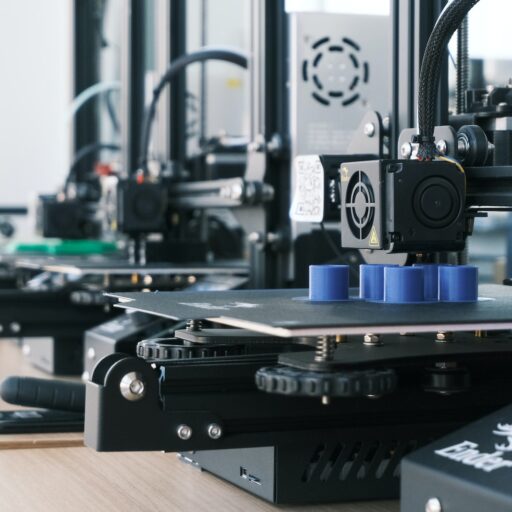
Ah, FDM! If you’ve ever seen a 3D printer in action, chances are it was an FDM machine. It’s the most common, most accessible, and arguably the most beloved technology for beginners and seasoned makers alike. We often call it the “gateway drug” of 3D printing because it’s so easy to get started, yet offers endless possibilities for prototyping and functional parts.
How FDM Works: The Hot Glue Gun on Steroids! 🔫
The principle behind FDM (or FFF – Fused Filament Fabrication, as the open-source community often calls it) is surprisingly straightforward, yet incredibly effective.
- The Filament Feed: It all starts with a spool of thermoplastic filament, typically 1.75mm or 2.85mm in diameter. This plastic string is fed into the printer.
- The Hot End: The filament travels through a tube (often a Bowden tube or directly into the extruder) to the “hot end.” Here, a heater block melts the plastic to a precise temperature, usually between 180°C and 260°C, depending on the material.
- The Nozzle: The molten plastic is then extruded through a tiny nozzle (common sizes are 0.4mm, 0.6mm, 0.8mm) onto a build plate.
- Layer by Layer: The print head moves along the X and Y axes, depositing a thin line of plastic, forming the first layer of your object. Once a layer is complete, the build plate moves down (or the print head moves up) along the Z-axis, and the next layer is deposited on top of the previous one.
- Cooling & Adhesion: As the plastic exits the nozzle, it cools and solidifies, bonding to the layer below it. This process repeats thousands of times until your object is complete!
It’s like building with LEGOs, but the LEGOs are made of molten plastic and stick together perfectly. Well, mostly perfectly! 😉
FDM Materials: A Rainbow of Possibilities 🌈
One of FDM’s biggest strengths is its incredible material versatility. You’re not just limited to one type of plastic; there’s a whole universe of filaments out there, each with unique properties.
- PLA (Polylactic Acid): The king of beginner filaments. Easy to print, low odor, and derived from renewable resources like corn starch. Great for visual models, prototypes, and decorative items. Brands like Prusa Research offer fantastic Prusament PLA for consistent results.
- ABS (Acrylonitrile Butadiene Styrene): Stronger and more heat-resistant than PLA, but trickier to print due to warping (it needs a heated bed and often an enclosure). Ideal for functional parts and enclosures.
- PETG (Polyethylene Terephthalate Glycol): A fantastic all-rounder, combining the ease of printing of PLA with the strength and durability of ABS. It’s our team’s go-to for many functional prints.
- TPU (Thermoplastic Polyurethane): Flexible and rubber-like! Perfect for phone cases, gaskets, and anything that needs to bend or absorb impact.
- Nylon: Extremely strong, durable, and wear-resistant. Great for gears and mechanical parts, but can be hygroscopic (absorbs moisture) and challenging to print.
- Exotic Filaments: Don’t even get us started on wood-filled, metal-filled, carbon fiber-reinforced, glow-in-the-dark, and color-changing filaments! The possibilities are truly endless.
Advantages and Limitations of FDM: The Good, The Bad, and The Layer Lines
✅ The Upsides:
- Affordability: Entry-level FDM printers can be incredibly inexpensive, making 3D printing accessible to almost anyone. Even professional models are generally more budget-friendly than SLA or SLS.
- Ease of Use: While there’s a learning curve, FDM is generally the easiest to pick up. Filament handling is straightforward, and post-processing can be minimal.
- Material Variety: As we just saw, the range of available filaments is vast, offering diverse mechanical and aesthetic properties.
- Large Build Volumes: Many FDM printers offer generous build volumes, allowing you to print larger objects in one go. The Creality CR-10 series, for example, is famous for its large build plates.
- Structural Stability: As Sinterit notes, “The porosity of the components is virtually zero,” meaning FDM parts can be quite dense and structurally sound, especially with proper infill and wall settings.
❌ The Downsides:
- Visible Layer Lines: This is FDM’s most recognizable trait. Parts often have a “stair-stepping” effect, which can detract from aesthetic appeal. Post-processing like sanding or vapor smoothing is often required for a smooth finish.
- Lower Resolution & Accuracy: Compared to SLA and SLS, FDM struggles with very fine details, thin walls, and extremely tight tolerances. Formlabs states FDM typically achieves around 0.8 mm wall thickness and 0.6 mm embossed details.
- Anisotropy: FDM parts are generally weaker along the Z-axis (between layers) than in the X-Y plane. This is because the bond between layers isn’t as strong as the material itself. As Formlabs puts it, FDM parts are “anisotropic; weaker between layers.”
- Support Structures: Overhangs and complex geometries almost always require support structures, which need to be manually removed, adding to post-processing time and potentially damaging the surface.
- Warping & Adhesion Issues: Some filaments, especially ABS, are prone to warping if the print bed isn’t heated correctly or if there are drafts.
FDM Applications: Where FDM Shines ✨
FDM is a true workhorse across many sectors:
- Rapid Prototyping: Quickly iterate designs, test fit and form, and validate concepts. Our team at Best 3D Printer™ uses FDM daily for this!
- Hobbyist & DIY Projects: From custom board game pieces to functional repairs around the house, FDM is a maker’s best friend.
- Educational Tools: Schools and universities use FDM printers to teach design, engineering, and problem-solving. Check out our insights on 3D Printers for Education.
- Jigs, Fixtures, and Tooling: Create custom tools and aids for manufacturing processes.
- Visual Models & Concept Validation: Produce physical representations of designs for presentations or client feedback.
Our Top FDM Printer Recommendations
Based on our extensive testing and awards for the best 3D printers, here are a few FDM machines that consistently impress:
| Printer Model | Design | Functionality | Ease of Use | Print Quality | Value |
|---|---|---|---|---|---|
| Bambu Lab P1S | 9 | 9 | 8 | 8 | 9 |
| Prusa MK4 | 8 | 9 | 9 | 9 | 8 |
| Creality K1 Max | 8 | 8 | 7 | 8 | 8 |
| Anycubic Kobra 2 Pro | 7 | 7 | 8 | 7 | 9 |
Our Take: For sheer speed and multi-material capabilities, the Bambu Lab P1S is a game-changer, especially with its AMS unit. If you prioritize reliability, open-source philosophy, and incredible support, the Prusa MK4 is a legend for a reason. For those on a tighter budget but still wanting great performance, the Anycubic Kobra 2 Pro offers fantastic value.
👉 Shop FDM Printers on:
- Bambu Lab P1S: Amazon | Bambu Lab Official Website
- Prusa MK4: Prusa Research Official Website
- Creality K1 Max: Amazon | Creality Official Website
- Anycubic Kobra 2 Pro: Amazon | Anycubic Official Website
So, FDM is your go-to for robust, affordable, and versatile printing, perfect for getting your feet wet or churning out prototypes. But what if you need something with a silky-smooth finish and jaw-dropping detail? That’s where our next contender steps in…
💡 What Is SLA 3D Printing? Exploring Resin Curing and Laser Precision
If FDM is the sturdy carpenter, then SLA (Stereolithography) is the meticulous jeweler. This technology is all about precision, smooth surfaces, and capturing the most intricate details imaginable. When we first started experimenting with SLA printers, the difference in print quality compared to FDM was absolutely breathtaking. It’s like switching from standard definition to 4K!
How SLA Works: The Magic of Light and Liquid ✨
SLA printers operate on a fundamentally different principle than FDM. Instead of melting plastic, they use light to solidify liquid resin.
- The Resin Vat: A transparent vat holds a photopolymer resin, a special liquid plastic that cures (hardens) when exposed to specific wavelengths of light, typically UV light.
- The Build Platform: A perforated build platform is lowered into the resin vat, leaving a tiny gap for the first layer.
- The Light Source:
- Laser SLA: A UV laser beam traces the shape of the first layer onto the resin. Where the laser hits, the resin solidifies.
- DLP (Digital Light Processing): An entire layer is projected at once using a digital projector, curing the whole layer simultaneously.
- LCD (Liquid Crystal Display): An LCD screen acts as a mask, allowing UV light from an array of LEDs to pass through only where the layer needs to be cured. This is common in most affordable desktop resin printers today.
- Layer by Layer: Once a layer is cured, the build platform lifts slightly, allowing fresh resin to flow underneath. The platform then lowers again, and the next layer is cured on top of the previous one. This process repeats until the entire object is formed, suspended upside down from the build platform.
- Post-Processing: This is a crucial step for SLA. The printed part, still covered in uncured liquid resin, needs to be washed (usually in isopropyl alcohol, or IPA) to remove excess resin. After washing, it undergoes a final UV curing stage to fully harden the material and achieve its optimal mechanical properties.
The precision of the laser or the sharpness of the projected image allows for incredibly fine details and smooth surfaces.
SLA Materials: Resins for Every Purpose 🧪
SLA resins come in a dazzling array of formulations, each designed for specific applications. This is where SLA truly shines for specialized needs.
- Standard Resins: Great for highly detailed visual prototypes, figurines, and models where aesthetics are paramount.
- Tough & Durable Resins: Engineered to withstand impact and stress, offering properties similar to ABS or polypropylene. Ideal for functional prototypes that need to last.
- Flexible & Elastic Resins: Mimic rubber, perfect for gaskets, grips, and wearable prototypes.
- Dental Resins: Biocompatible resins for dental models, surgical guides, and even temporary crowns. Formlabs is a leader in this space with their Dental Resins.
- Castable Resins: Designed to burn out cleanly, leaving no ash, making them perfect for jewelry casting and other investment casting applications.
- Clear Resins: Produce transparent parts, often used for fluidics, light guides, or visual inspection.
Advantages and Limitations of SLA: The Beauty and The Mess
✅ The Upsides:
- Exceptional Surface Finish: This is SLA’s superpower. Parts come out incredibly smooth, often looking injection-molded, with virtually invisible layer lines. As Formlabs states, “SLA parts have smooth surfaces, extremely tight tolerances, and superior dimensional accuracy.”
- High Resolution & Accuracy: SLA can produce incredibly fine details, thin walls (as thin as 0.2 mm), and intricate geometries with very tight tolerances (±0.02–0.3 mm). Sinterit highlights its “excellent surface finish with layer thickness between 0.05 – 0.15 mm.”
- Isotropic Properties: Unlike FDM, SLA parts typically have uniform strength in all directions, meaning they are “isotropic,” as Formlabs notes. This makes them more reliable for functional applications.
- Versatile Materials: The wide range of specialized resins allows for diverse mechanical, optical, and even biocompatible properties.
- Watertight Parts: SLA parts are typically watertight and airtight, making them suitable for fluidic applications.
❌ The Downsides:
- Material Cost: SLA resins are generally more expensive per liter than FDM filaments.
- Messy & Complex Post-Processing: This is the biggest hurdle for many. Handling liquid resin can be messy, and parts require washing in IPA and then UV curing. Resins are also often toxic and require proper ventilation and PPE.
- Brittle Parts: While there are tough resins, many standard SLA resins can be quite brittle, especially if not fully cured. Sinterit mentions that “parts are brittle” as a general disadvantage.
- Support Structures: Like FDM, SLA requires support structures for overhangs and to prevent parts from detaching from the build plate. These need careful removal.
- Smaller Build Volumes: Desktop SLA printers typically have smaller build volumes compared to FDM, though larger industrial SLA machines exist.
- Resin Shelf Life & Storage: Resins have a limited shelf life and need to be stored away from UV light.
SLA Applications: Where Detail is King 👑
SLA is indispensable in industries where precision and aesthetics are paramount:
- Dental: Creating highly accurate dental models, surgical guides, aligner molds, and even temporary crowns.
- Jewelry: Producing intricate master patterns for investment casting (lost-wax casting).
- Medical Devices: Prototyping and producing custom medical devices, anatomical models for surgical planning, and microfluidic devices.
- Functional Prototypes: When a prototype needs to look and feel like a final product, or requires specific mechanical properties.
- Visual & Aesthetic Models: High-fidelity models for product design, art, and collectibles.
Our Top SLA Printer Recommendations
For those seeking unparalleled detail and smooth finishes, here are some SLA printers that stand out:
| Printer Model | Design | Functionality | Ease of Use | Print Quality | Value |
|---|---|---|---|---|---|
| Formlabs Form 3+ | 9 | 9 | 8 | 10 | 8 |
| Elegoo Mars 4 Ultra | 8 | 8 | 9 | 9 | 9 |
| Anycubic Photon Mono M5s | 8 | 8 | 9 | 9 | 9 |
Our Take: The Formlabs Form 3+ is a professional-grade powerhouse, offering incredible reliability, a vast ecosystem of high-performance resins, and a streamlined workflow. For hobbyists and small businesses looking for exceptional detail without breaking the bank, the Elegoo Mars 4 Ultra and Anycubic Photon Mono M5s are fantastic choices, pushing the boundaries of desktop resin printing with their high-resolution LCD screens.
👉 Shop SLA Printers on:
- Formlabs Form 3+: Amazon | Formlabs Official Website
- Elegoo Mars 4 Ultra: Amazon | Elegoo Official Website
- Anycubic Photon Mono M5s: Amazon | Anycubic Official Website
SLA is a fantastic choice for those who prioritize aesthetics and precision, but be prepared for a bit more post-processing. Now, what if you need strength, complexity, and no supports? Let’s talk about the big guns!
🔥 What Is SLS 3D Printing? The Power of Powder and Laser Sintering
Alright, buckle up! If FDM is your everyday car and SLA is a finely tuned sports car, then SLS (Selective Laser Sintering) is a heavy-duty, all-terrain vehicle. This technology is a beast when it comes to producing incredibly strong, functional, and complex parts, often used for end-use components in demanding industries. The first time we saw an SLS part, we were genuinely amazed by its durability and the sheer freedom of design it offered.
How SLS Works: Fusing Powder with Precision 💥
SLS operates in a completely different realm, using powdered materials and a powerful laser.
- The Powder Bed: The printer has a build chamber filled with a fine polymer powder (like Nylon PA12). A roller or blade spreads a thin layer of this powder across the build platform.
- The Laser Beam: A high-powered CO2 laser then selectively scans and sinters (fuses) the powder particles together, tracing the cross-section of your object’s first layer. The laser heats the powder just enough to fuse it without fully melting it.
- Lowering the Bed: Once a layer is sintered, the build platform lowers slightly, and a fresh layer of powder is spread on top.
- Repeat & Build: The laser then sinters the next layer, fusing it to the layer below. This process continues until the entire part is built, completely encapsulated within a block of unfused powder.
- The Magic of Self-Support: Here’s the kicker: the surrounding unfused powder acts as a natural support structure for the printed part. This means you don’t need to design or remove any external supports! This is a massive advantage for complex geometries and internal features.
- Cooling & Breakout: After printing, the entire build chamber needs to cool down slowly to prevent warping. Once cooled, the block of powder is excavated, and the finished parts are “broken out” from the surrounding powder.
- Post-Processing: The parts are then cleaned (depowdered) using compressed air or media blasting. The unfused powder can often be recycled and reused, making SLS quite material-efficient. Further smoothing can be achieved through processes like vapor smoothing.
SLS Materials: Tough Powders for Tough Jobs 💪
SLS primarily uses engineering-grade thermoplastics in powder form, known for their strength and durability.
- Nylon (Polyamide – PA): The most common SLS material, especially PA12. It’s incredibly strong, flexible, impact-resistant, and chemically resistant. Perfect for functional prototypes, jigs, fixtures, and end-use parts.
- Glass-Filled Nylon: Nylon mixed with glass beads for increased stiffness and heat resistance.
- TPU (Thermoplastic Polyurethane): Offers rubber-like flexibility and high tear resistance, ideal for flexible functional parts.
- Polypropylene (PP): Known for its chemical resistance and ductility, similar to injection-molded PP.
- Composites: Some SLS systems can work with composite powders for specialized applications.
These materials are often industry-standard, as Formlabs notes, with powders costing around ~$100/kg.
Advantages and Limitations of SLS: Strength, Complexity, and a Bit of a Mess
✅ The Upsides:
- No Support Structures Needed: This is the game-changer! The unfused powder supports the part, allowing for incredible design freedom, complex internal geometries, and interlocking parts that would be impossible with FDM or SLA. Formlabs highlights that “SLS is ideal for complex geometries and high-volume production with minimal support removal.” Sinterit adds, “Creating movable parts with complicated geometry is possible.”
- Excellent Mechanical Properties: SLS parts are very strong, durable, impact-resistant, and have isotropic properties, meaning uniform strength in all directions. They often mimic the properties of injection-molded parts.
- High Part Density & Nesting: Multiple parts can be tightly “nested” or packed into the build volume, maximizing throughput and making it highly efficient for batch production.
- Material Efficiency: Unfused powder can be largely recycled and reused, reducing waste and material costs over time.
- Functional End-Use Parts: SLS is a go-to for producing actual end-use components, not just prototypes.
- Good Resolution & Accuracy: While typically not as smooth as SLA, SLS offers high resolution and accuracy, with walls as thin as 0.3 mm and details around 0.1–0.4 mm, according to Formlabs.
❌ The Downsides:
- Higher Upfront Cost: Traditionally, industrial SLS machines were incredibly expensive (over $200,000). While more accessible desktop options are emerging (under $30,000 for systems like Formlabs Fuse Series), they still represent a significant investment compared to most FDM or desktop SLA printers.
- Rougher Surface Finish: SLS parts have a slightly grainy or matte finish due to the powder sintering process. While it can be smoothed via tumbling, media blasting, or vapor smoothing, it won’t be as inherently smooth as an SLA part.
- Complex Post-Processing: While no support removal is needed, depowdering can be a messy and time-consuming process. Specialized equipment like powder recovery stations and blasting cabinets are often required.
- Longer Print & Cool-Down Times: The entire build chamber needs to heat up and cool down, which can add significant time to the overall print cycle, especially for large builds.
- Powder Handling: Working with fine powders requires careful handling, proper ventilation, and safety precautions.
SLS Applications: The Backbone of Advanced Manufacturing ⚙️
SLS is a powerhouse in industries demanding high-performance, complex parts:
- Functional Prototyping: Creating prototypes that truly mimic the mechanical properties of final injection-molded parts.
- End-Use Parts & Low-Volume Production: Ideal for custom manufacturing, spare parts, and short production runs where tooling costs for injection molding would be prohibitive.
- Complex Assemblies: Printing intricate, interlocking parts or assemblies in a single print, reducing assembly time.
- Medical & Dental: Custom prosthetics, orthotics, and surgical guides.
- Aerospace & Automotive: Lightweight, strong components with optimized geometries.
Our Top SLS Printer Recommendations
While SLS has traditionally been an industrial domain, brands like Formlabs and Sinterit are making it more accessible.
| Printer Model | Design | Functionality | Ease of Use | Print Quality | Value |
|---|---|---|---|---|---|
| Formlabs Fuse 1+ 30W | 9 | 9 | 8 | 9 | 8 |
| Sinterit Lisa X | 8 | 9 | 7 | 9 | 8 |
Our Take: The Formlabs Fuse 1+ 30W is a fantastic example of a powerful, compact SLS system that brings industrial capabilities to a more accessible price point. It’s designed for reliability and ease of use within the SLS ecosystem. The Sinterit Lisa X is another strong contender, offering a robust platform for professional SLS printing, particularly for those looking for a compact industrial solution.
👉 Shop SLS Printers on:
- Formlabs Fuse 1+ 30W: Formlabs Official Website
- Sinterit Lisa X: Sinterit Official Website
Now, you might be wondering, with all these incredible materials and technologies, how do you even begin to choose? It’s a question that plagues many, and it’s precisely what the experts at Formlabs address in their video. As they wisely point out, the first step is always to “Define Performance Requirements,” then “Translate Performance Requirements to Material Requirements,” and finally, “Make a Selection.” This systematic approach is crucial, and it’s a perspective we wholeheartedly endorse. If you haven’t seen it yet, check out the first YouTube video embedded in this article for a great visual explanation of this decision-making process!
So, we’ve explored the individual strengths and weaknesses of FDM, SLA, and SLS. But how do they stack up head-to-head? Let’s get into the ultimate comparison!
📊 FDM vs. SLA vs. SLS: In-Depth Comparison of Materials, Resolution, and Costs
Okay, you’ve met the contenders individually. Now it’s time for the ultimate showdown! Choosing the right 3D printing technology isn’t just about picking the “best” one; it’s about picking the right one for your specific needs. This often boils down to a careful balance of desired part quality, material properties, production volume, and, of course, budget. Let’s break down the key comparison points.
The Grand Comparison Table: FDM vs. SLA vs. SLS
We’ve gathered insights from our own experience and synthesized information from leading industry sources like Formlabs, Sinterit, and CoPrint3D to give you the most comprehensive overview.
| Feature | FDM (Fused Deposition Modeling) | SLA (Stereolithography) | SLS (Selective Laser Sintering) |
|---|---|---|---|
| Core Process | Extrudes melted thermoplastic filament layer by layer. | Uses UV laser/projector to cure liquid photopolymer resin layer by layer. | Uses high-powered laser to sinter polymer powder particles. |
| Materials | PLA, ABS, PETG, TPU, Nylon, Composites. | Photopolymer resins (Standard, Tough, Flexible, Dental, Castable, Clear). | Nylon (PA12, PA11), TPU, Polypropylene, Composites. |
| Surface Finish | Visible layer lines, often rough. Requires sanding/smoothing for aesthetics. | Very smooth, high detail, almost injection-molded quality. | Slightly grainy/matte. Can be smoothed via tumbling/blasting. |
| Resolution/Detail | Moderate. Wall thickness ~0.8mm, embossed details ~0.6mm. | Highest. Walls ~0.2mm, details ~0.1-0.15mm. | High. Walls ~0.3mm, details ~0.1-0.4mm. |
| Accuracy | Lower (0.10–0.25 mm tolerance). Affected by nozzle, filament. | Very High (±0.02–0.3 mm). Excellent dimensional stability. | High (e.g., Formlabs Fuse 1+ achieves ±0.5% or 0.3 mm). |
| Part Strength | Anisotropic (weaker between layers). | Isotropic, but can be brittle with standard resins. | Isotropic, very strong, impact-resistant, durable. |
| Support Structures | ✅ Required for overhangs. Manual removal. | ✅ Required for overhangs. Manual removal. | ❌ Not required. Unfused powder supports the part. |
| Post-Processing | Support removal, sanding, painting, acetone smoothing. | Washing (IPA), UV curing, support removal. Messy. | Depowdering, media blasting, optional smoothing. Messy. |
| Build Volume | Can be very large (desktop to industrial). | Typically smaller desktop, but industrial options exist. | Traditionally industrial large, now accessible desktop options. |
| Speed/Throughput | Slower for individual parts. Good for small batches. | Moderate for individual parts. High throughput with large chambers (e.g., Form 4). | Faster for batch production due to dense packing. |
| Printer Cost | Low (few hundred to $8,000 for pro desktop). | Moderate ($2,500–$25,000 for pro desktop). | High (desktop $30,000+, industrial $200,000+). |
| Material Cost | Low-Moderate (~$30–$150/kg filament). | Moderate-High (~$79/liter resin). | High (~$100/kg powder). Efficient powder reuse. |
| Workflow | Simple: Design → Slice → Print → Post-process. | More involved: Design → Slice → Print → Wash → Cure. | Complex: Design → Pack → Print → Cool → Depowder → Smooth. |
| Environmental | Generally safer (some fumes from ABS). | Toxic resins, fumes. Requires PPE & ventilation. | Fine powders, requires PPE & ventilation. |
| Best For | Quick prototypes, educational, visual models, concept validation, jigs. | Functional prototypes, dental, jewelry, microfluidics, detailed models. | Functional prototypes, end-use parts, complex geometries, low-volume production. |
Deep Dive into Key Differences:
1. Surface Finish & Resolution: The Aesthetic Battle 🎨
- SLA reigns supreme here. As Formlabs aptly states, “SLA parts have smooth surfaces, extremely tight tolerances, and superior dimensional accuracy.” If you need parts that look like they came out of an injection mold, SLA is your champion. Think jewelry, dental models, or highly detailed miniatures.
- SLS comes in a close second for resolution but with a distinct texture. Its parts have a slightly grainy, matte finish. While not as smooth as SLA out of the printer, the detail capabilities are impressive, and the texture can be desirable for functional parts, or smoothed with post-processing.
- FDM is at the bottom for raw surface finish. The visible layer lines are its hallmark. While layer height can be reduced for smoother prints, they’ll always be present to some degree. For quick prototypes where aesthetics aren’t critical, it’s perfectly fine. For presentation models, significant post-processing (sanding, painting, or even chemical smoothing with acetone for ABS) is needed.
2. Material Properties & Part Strength: The Durability Contest 💪
- SLS is the undisputed champion for strength and durability. Its parts are isotropic (uniform strength in all directions) and incredibly robust, often mimicking injection-molded nylon. This makes it ideal for functional, end-use components that need to withstand stress and impact. Sinterit emphasizes that SLS parts are “Durable, impact-resistant parts.”
- SLA parts are isotropic (uniform strength), which is a big step up from FDM. However, standard resins can be brittle. While specialized “tough” and “durable” resins significantly improve this, they still might not match the sheer impact resistance of SLS nylon.
- FDM parts are anisotropic, meaning they are weaker along the Z-axis (between layers). This is a critical consideration for functional parts, as they can delaminate under stress. While “The porosity of the components is virtually zero” as Sinterit notes, this doesn’t negate the layer adhesion weakness. Proper print orientation can mitigate this, but it’s a fundamental limitation.
3. Support Structures: The Freedom Factor 🕊️
- SLS wins hands down. The unfused powder acts as a natural support, meaning you can print incredibly complex geometries, internal channels, and interlocking parts without worrying about support removal. This is a huge advantage for design freedom and post-processing efficiency.
- FDM and SLA both require support structures for overhangs and complex features. These supports need to be manually removed, which can be tedious, time-consuming, and can leave marks on the part’s surface, requiring further finishing. This is a major workflow difference.
4. Cost & Accessibility: The Budget Battle 💰
- FDM is the most accessible and affordable. As CoPrint3D states, “FDM is the most accessible and cost-effective technology for beginners.” Entry-level printers are very inexpensive, and filament is relatively cheap. This makes it perfect for hobbyists, educators (3D Printers for Education), and small businesses needing quick prototypes.
- SLA is moderately priced. Desktop SLA printers are more expensive than FDM, and resins are pricier than filaments. However, for the quality and detail it offers, the cost is often justified for specific applications like dental or jewelry.
- SLS has the highest upfront cost. While desktop SLS systems like the Formlabs Fuse Series have made it more accessible (under $30,000), it’s still a significant investment. Industrial SLS machines can easily run into the hundreds of thousands. Material costs per kilogram are high, but the ability to reuse powder helps with overall operational costs.
5. Workflow & Post-Processing: The Time Sink ⏳
- FDM generally has the simplest workflow, especially for basic prints. Design, slice, print, remove supports (if any), and you’re often done.
- SLA has a more involved and messier workflow. After printing, parts must be washed in IPA and then UV cured. This adds significant time and requires proper safety precautions due to the nature of liquid resins.
- SLS has a complex workflow that includes careful powder handling, a cool-down period, and thorough depowdering. While it saves time on support removal, the overall process from print completion to a finished, clean part can be lengthy and requires dedicated equipment.
Resolving Conflicts & Nuances:
You might notice some slight variations in quoted accuracies or costs between sources. For instance, Formlabs provides specific resolution numbers (e.g., FDM 0.8mm wall thickness), while Sinterit gives a general tolerance (FDM 0.10-0.25mm). These aren’t conflicts but rather different ways of measuring and describing performance.
- Accuracy: Formlabs’ numbers are often based on their own highly optimized systems (like the Fuse 1+ for SLS), which might represent the upper end of what’s achievable. General tolerances from other sources might reflect a broader range of machines on the market. Always consider the specific printer model when evaluating accuracy.
- Cost: “Entry-level” FDM can be a few hundred dollars, while “professional” FDM can be thousands. Similarly, desktop SLA ranges widely. The key is understanding the relative cost hierarchy: FDM < SLA < SLS.
- Speed: Formlabs highlights SLA (Form 4/4L) as fast for parts (2-6 hours) and SLS as fast for batch production. FDM is generally slower per part due to extrusion. This isn’t a conflict; it’s about what is being optimized for speed – individual part completion vs. total batch throughput.
Ultimately, as CoPrint3D aptly summarizes, “choosing the right technology depends on the specific application, budget, and desired quality.” There’s no single “best” technology, only the best fit for your project.
🎯 7 Key Advantages and Limitations of FDM, SLA, and SLS Technologies
We’ve thrown a lot of information at you, so let’s distill it down to the absolute essentials. Here are 7 crucial points highlighting the advantages and limitations of each technology, helping you quickly grasp their core strengths and weaknesses. Think of this as your cheat sheet for rapid decision-making!
1. FDM: The Accessible Workhorse 🛠️
- ✅ Advantage: Unbeatable Affordability & Ease of Entry. FDM printers are the most budget-friendly, making 3D printing accessible to hobbyists, students, and small businesses. Filament is also relatively inexpensive. It’s the easiest to learn and get started with.
- ❌ Limitation: Visible Layer Lines & Anisotropic Strength. FDM parts inherently show layer lines, impacting aesthetic quality. More critically, they are weaker along the Z-axis (between layers), which can be a concern for high-stress functional parts.
2. SLA: The Detail Maestro 💎
- ✅ Advantage: Superior Surface Finish & Incredible Detail. SLA produces exceptionally smooth parts with intricate details and tight tolerances, often rivaling injection-molded aesthetics. It’s perfect for visual prototypes, dental applications, and jewelry.
- ❌ Limitation: Messy Post-Processing & Brittle Materials. Handling liquid resin requires careful washing and UV curing, which can be messy, time-consuming, and requires safety precautions. Standard SLA resins can also be brittle, although specialized resins mitigate this.
3. SLS: The Functional Powerhouse 🚀
- ✅ Advantage: No Support Structures & Isotropic Strength. This is SLS’s killer feature! The powder bed supports the print, allowing for unparalleled design freedom, complex geometries, and internal features without the need for manual support removal. Parts are also incredibly strong and durable in all directions.
- ❌ Limitation: High Upfront Cost & Complex Powder Handling. While desktop options are emerging, SLS printers represent a significant investment. The workflow involves handling fine powders, which can be messy and requires specialized equipment for recovery and cleaning.
4. FDM: Material Versatility & Large Builds 🌈
- ✅ Advantage: Wide Range of Thermoplastic Filaments. FDM offers a vast selection of materials, from basic PLA to engineering-grade nylons and flexible TPUs, catering to diverse application needs. Many FDM printers also boast large build volumes.
- ❌ Limitation: Lower Accuracy & Support Removal. FDM struggles with very fine features and tight dimensional accuracy compared to SLA and SLS. Support structures are almost always needed for overhangs, adding to post-processing and potential surface blemishes.
5. SLA: Diverse Resin Properties & Watertightness 💧
- ✅ Advantage: Specialized Resins for Specific Applications. SLA’s strength lies in its diverse resin library, offering materials with properties like biocompatibility (dental), flexibility, toughness, and castability, opening doors to highly specialized uses. Parts are also typically watertight.
- ❌ Limitation: Material Cost & UV Sensitivity. SLA resins are generally more expensive than FDM filaments. Printed parts can also be sensitive to UV light over time, potentially yellowing or degrading if not properly protected.
6. SLS: High Throughput for Functional Parts 🏭
- ✅ Advantage: Excellent for Batch Production & End-Use Components. The ability to nest multiple parts tightly within the build volume and the lack of supports make SLS highly efficient for producing batches of functional, durable end-use parts.
- ❌ Limitation: Rougher Surface Finish & Longer Cycle Times. SLS parts have a characteristic grainy surface. While resolution is high, the finish isn’t as smooth as SLA. The overall print cycle, including heating and cooling, can also be quite long.
7. FDM vs. SLA vs. SLS: The Overall Trade-off ⚖️
- ✅ Advantage: Complementary Technologies. The biggest advantage is that these technologies aren’t mutually exclusive. Many businesses leverage multiple types of printers to cover a wider range of applications, from quick prototyping (FDM) to detailed models (SLA) and functional end-use parts (SLS).
- ❌ Limitation: No Single “Perfect” Solution. There is no one-size-fits-all 3D printing technology. Each has inherent trade-offs in terms of cost, speed, quality, and material properties. Choosing the wrong technology for your specific needs can lead to frustration and wasted resources.
Understanding these core advantages and limitations is crucial for making an informed decision. But how do these differences play out when you consider the scale of your operations, from a desktop hobbyist to an industrial powerhouse? Let’s explore the industrial vs. desktop landscape!
🏭 Industrial vs. Desktop 3D Printing: Which Technology Fits Your Needs?
The world of 3D printing isn’t just about the technology itself; it’s also about the scale. What works for a hobbyist in their garage might be completely different from what a manufacturing plant needs. The lines between “desktop” and “industrial” have blurred significantly in recent years, especially with the advent of more accessible professional machines. But understanding this distinction is key to choosing the right tool for your job.
FDM: From Hobbyist Hero to Industrial Workhorse
- Desktop FDM: This is where FDM truly shines in accessibility. Printers like the Creality Ender 3 V3 KE or Bambu Lab P1S are compact, relatively inexpensive, and perfect for home users, small businesses, and educational institutions. They offer a fantastic entry point into 3D printing, allowing for rapid prototyping and functional prints on a smaller scale. Many of our 3D Printer Reviews focus on these accessible machines.
- Best for: Personal projects, rapid concept validation, educational settings, custom jigs and fixtures for small workshops.
- Industrial FDM: Don’t let the desktop dominance fool you; FDM also has a powerful industrial presence. Companies like Stratasys (the original FDM patent holders) produce large, highly precise, and robust FDM machines capable of printing with high-performance engineering thermoplastics like PEEK and ULTEM. These systems are designed for continuous operation, tight tolerances, and demanding applications in aerospace, automotive, and medical fields.
- Best for: Manufacturing aids, end-use parts in demanding environments, large-scale functional prototypes requiring specific material certifications.
SLA: Precision on Your Desk, Power in the Lab
- Desktop SLA: This segment has exploded in popularity, offering incredible detail at surprisingly affordable prices. Printers like the Elegoo Mars or Anycubic Photon series bring high-resolution resin printing to your workbench. They are perfect for intricate models, jewelry, dental applications, and highly detailed prototypes.
- Best for: Jewelry design, dental models, miniature painting, highly detailed visual prototypes, small-batch production of intricate parts.
- Professional/Industrial SLA: Brands like Formlabs bridge the gap, offering professional desktop and benchtop SLA solutions (e.g., the Form 3+ and Form 4 series) that are robust enough for engineering labs and small-to-medium businesses. Larger industrial SLA machines from companies like 3D Systems or Carbon offer massive build volumes, faster print speeds, and advanced material capabilities for high-throughput manufacturing and specialized applications.
- Best for: High-fidelity functional prototypes, medical device manufacturing, custom tooling, high-volume dental production, advanced material research.
SLS: From Factory Floor to Benchtop Revolution
- Industrial SLS: Historically, SLS has been the domain of large industrial manufacturers. Machines from 3D Systems or EOS are massive, complex, and incredibly expensive, designed for high-volume production of end-use parts in demanding sectors like aerospace, automotive, and consumer goods. They require specialized facilities and highly trained operators. This is where you see significant 3D Printing Industry News regarding advanced materials and applications.
- Best for: Mass customization, complex end-use parts, functional prototypes for critical applications, high-volume production runs.
- Desktop/Benchtop SLS: This is the newest and most exciting frontier. Companies like Sinterit (with their Lisa series) and Formlabs (with their Fuse series) are democratizing SLS, bringing compact, more affordable systems to the market. These benchtop SLS printers are designed for engineering firms, product development teams, and 3D Printers for Small Businesses that need the strength and design freedom of SLS without the multi-hundred-thousand-dollar price tag.
- Best for: Functional prototyping for small businesses, low-volume production of complex parts, R&D, educational institutions teaching advanced additive manufacturing.
Which Fits Your Needs? A Quick Guide
| Factor / Need | FDM (Desktop) | SLA (Desktop) | SLS (Benchtop/Industrial) |
|---|---|---|---|
| Budget | ✅ Lowest initial investment | 🟡 Moderate initial investment | ❌ Highest initial investment (even for benchtop) |
| Ease of Use | ✅ Easiest to learn & operate | 🟡 Moderate (messier post-processing) | ❌ Most complex (powder handling, workflow) |
| Part Detail | 🟡 Good for general shapes, visible layers | ✅ Excellent for intricate details, smooth finish | ✅ High detail, but grainy surface |
| Part Strength | 🟡 Good for prototypes, but anisotropic | 🟡 Good for visual, some tough resins | ✅ Excellent for functional, isotropic, durable |
| Design Freedom | 🟡 Limited by supports & overhangs | 🟡 Limited by supports & orientation | ✅ Unparalleled (no supports needed) |
| Production Volume | Low-Medium (individual parts) | Low-Medium (individual parts, small batches) | Medium-High (batch production, dense packing) |
| Target User | Hobbyists, educators, rapid prototyping | Designers, jewelers, dental, detailed prototypes | Engineers, product developers, low-volume manufacturers |
The key takeaway here is that your choice isn’t just about the technology, but also about the ecosystem and scale. Are you looking for a plug-and-play experience for occasional prints, or a robust system for continuous production? The answer will heavily influence whether a desktop FDM, a professional SLA, or an accessible SLS system is your ideal match.
🔧 Maintenance, Post-Processing, and Workflow Tips for FDM, SLA, and SLS Printers
So, you’ve printed your masterpiece! But wait, the journey isn’t over. One of the most overlooked aspects of 3D printing, yet absolutely critical for success and longevity, is maintenance and post-processing. Each technology has its own unique quirks and demands. Ignore them at your peril! We’ve learned this the hard way, trust us. Nothing’s worse than a clogged nozzle or a sticky resin mess.
FDM: The “Relatively” Low-Maintenance Friend
FDM printers are generally the most forgiving, but a little TLC goes a long way.
Workflow & Post-Processing:
- Print Removal: Once cooled, carefully remove your print from the build plate. Flexible build plates (like those on the Prusa MK4 or Bambu Lab P1S) make this a breeze.
- Support Removal: If your print had supports, carefully snap or cut them away. Flush cutters are your best friend here.
- Surface Finishing (Optional):
- Sanding: For smoother surfaces, start with coarse sandpaper and move to finer grits.
- Filling: Use wood filler or Bondo for larger gaps or layer lines.
- Painting: Acrylic paints work well. Primer is often recommended for better adhesion.
- Acetone Vapor Smoothing (for ABS): This technique can melt away layer lines, creating a glossy, smooth finish. ⚠️ Caution: Acetone is highly flammable and its fumes are toxic. Always use in a well-ventilated area with proper PPE.
Maintenance Tips:
- Keep the Build Plate Clean: Residue from previous prints or fingerprints can cause adhesion issues. Clean with IPA or soap and water regularly.
- Nozzle Care: Clogs happen! Learn how to do a “cold pull” or use a tiny needle to clear blockages. Replace worn nozzles periodically, especially if printing abrasive filaments (carbon fiber, glow-in-the-dark).
- Bed Leveling: A perfectly level bed is crucial for good first layers. Auto-bed leveling systems (like on the Anycubic Kobra 2 Pro) help, but manual checks are still good practice.
- Tighten Belts & Screws: Loose belts can lead to ghosting or inaccurate prints. Check and tighten them periodically.
- Lubricate Moving Parts: Apply a small amount of lithium grease or PTFE lubricant to Z-axis lead screws and smooth rods.
- Filament Storage: Store filament in a dry, airtight container with desiccant. Humid filament can lead to poor print quality (stringing, weak layers). We’ve seen prints fail spectacularly due to damp filament!
SLA: The Meticulous Artist (with a Messy Studio)
SLA offers stunning detail, but it demands a more rigorous post-processing and maintenance routine due to the nature of liquid resin.
Workflow & Post-Processing:
- Print Removal: Carefully remove the build platform and then the print from the platform. Be gentle, as uncured resin prints can be fragile.
- Washing: This is critical! Parts must be thoroughly washed in Isopropyl Alcohol (IPA) to remove all uncured liquid resin.
- Manual Wash: Submerge and agitate parts in a bath of IPA.
- Automated Wash Stations: Devices like the Formlabs Form Wash or Anycubic Wash & Cure machines automate this, using agitation and sometimes ultrasonic cleaning. This is a game-changer for efficiency and cleanliness.
- Support Removal: While the part is still slightly soft (before final cure), carefully remove supports. This is often easier than with FDM.
- UV Curing: Place the washed and de-supported part in a UV Curing Station (like the Formlabs Form Cure or Elegoo Mercury Plus). This final step fully hardens the resin, achieving its optimal mechanical properties.
- Surface Finishing (Optional): Light sanding, polishing, or clear coating can further enhance the surface.
Maintenance Tips:
- Resin Handling Safety: Always wear nitrile gloves and eye protection! Resins are skin irritants and can be toxic. Work in a well-ventilated area.
- Clean the Resin Vat: Regularly inspect the bottom of your resin vat for cured resin bits (called “floaters” or “rafts”). These can damage your FEP film or LCD screen. Use a plastic scraper or filter the resin.
- FEP Film Care: The FEP (Fluorinated Ethylene Propylene) film at the bottom of the vat is crucial. Avoid touching it with bare hands. Replace it if it gets cloudy, scratched, or punctured.
- Keep the Printer Clean: Wipe down any spilled resin immediately. Cured resin is much harder to remove.
- Resin Storage: Store resin in its original opaque bottle, away from UV light, at room temperature. Shake well before use.
- IPA Management: IPA gets contaminated with resin. You’ll need to replace it or use a resin cleaner. Dispose of contaminated IPA and cured resin waste properly (check local regulations).
SLS: The Industrial Clean-Up Crew
SLS offers incredible design freedom, but its post-processing is a unique beast, revolving around powder management.
Workflow & Post-Processing:
- Cool Down: After printing, the entire build chamber needs to cool down slowly, often for several hours, to prevent warping. Patience is key!
- Breakout/Depowdering: Once cooled, the block of unsintered powder is removed from the printer. Parts are then carefully excavated from this powder block. This can be done manually or with specialized depowdering stations.
- Powder Recovery: The unfused powder is collected and sieved to remove any larger particles or debris. A percentage of this “recycled” powder is then mixed with fresh powder for the next print, optimizing material usage.
- Cleaning: Parts are cleaned using compressed air, bead blasting, or media blasting to remove all residual powder from surfaces and internal channels.
- Surface Finishing (Optional):
- Tumbling/Vibratory Finishing: For a smoother, more uniform surface.
- Dyeing: SLS parts can be easily dyed in various colors.
- Vapor Smoothing: For a truly smooth, sealed surface, similar to injection molding.
Maintenance Tips:
- Powder Handling Safety: Fine powders can be respiratory irritants. Always wear a respirator (N95 or better), gloves, and eye protection. Work in a dedicated, well-ventilated area.
- Printer Calibration: SLS machines require precise calibration of the laser and temperature controls. Follow manufacturer guidelines rigorously.
- Build Chamber Cleaning: Keep the build chamber meticulously clean to prevent contamination of fresh powder.
- Powder Management System: If you have a professional SLS system, you’ll likely have an integrated powder management station for sieving and mixing. Maintain this system diligently.
- Filter Replacement: Regularly replace air filters and other consumables to ensure optimal performance and safety.
As you can see, the “set it and forget it” dream of 3D printing is often just that – a dream! Each technology requires a commitment to proper maintenance and post-processing. While FDM is the most straightforward, SLA and SLS demand more specialized attention. But the results? Absolutely worth the effort!
🤝 Combining FDM, SLA, and SLS: How to Use Multiple 3D Printing Technologies Together
Here’s a little secret from the pros: very few advanced users or businesses rely on just one 3D printing technology. Why limit yourself when each method offers unique strengths? As Formlabs wisely noted, “Many businesses use multiple technologies as complementary tools.” This isn’t just about having more printers; it’s about creating a powerful, versatile toolkit that allows you to tackle virtually any project with optimal efficiency and quality.
Think of it like a chef’s kitchen. You wouldn’t use a bread knife to chop vegetables, nor a paring knife to carve a roast. Each tool has its purpose, and when used together, they create culinary magic! The same applies to 3D printing.
The Hybrid Workflow: Leveraging Each Technology’s Superpower
Let’s explore how you can strategically combine FDM, SLA, and SLS for maximum impact:
1. FDM for Speed & Volume, SLA for Detail, SLS for Functionality
This is perhaps the most common and effective hybrid approach:
- FDM for Initial Concept & Large Prototypes:
- Use Case: Need to quickly validate a design’s form, fit, or ergonomics? Print a large, rough prototype on an FDM printer like a Creality K1 Max. It’s fast, cheap, and lets you iterate rapidly.
- Example: We once had a client who needed to test the ergonomics of a new power tool grip. We churned out several FDM versions in different sizes and shapes overnight. They could hold them, feel them, and give immediate feedback.
- SLA for High-Fidelity Visuals & Intricate Features:
- Use Case: Once the form is validated, if you need a stunning, presentation-ready model or a prototype with very fine details (e.g., small buttons, intricate textures, clear windows), switch to SLA.
- Example: After the FDM grip was approved, we printed a final, highly detailed version on a Formlabs Form 3+ using a tough resin. The smooth surface and crisp details made it look like a production part, perfect for client presentations or marketing photos.
- SLS for Functional Testing & End-Use Components:
- Use Case: For parts that need to be strong, durable, and withstand real-world conditions, or for complex internal mechanisms that require no supports, SLS is the answer.
- Example: The internal gears and structural components of that same power tool, which needed to be robust and impact-resistant, were printed using Nylon PA12 on a Formlabs Fuse 1+ 30W. This allowed for functional testing under load, ensuring the design would hold up in production.
2. Jigs, Fixtures, and Tooling: A Multi-Tech Approach
Manufacturing and assembly lines often benefit immensely from custom 3D printed tools:
- FDM for Large, Simple Jigs:
- Use Case: Create large, non-critical jigs or fixtures for assembly or measurement. FDM’s affordability and ability to print larger parts quickly make it ideal.
- Example: A custom holder for a circuit board during soldering, printed from PETG on a Prusa MK4.
- SLA for High-Precision Molds & Master Patterns:
- Use Case: For creating highly accurate molds for casting (e.g., silicone molds) or master patterns for investment casting (jewelry, small metal parts).
- Example: A master pattern for a custom metal emblem, printed in castable resin on an Elegoo Mars 4 Ultra, then used to create a silicone mold for wax injection.
- SLS for Durable, Complex End-Use Tooling:
- Use Case: For jigs and fixtures that need to be extremely durable, impact-resistant, or have complex geometries that would be difficult to machine or print with supports.
- Example: A custom snap-fit assembly jig with internal channels for wiring, printed in Nylon PA12 on a Sinterit Lisa X, designed to withstand repeated use on a production line.
3. Artistic & Hybrid Creations
Even in the artistic realm, combining technologies can lead to stunning results:
- FDM for Base Structures: Print large, underlying structures or armatures with FDM.
- SLA for Fine Details: Add intricate details, facial features, or delicate components with SLA, then attach them to the FDM base.
- SLS for Wearable or Functional Art: Create flexible, durable components for costumes or interactive art pieces.
The Benefits of a Multi-Technology 3D Printing Lab
- Optimized Cost & Time: You use the most appropriate (and often most cost-effective) technology for each specific part or stage of development. Why print a rough concept on an expensive SLS machine?
- Expanded Capabilities: You’re no longer limited by the constraints of a single technology. You can achieve high detail, high strength, and large volumes simultaneously.
- Faster Iteration Cycles: By quickly prototyping with FDM, then refining with SLA, and finally validating with SLS, you can significantly accelerate your product development timeline.
- Versatility for Clients: For 3D Printers for Small Businesses offering printing services, having multiple technologies means you can cater to a wider range of client needs and project requirements.
- Learning & Innovation: Operating different types of printers deepens your understanding of additive manufacturing as a whole, fostering innovation.
Our team at Best 3D Printer™ constantly juggles between our FDM, SLA, and even our benchtop SLS machines. It’s not about which one is “best,” but which one is “best for this job.” This holistic approach is what truly unlocks the full potential of 3D printing. So, don’t think of it as FDM or SLA or SLS. Think of it as FDM and SLA and SLS, working in harmony!
🛠️ Choosing the Right 3D Printer: Factors to Consider When Picking Between FDM, SLA, and SLS
Alright, we’ve journeyed through the fascinating worlds of FDM, SLA, and SLS. You’ve seen their inner workings, their strengths, their weaknesses, and even how they can play nicely together. Now comes the million-dollar question (or rather, the several-hundred-to-several-thousand-dollar question): Which 3D printer is right for you?
This isn’t a simple “buy this one” answer. It’s a decision that hinges entirely on your specific needs, goals, and resources. Think of it as a personalized quest! Here at Best 3D Printer™, we’ve guided countless enthusiasts and professionals through this maze, and we’ve boiled it down to a few critical factors.
1. What Are You Making? (Application Needs) 🎯
This is the absolute first question. Your end goal dictates everything.
- Quick & Dirty Prototypes / Concept Models: Do you need to rapidly test a design’s form and fit, where aesthetics aren’t paramount?
- Go FDM. It’s fast, cheap, and perfect for iterating.
- Highly Detailed Visual Models / Aesthetic Prototypes: Are you creating jewelry, dental models, figurines, or presentation-ready prototypes that need to look flawless?
- Go SLA. Its smooth finish and intricate detail capabilities are unmatched.
- Functional Prototypes / End-Use Parts / Complex Geometries: Do your parts need to be strong, durable, impact-resistant, or feature intricate internal structures without supports?
- Go SLS. It excels in mechanical performance and design freedom.
- Jigs, Fixtures, Tooling:
- FDM for simpler, larger tools.
- SLS for robust, complex, high-wear tooling.
2. What Level of Quality Do You Need? (Surface Finish, Resolution, Accuracy) ✨
How perfect does your part need to be?
- “Good Enough” with Visible Layer Lines: If functionality outweighs aesthetics, FDM is perfectly acceptable.
- Silky Smooth, Museum-Quality Finish: If every micron matters and you want a near-perfect surface straight off the printer, SLA is your only real choice.
- Strong & Detailed, but with a Matte Texture: If mechanical performance and intricate detail are key, but a slightly grainy surface is acceptable (or can be post-processed), SLS is ideal.
3. What Material Properties Are Essential? (Strength, Flexibility, Heat Resistance) 🧪
The material defines the part’s performance.
- General-Purpose Plastics (PLA, PETG, ABS): FDM offers a wide range of common thermoplastics.
- Specialized Resins (Tough, Flexible, Dental, Castable): SLA provides a diverse palette of photopolymer resins for highly specific applications.
- Engineering-Grade Nylons & TPUs (High Strength, Durability): SLS excels with robust, isotropic materials perfect for demanding functional parts.
4. What’s Your Budget? (Printer Cost, Material Cost, Post-Processing Equipment) 💰
Money talks, and 3D printing can range from a modest investment to a significant capital expenditure.
- Lowest Entry Cost: FDM printers are the most affordable upfront, and filament is relatively cheap.
- Moderate Investment: SLA printers and resins are more expensive than FDM but offer a significant leap in quality. Factor in IPA and a UV curing station.
- Highest Investment: SLS printers, even benchtop models, are the most expensive upfront. Powders are costly, and you’ll need depowdering and recovery equipment. However, powder reuse can offset material costs over time.
Don’t forget the hidden costs: replacement parts (nozzles, FEP film), post-processing supplies, and electricity!
5. How Much Time & Effort Are You Willing to Invest? (Workflow & Post-Processing) ⏱️
Some technologies are more “hands-on” than others.
- Simplest Workflow: FDM generally has the most straightforward process from print to finished part.
- More Involved & Messy: SLA requires careful washing and UV curing, plus handling liquid resins.
- Complex & Time-Consuming: SLS involves powder handling, long cool-down times, and thorough depowdering.
Consider the time you have for learning, operating, and maintaining the machine, as well as the safety precautions required for resins and powders.
6. How Big Do Your Parts Need to Be? (Build Volume) 📏
Size matters!
- Large Parts: FDM often offers the largest build volumes, especially for desktop machines. Industrial FDM can print massive objects.
- Small to Medium, Intricate Parts: Desktop SLA and SLS typically have smaller build volumes, optimized for precision over sheer size.
7. What’s Your Experience Level? (Ease of Use) 🧑 🎓
Are you a seasoned pro or just starting your 3D printing journey?
- Beginner-Friendly: FDM is generally the easiest to get into, with a vast community and resources.
- Intermediate: SLA requires more attention to detail and safety protocols but is manageable for motivated beginners.
- Advanced: SLS has a steeper learning curve due to its complex workflow and material handling.
The “Best 3D Printer” for You: A Decision Matrix
To help you visualize, here’s a simplified decision path:
- Is your primary need for quick, affordable prototypes or large, general-purpose functional parts, where visible layer lines are acceptable?
- ✅ Choose FDM. (Consider a Bambu Lab P1S for speed or a Prusa MK4 for reliability).
- Do you require extremely high detail, super-smooth surfaces, or specialized material properties (like dental or castable)?
- ✅ Choose SLA. (Look at a Formlabs Form 3+ for professional use or an Elegoo Mars 4 Ultra for desktop detail).
- Do you need incredibly strong, durable, isotropic parts with complex geometries, and no support structures, for functional testing or end-use?
- ✅ Choose SLS. (Explore a Formlabs Fuse 1+ 30W or Sinterit Lisa X for accessible industrial quality).
Remember, as we discussed in the previous section, you don’t have to pick just one! Many businesses find immense value in having a diverse fleet of printers to tackle different stages of product development or various client needs. This is especially true for 3D Printers for Small Businesses looking to offer comprehensive services.
Ultimately, the “right” 3D printer is the one that best aligns with your project’s demands, your budget, and your comfort level. Do your research, consider these factors carefully, and don’t be afraid to reach out to communities or experts (like us!) for personalized advice. Happy printing!
🌐 Learn More: Advanced Resources on SLA and SLS 3D Printing Technologies
You’ve absorbed a ton of information, and hopefully, you’re feeling much more confident about the distinctions between FDM, SLA, and SLS. While FDM is often the entry point for many, SLA and especially SLS represent the cutting edge of what’s possible in additive manufacturing, pushing boundaries in precision, material science, and functional applications.
For those of you eager to dive even deeper into the intricacies of resin 3D printing (SLA) and powder bed fusion (SLS), we’ve curated some advanced resources. These links will take you beyond the basics, offering detailed insights into material properties, advanced workflows, and specific industry applications.
Advanced SLA Resources: Unlocking Resin’s Full Potential
SLA is far more than just printing pretty models. Its material versatility and precision make it indispensable in highly specialized fields.
- Formlabs Whitepapers & Guides: Formlabs is a leader in professional desktop SLA, and their website is a treasure trove of in-depth technical documentation.
- Engineering Resins Guide: Explore the mechanical properties and applications of their Tough, Durable, Flexible, and High Temp resins. Formlabs Engineering Resins
- Dental 3D Printing Solutions: Dive into the world of biocompatible resins for dental models, surgical guides, and prosthetics. Formlabs Dental Solutions
- Jewelry 3D Printing: Learn about castable resins and how SLA is revolutionizing jewelry manufacturing. Formlabs Jewelry 3D Printing
- Carbon DLS™ Technology: For those interested in high-speed, industrial-scale resin printing, Carbon’s Digital Light Synthesis (DLS) offers continuous liquid interface production, pushing the boundaries of SLA-like processes. Their site provides excellent technical overviews. Carbon 3D Technology
- Understanding Resin Chemistry: For the truly curious, exploring the chemical composition and curing mechanisms of photopolymer resins can provide a deeper appreciation for the technology. Look for academic papers on photopolymerization.
Advanced SLS Resources: Mastering Powder Bed Fusion
SLS is where industrial-grade strength meets design freedom. These resources will help you understand its robust capabilities and complex workflows.
- Sinterit Blog & Case Studies: Sinterit has been instrumental in making benchtop SLS accessible. Their blog offers practical advice, material insights, and real-world application examples. Sinterit Blog
- SLS Material Properties: Detailed breakdowns of Nylon PA12, Flexa Grey (TPU), and other SLS powders. Sinterit Materials
- Formlabs Fuse Series Resources: Formlabs’ entry into the SLS market with the Fuse series provides excellent documentation on their integrated SLS ecosystem, including powder management and material properties. Formlabs Fuse Series
- EOS Additive Manufacturing: For a look at the high-end industrial SLS landscape, EOS is a pioneer. Their website features extensive information on industrial SLS systems, advanced materials, and applications in aerospace, automotive, and medical sectors. EOS Additive Manufacturing
- Powder Recycling & Management: A critical aspect of SLS is efficient powder management. Researching best practices for powder refresh rates, sieving, and storage is essential for optimizing costs and print quality.
These resources are just the tip of the iceberg, but they’ll provide a solid foundation for anyone looking to become an expert in SLA and SLS. The world of 3D printing is constantly evolving, with new materials and processes emerging regularly. Staying informed through these kinds of resources is key to harnessing the full power of additive manufacturing. Happy learning!
🎉 Conclusion: Which 3D Printing Technology Reigns Supreme for Your Projects?

Phew! What a ride through the fascinating worlds of FDM, SLA, and SLS 3D printing technologies. By now, you’ve got a solid grasp of how each technology works, their unique strengths, limitations, and where they fit in the grand scheme of additive manufacturing.
To wrap up our exploration:
-
FDM is your trusty, budget-friendly workhorse. It’s perfect for rapid prototyping, educational projects, and functional parts where surface finish isn’t critical. Its vast material selection and large build volumes make it a versatile choice for many beginners and small businesses. Just remember: visible layer lines and anisotropic strength are part of the package.
-
SLA dazzles with its stunning surface finish and ultra-fine detail. If your project demands precision, smooth aesthetics, or specialized materials like dental or castable resins, SLA is the clear winner. However, be prepared for a messier post-processing routine and higher material costs.
-
SLS stands tall as the industrial champion, delivering strong, isotropic, and complex parts without the hassle of support structures. It’s ideal for functional prototypes, end-use components, and intricate geometries that other technologies simply can’t handle. The trade-off? Higher upfront investment and a more involved powder-handling workflow.
But here’s the kicker: there’s no single “best” technology. The real magic happens when you combine these technologies, leveraging their strengths to cover every stage of your product development or manufacturing process. Whether you’re a hobbyist, educator, small business, or industrial manufacturer, understanding these differences empowers you to make smarter, more cost-effective decisions.
So, next time you’re faced with a 3D printing challenge, ask yourself: What’s my priority — speed, detail, strength, or cost? Your answer will point you to the right technology or combination thereof.
Ready to take your 3D printing journey to the next level? Whether you’re eyeing a sleek Bambu Lab P1S, a precision powerhouse like the Formlabs Form 3+, or an industrial-grade Formlabs Fuse 1+ 30W, we’ve got you covered with expert insights and recommendations.
Happy printing, and may your layers always adhere perfectly! 🚀
🔗 Recommended Links for 3D Printing Enthusiasts
Ready to shop or learn more? Here are some of our top picks and resources to fuel your 3D printing passion:
Shop Featured 3D Printers and Brands
- Bambu Lab P1S: Amazon | Bambu Lab Official Website
- Prusa MK4: Prusa Research Official Website
- Creality K1 Max: Amazon | Creality Official Website
- Anycubic Kobra 2 Pro: Amazon | Anycubic Official Website
- Formlabs Form 3+: Amazon | Formlabs Official Website
- Elegoo Mars 4 Ultra: Amazon | Elegoo Official Website
- Anycubic Photon Mono M5s: Amazon | Anycubic Official Website
- Formlabs Fuse 1+ 30W: Formlabs Official Website
- Sinterit Lisa X: Sinterit Official Website
Recommended Books on 3D Printing
- 3D Printing: The Next Industrial Revolution by Christopher Barnatt — Amazon
- Additive Manufacturing Technologies: 3D Printing, Rapid Prototyping, and Direct Digital Manufacturing by Ian Gibson, David Rosen, Brent Stucker — Amazon
- Mastering 3D Printing by Joan Horvath and Rich Cameron — Amazon
❓ FAQ: Your Burning Questions About FDM, SLA, and SLS Answered

Which 3D printing technology is best suited for producing functional prototypes and end-use products with high durability?
Answer:
SLS is generally the best choice for functional prototypes and durable end-use parts due to its use of engineering-grade thermoplastic powders like Nylon PA12, which produce isotropic, strong, and impact-resistant components. Unlike FDM, which has anisotropic strength, and SLA, which can be brittle depending on resin choice, SLS parts closely mimic injection-molded plastics in mechanical performance. Desktop SLS systems like the Formlabs Fuse 1+ 30W have made this technology more accessible for small businesses and prototyping labs.
What are the typical applications and use cases for each of the FDM, SLA, and SLS 3D printing technologies?
Answer:
- FDM: Rapid prototyping, educational models, hobbyist projects, jigs and fixtures, and functional parts where surface finish is less critical.
- SLA: Highly detailed visual prototypes, dental and medical models, jewelry casting patterns, microfluidics, and parts requiring smooth surfaces and tight tolerances.
- SLS: Functional prototypes, complex geometries with internal features, end-use parts, low-volume manufacturing, aerospace and automotive components, and durable tooling.
How do SLA and SLS 3D printing differ in terms of print resolution and surface finish?
Answer:
SLA offers the highest resolution and smoothest surface finish among the three technologies, with layer thicknesses as low as 0.025 mm and near injection-molded quality surfaces. It excels in capturing fine details and producing watertight parts.
SLS provides high resolution but with a characteristic slightly grainy or matte texture due to the powder sintering process. While details are sharp, the surface finish is rougher than SLA and often requires post-processing like tumbling or vapor smoothing for a smoother feel.
What are the advantages and disadvantages of FDM 3D printing compared to other methods?
Answer:
Advantages:
- Lowest cost of entry and materials.
- Wide range of thermoplastic filaments.
- Large build volumes available.
- Simple workflow and maintenance.
Disadvantages:
- Visible layer lines and lower surface quality.
- Anisotropic strength, weaker between layers.
- Requires support structures for overhangs.
- Limited fine detail and accuracy compared to SLA and SLS.
Which 3D printing technology offers the highest print resolution and detail?
Answer:
SLA offers the highest print resolution and finest detail, capable of producing features as small as 0.1 mm or less with ultra-smooth surfaces. This makes it ideal for applications requiring intricate geometries, such as jewelry, dental models, and microfluidic devices.
How do material costs compare between FDM, SLA, and SLS 3D printers?
Answer:
- FDM filaments generally cost between $30–$150 per kilogram, making them the most affordable material option.
- SLA resins are more expensive, typically around $79 per liter, with specialized resins costing more.
- SLS powders are the most costly, averaging about $100 per kilogram, but powder reuse helps reduce overall material expenses.
What are the advantages of using SLA over FDM for professional 3D printing?
Answer:
SLA provides superior surface finish, higher resolution, and more precise dimensional accuracy than FDM. It allows for the production of highly detailed parts with smooth surfaces suitable for presentation models, dental applications, and jewelry. SLA parts are also isotropic, offering uniform strength, whereas FDM parts are anisotropic. However, SLA requires more complex post-processing and safety precautions.
Which 3D printing technology is best suited for producing durable functional parts?
Answer:
SLS is best suited for durable functional parts due to its use of strong, isotropic thermoplastic powders that produce impact-resistant, wear-resistant components. It allows for complex geometries without supports and parts that can withstand real-world mechanical stresses, making it ideal for end-use applications.
📚 Reference Links and Further Reading on 3D Printing Technologies
-
Formlabs Blog: FDM vs SLA vs SLS – How to Choose the Right 3D Printing Technology
https://formlabs.com/blog/fdm-vs-sla-vs-sls-how-to-choose-the-right-3d-printing-technology/ -
Sinterit Blog: FDM vs SLA vs SLS Comparison
https://sinterit.com/blog/sls-technology/fdm-vs-sla-vs-sls-comparison/ -
CoPrint3D: 3D Printing Technologies Comparison: FDM, SLA, SLS and DMLS
https://coprint3d.com/blogs/guides/3d-printing-technologies-comparison-fdm-sla-sls-and-dmls -
3D Systems: History and Technology Overview
https://www.3dsystems.com/company/history -
Prusa Research: Official Website
https://www.prusa3d.com/ -
Formlabs Official Website
https://formlabs.com/ -
Sinterit Official Website
https://sinterit.com/ -
Bambu Lab Official Website
https://us.store.bambulab.com/ -
Carbon 3D Technology
https://www.carbon3d.com/technology/ -
EOS Additive Manufacturing
https://www.eos.info/en/additive-manufacturing
If you want to dive deeper into the fascinating world of 3D printing or explore our expert reviews, check out our 3D Printer Reviews and 3D Printer Brands categories. Happy printing!