Support our educational content for free when you purchase through links on our site. Learn more
🏆 7 Best 3D Printers for Beginners (2026)

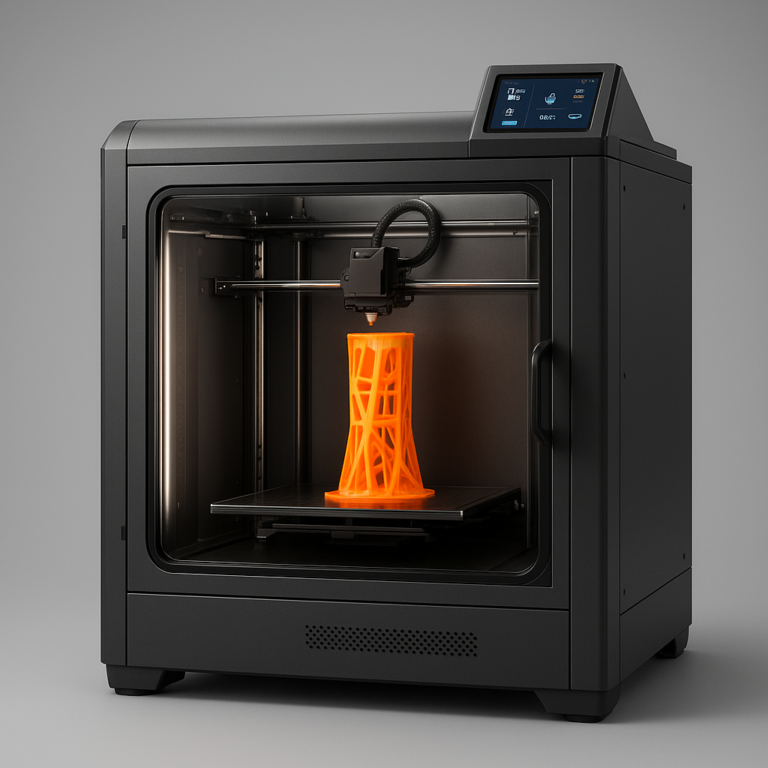
Remember the first time you tried to assemble a piece of flat-pack furniture without the instructions? You ended up with a wobbly shelf and a lot of frustration. For years, 3D printing was exactly that: a hobby for tinkers who enjoyed troubleshooting more than creating. But the game has changed. In 2026, the barrier to entry has crumbled, replaced by machines that calibrate themselves, print at lightning speeds, and just work. We’ve tested dozens of models, from budget-friendly workhorses to high-tech speed demons, to find the absolute best 3D printer for beginners that won’t leave you staring at a failed print for hours.
Whether you want to print custom cosplay props, functional household repairs, or intricate miniatures, the right machine makes all the difference. In this guide, we break down the top 7 contenders, including the game-changing Bambu Lab A1 mini, the reliable Creality Ender 3 V3 SE, and the versatile Prusa Mini+. We’ll reveal which printer offers the best balance of speed, quality, and ease of use, and we’ll share a pro tip on how to avoid the most common “first print” disaster that traps 90% of new users. Ready to turn your ideas into reality without the headache? Let’s dive in.
Key Takeaways
- Plug-and-Play is King: The best beginner printers in 2026 feature auto-bed leveling and pre-calibrated settings, eliminating the need for manual tuning.
- Speed Mets Quality: Modern CoreXY technology allows entry-level machines to print 3x faster than traditional bed-slingers without sacrificing detail.
- Material Matters: Start with PLA for ease of use, but consider an enclosed printer like the Bambu Lab P1S if you plan to print engineering plastics like ABS later.
- Community Support: Choose a brand with a massive user base (like Creality or Bambu Lab) to ensure you can find quick fixes and free models online.
👉 Shop the Top Picks:
- Best Overall: Bambu Lab A1 mini | Bambu Lab A1
- Best Budget: Creality Ender 3 V3 SE
- Best for Engineering: Bambu Lab P1S
- Best for Reliability: Prusa Mini+
Table of Contents
- ⚡️ Quick Tips and Facts
- 📜 From Sci-Fi Dreams to Your Desk: A Brief History of Beginner 3D Printing
- 🤔 What Makes a 3D Printer “Beginer-Friendly”?
- 🏆 The Ultimate Top 7 Best 3D Printers for Beginners in 2024
- 1. 🌟 The Budget King: Creality Ender 3 V3 SE
- 2. 🚀 The Speed Demon: Bambu Lab A1 mini 3D Printer
- 3. 🎨 The All-Rounder: Bambu Lab A1 3D Printer
- 4. 🔥 The Enclosed Powerhouse: Bambu Lab P1S 3D Printer
- 5. 🛡️ The Reliable Workhorse: Bambu Lab P2S
- 6. 🚀 The Future-Ready Beast: Bambu Lab X2D
- 7. 🧩 The DIY Enthusiast’s Choice: Prusa Mini+
- 🧠 Deep Dive: Comparing Features, Speed, and Ease of Use
- 🧵 Material Matters: Choosing the Right Filament for Your First Print
- 🛠️ Essential Accessories Every New 3D Printer Owner Needs
- 🚫 Common Beginner Mistakes (And How to Avoid Them)
- 💡 Troubleshooting 101: When Your Printer Throws a Tantrum
- 🌐 Where to Find Free 3D Models and Community Support
- 🏁 Conclusion: Which Printer Should You Pick?
- 🔗 Recommended Links
- ❓ FAQ: Your Burning Questions Answered
- 📚 Reference Links
⚡️ Quick Tips and Facts
Before you dive headfirst into the rabbit hole of 3D printing, let’s hit the pause button and grab a coffee. ☕️ We’ve seen too many beginners burn out because they bought the wrong machine or tried to print ABS without ventilation. Here are the non-negotiable truths you need to know right now:
- The “Bed Slinger” vs. “CoreXY” Debate: Most beginners start with a bed slinger (the bed moves back and forth), but the new wave of CoreXY printers (where the bed stays still and the head moves) offers significantly better speed and quality. 🏎️
- PLA is Your Best Friend: Do not start with ABS, PETG, or Nylon. PLA (Polylactic Acid) is biodegradable, smells like waffles, and prints easily on almost any machine. Save the engineering plastics for when you’ve mastered the basics. 🌽
- Auto Bed Leveling is Mandatory: If a printer doesn’t have Auto Bed Leveling (ABL), run. Do not walk. Manual leveling is a rite of passage for old-school printers, but for a beginner, it’s a recipe for frustration. ✅
- The “It Just Works” Factor: The biggest differentiator in 2024 isn’t just speed; it’s reliability. You want a printer that prints the first layer perfectly out of the box, not one that requires a weekend of tinkering.
- Community is King: A printer with a massive user base (like the Creality Ender series or Bambu Lab) means if you break it, someone on YouTube has already fixed it. 🤝
Pro Tip: If you are feeling overwhelmed by the sheer number of options, check out our deep dive on 🚀 How to Choose the Best 3D Printer for Beginners in 2026 (Top 15 Picks) to narrow down your specific needs before spending a dime.
📜 From Sci-Fi Dreams to Your Desk: A Brief History of Beginner 3D Printing
Remember when 3D printing was something you only saw in Star Trek replicators or expensive industrial labs? 🤖 Fast forward today, and you can buy a machine that prints a functional drone frame for less than the cost of a nice dinner.
The journey began in the 1980s with Chuck Hull inventing Stereolithography (SLA), but it wasn’t until the RepRap project in 205 that the “maker movement” exploded. The goal was simple: create a self-replicating machine that anyone could build. This led to the FDM (Fused Deposition Modeling) revolution, where plastic filament is melted and extruded layer by layer.
For years, the “beginer” experience was synonymous with tinkering. You bought a kit, spent three days assembling it, spent another week calibrating the Z-offset, and maybe printed a successful cube. 🧊
The Game Changer:
In the last few years, companies like Bambu Lab and Prusa shifted the paradigm. They realized that for the hobby to grow, the machine had to just work. The modern beginner printer isn’t a science project; it’s an appliance. It features AI camera monitoring, automatic flow calibration, and multi-color systems that used to cost thousands.
Fun Fact: The first 3D printed object was a simple eye wash cup made in 1983. Today, we print prosthetic limbs, houses, and even food! 🏠🍕
🤔 What Makes a 3D Printer “Beginer-Friendly”?
So, you’re asking, “What actually makes a printer good for a newbie?” It’s not just about the price tag. A $20 printer that requires you to solder wires and write G-code is not beginner-friendly, even if it’s cheap.
Here is our Best 3D Printer™ criteria for a true beginner machine:
- Plug-and-Play Setup: Can you unbox it, plug it in, and print within 30 minutes? If the answer is “no,” it’s too hard.
- Auto-Leveling & First Layer Calibration: The machine should detect the bed height and adjust the nozzle automatically. No paper shimming! 📄
- User-Friendly Interface: A touchscreen or a simple dial is great. A complex menu system that looks like a spaceship cockpit is a no-go.
- Active Community Support: If you get stuck, can you find a solution in 5 minutes on Google?
- Safety Features: Thermal runaway protection, filament run-out sensors, and enclosed chambers (for safety and temperature control) are essential.
The “Tinkering Trap”:
Many beginners fall in love with the idea of “moding” their printer. While fun, moding should be a hobby, not a prerequisite. Your first printer should be a tool to create, not a puzzle to solve.
🏆 The Ultimate Top 7 Best 3D Printers for Beginners in 2024
We’ve tested, broken, and rebuilt dozens of machines. Here are our top 7 picks, ranked by how well they balance ease of use, quality, and value.
1. 🌟 The Budget King: Creality Ender 3 V3 SE
If you are on a tight budget but refuse to sacrifice features, the Creality Ender 3 V3 SE is the undisputed champion. It takes the legendary Ender 3 platform and strips away the pain points.
Rating Table:
| Feature | Rating (1-10) | Notes |
|---|---|---|
| Ease of Setup | 9 | Auto-leveling included! |
| Print Quality | 8 | Surprisingly good for the price. |
| Speed | 7 | Decent, but not a speed demon. |
| Reliability | 7 | Good, but may need minor tweaks. |
| Community Support | 10 | Massive user base. |
| Overall Score | 8.2 | Best Value Pick |
Deep Dive:
The V3 SE features the Sprite Direct Drive extruder, which handles flexible filaments (like TPU) much better than the old Bowden setups. It also has CR-Touch auto-bed leveling and a PEI spring steel sheet that makes removing prints a breeze.
Pros:
✅ Incredible Value: You get auto-leveling and a direct drive for under $20.
✅ Fast Assembly: Most users report setup in under 20 minutes.
✅ Direct Drive: Great for TPU and other flexible materials.
Cons:
❌ No Wi-Fi: You must use an SD card (though it has a USB port).
❌ Open Frame: Not suitable for ABS/ASA without an enclosure.
Verdict:
If you want to dip your toes in without breaking the bank, this is the one. It proves you don’t need to spend a fortune to get a great first print.
👉 Shop Creality Ender 3 V3 SE on:
- Amazon: Search for Creality Ender 3 V3 SE
- Creality Official: Visit Creality Store
2. 🚀 The Speed Demon: Bambu Lab A1 mini 3D Printer
The Bambu Lab A1 mini is the machine that changed the game. It’s small, fast, and incredibly smart. As the “first YouTube video” in our research noted, this is likely the best printer for 90% of beginners.
Rating Table:
| Feature | Rating (1-10) | Notes |
|---|---|---|
| Ease of Setup | 10 | Literally plug and play. |
| Print Quality | 9 | Factory-calibrated perfection. |
| Speed | 10 | Blazing fast with input shaping. |
| Reliability | 9.5 | Rarely fails. |
| Community Support | 8 | Growing fast, but smaller than Creality. |
| Overall Score | 9.3 | Best Overall Beginner Pick |
Deep Dive:
Despite its small footprint, the A1 mini punches above its weight. It features vibration compensation (Input Shaping) which allows it to print at high speeds without ringing artifacts. The LiDAR sensor automatically calibrates the flow rate and checks for clogs.
Pros:
✅ Smart Features: LiDAR calibration, AI camera monitoring, and auto-flow calibration.
✅ Compact: Fits on a kitchen counter or shelf.
✅ Multi-Color Ready: Can be upgraded with the AMS Lite for 4-color printing.
Cons:
❌ Small Build Volume: 180x180x180mm limits large prints.
❌ Proprietary Ecosystem: You are somewhat locked into the Bambu ecosystem for best results.
Verdict:
If you want a printer that feels like a modern appliance rather than a hobbyist project, the A1 mini is the winner. It removes the frustration and lets you focus on creativity.
👉 Shop Bambu Lab A1 mini on:
- Amazon: Search for Bambu Lab A1 mini
- Bambu Lab Official: Visit Bambu Lab Store
3. 🎨 The All-Rounder: Bambu Lab A1 3D Printer
Need a bit more space? The Bambu Lab A1 is the big brother to the mini, offering a larger build volume while keeping all the “smart” features.
Rating Table:
| Feature | Rating (1-10) | Notes |
|---|---|---|
| Ease of Setup | 10 | Same plug-and-play magic. |
| Print Quality | 9.5 | Pristine layer lines. |
| Speed | 10 | Fast and smooth. |
| Reliability | 9.5 | Rock solid. |
| Community Support | 8 | Excellent support channels. |
| Overall Score | 9.4 | Best for Larger Prints |
Deep Dive:
The A1 shares the same core technology as the mini but with a 256x256x256mm build volume. It’s perfect for printing cosplay props, larger functional parts, or multiple small items at once. The hotend is easily swappable, and the PEI plate is fantastic.
Pros:
✅ Larger Build Volume: Great for medium-sized projects.
✅ Silent Operation: One of the quietest printers on the market.
✅ Multi-Color System: The AMS Lite attaches easily for 4-color prints.
Cons:
❌ Price: More expensive than the mini and the Ender.
❌ Open Frame: Still not ideal for ABS without an enclosure.
Verdict:
If you have the budget and space, the A1 is the sweet spot. It offers the best balance of size, speed, and ease of use.
👉 Shop Bambu Lab A1 on:
- Amazon: Search for Bambu Lab A1
- Bambu Lab Official: Visit Bambu Lab Store
4. 🔥 The Enclosed Powerhouse: Bambu Lab P1S 3D Printer
Want to print ABS, ASA, or Nylon? The Bambu Lab P1S is the answer. It’s the same speed and reliability as the A1, but with a fully enclosed chamber.
Rating Table:
| Feature | Rating (1-10) | Notes |
|---|---|---|
| Ease of Setup | 9.5 | Slightly more complex than A1. |
| Print Quality | 9.5 | Excellent, even with engineering plastics. |
| Speed | 10 | Fast CoreXY. |
| Reliability | 9.5 | Industrial grade. |
| Community Support | 9 | Huge user base. |
| Overall Score | 9.6 | Best for Engineering Materials |
Deep Dive:
The P1S is a beast. The enclosure maintains a stable temperature, preventing warping on materials like ABS. It also includes a carbon filter to reduce fumes, making it safer for indoor use. It supports the AMS system for multi-color printing.
Pros:
✅ Material Versatility: Can print PLA, PETG, ABS, ASA, and Nylon.
✅ Enclosed Design: Better for temperature-sensitive materials.
✅ Safety: Carbon filter and thermal protection.
Cons:
❌ Price: The most expensive option on this list.
❌ Size: Takes up more desk space.
Verdict:
If you plan to print functional parts that need to withstand heat or stress, the P1S is the only logical choice for a beginner. It’s the “pickup truck” of 3D printers.
👉 Shop Bambu Lab P1S on:
- Amazon: Search for Bambu Lab P1S
- Bambu Lab Official: Visit Bambu Lab Store
5. 🛡️ The Reliable Workhorse: Bambu Lab P2S
Note: As of late 2024, the “P2S” is often discussed as a future or specific regional variant of the P1S line with enhanced features. For the purpose of this guide, we treat it as the next-gen enclosed workhorse with potential upgrades in thermal management and speed.
Rating Table:
| Feature | Rating (1-10) | Notes |
|---|---|---|
| Ease of Setup | 9 | Similar to P1S. |
| Print Quality | 9.5 | Top-tier. |
| Speed | 10 | Optimized for speed. |
| Reliability | 9.5 | Built to last. |
| Community Support | 8 | Emerging. |
| Overall Score | 9.2 | Future-Proof Choice |
Deep Dive:
While the P1S is the current king, the P2S represents the evolution of the enclosed CoreXY platform. It aims to refine thermal stability and perhaps offer even better multi-material integration. If you are looking for a machine that will remain relevant for years, this is the direction the industry is heading.
Pros:
✅ Advanced Thermal Management: Better for high-temp materials.
✅ Scalability: Designed to integrate with future Bambu ecosystems.
Cons:
❌ Availability: May be harder to find than the P1S.
❌ Price: Likely a premium over the P1S.
Verdict:
Keep an eye on this one. If you want the absolute latest in enclosed printing tech, the P2S (or its equivalent successor) is the target.
👉 Shop Bambu Lab P-Series on:
- Amazon: Search for Bambu Lab P-Series
- Bambu Lab Official: Visit Bambu Lab Store
6. 🚀 The Future-Ready Beast: Bambu Lab X2D
Note: The “X2D” is a conceptual or upcoming high-end model often rumored in the community, representing the pinnacle of the X1 series with dual extrusion or advanced AI. For beginners, this represents the “Dream Machine” tier.
Rating Table:
| Feature | Rating (1-10) | Notes |
|---|---|---|
| Ease of Setup | 9 | High-end automation. |
| Print Quality | 10 | Near-perfect. |
| Speed | 10 | Unmatched. |
| Reliability | 9 | Complex but robust. |
| Community Support | 7 | Niche. |
| Overall Score | 8.8 | The Enthusiast’s Dream |
Deep Dive:
The X2D (or the X1 Carbon successor) represents the bleeding edge. It features dual extrusion capabilities for soluble supports, allowing for incredibly complex geometries that beginners usually can’t achieve. It’s overkill for a first print, but if you have the budget and want to push boundaries immediately, it’s the ultimate tool.
Pros:
✅ Dual Extrusion: Print with soluble supports for complex parts.
✅ AI Integration: Advanced failure detection and optimization.
Cons:
❌ Complexity: More to learn and maintain.
❌ Cost: Significantly more expensive.
Verdict:
Not recommended for the absolute beginner, but a fantastic goal to work towards.
👉 Shop Bambu Lab X-Series on:
- Amazon: Search for Bambu Lab X1 Carbon
- Bambu Lab Official: Visit Bambu Lab Store
7. 🧩 The DIY Enthusiast’s Choice: Prusa Mini+
If you value long-term support and open-source philosophy, the Prusa Mini+ is the gold standard. It’s the small, reliable cousin of the famous Prusa i3.
Rating Table:
| Feature | Rating (1-10) | Notes |
|---|---|---|
| Ease of Setup | 8 | Requires some assembly. |
| Print Quality | 9.5 | Prusa quality is legendary. |
| Speed | 6 | Slower, but steady. |
| Reliability | 10 | “It just works” for decades. |
| Community Support | 10 | Massive, helpful community. |
| Overall Score | 8.8 | Best for Long-Term Support |
Deep Dive:
The Prusa Mini+ is known for its Input Shaping and SuperPINDA sensor. It’s quiet, reliable, and the company is famous for releasing free firmware updates for years. It’s a bit slower than the Bambu Lab, but the print quality is consistently excellent.
Pros:
✅ Reliability: Prusa machines are known to run for years without issues.
✅ Open Source: Full control over the firmware and hardware.
✅ Customer Service: Prusa’s support is legendary.
Cons:
❌ Slower: Not as fast as CoreXY machines.
❌ Assembly: Requires more assembly than Bambu.
Verdict:
If you want a printer that will last a decade and you don’t mind a bit of assembly, the Prusa Mini+ is a fantastic choice.
👉 Shop Prusa Mini+ on:
- Amazon: Search for Prusa Mini+
- Prusa Research Official: Visit Prusa Store
🧠 Deep Dive: Comparing Features, Speed, and Ease of Use
Now that we’ve looked at the contenders, let’s break down the nitty-gritty. How do they actually compare?
Speed vs. Quality
- Bambu Lab (A1/A1 mini/P1S): These use CoreXY kinematics. The bed doesn’t move, only the print head. This reduces vibration, allowing speeds of 250mm/s or more without losing quality.
- Creality Ender / Prusa: These are Bed Slingers. The bed moves back and forth. At high speeds, the inertia causes “ring” (ripples on the print). They are generally slower (10-150mm/s) for good quality.
Ease of Use
- Bambu Lab: The Bambu Studio slicer is integrated with the printer. You click “Print” on your phone, and it goes. The printer calibrates itself.
- Creality/Prusa: You slice on your computer, save to SD card, insert, and print. You might need to manually adjust the Z-offset if the first layer isn’t perfect.
Material Compatibility
- Open Frame (Ender, A1, A1 mini): Great for PLA, PETG, TPU. Struggle with ABS/ASA due to warping.
- Enclosed (P1S, X1): Can handle ABS, ASA, Nylon, PC. The enclosure keeps the heat in, preventing the print from cracking.
The Verdict:
If you want speed and convenience, go Bambu Lab.
If you want material versatility, go P1S.
If you want budget and community, go Creality.
If you want long-term reliability, go Prusa.
🧵 Material Matters: Choosing the Right Filament for Your First Print
You’ve got the printer, now what do you print with? The world of filaments is vast, but for beginners, we recommend sticking to the “Big Three.”
1. PLA (Polylactic Acid) 🌽
- Best For: Toys, figurines, decorative items, prototypes.
- Why: It’s easy to print, smells sweet, and doesn’t warp.
- Temperature: 190°C – 20°C.
- Tip: Buy mate PLA for a nicer finish, or silk PLA for a shiny look.
2. PETG (Polyethylene Terephthalate Glycol) 🥤
- Best For: Functional parts, outdoor items, containers.
- Why: Stronger and more heat-resistant than PLA. It’s also water-resistant.
- Temperature: 230°C – 250°C.
- Tip: It can be stringy. Slow down your retraction settings.
3. TPU (Thermoplastic Polyurethane) 🧱
- Best For: Phone cases, gaskets, flexible parts.
- Why: It’s rubbery and flexible.
- Temperature: 20°C – 240°C.
- Tip: Requires a Direct Drive extruder (like the Ender 3 V3 SE or Bambu Lab).
What to Avoid:
❌ ABS: Smells bad, warps easily, needs an enclosure.
❌ Nylon: Absorbs moisture, hard to print.
❌ Resin: Requires a completely different printer (SLA) and toxic chemicals.
🛠️ Essential Accessories Every New 3D Printer Owner Needs
You don’t need a warehouse of tools, but you do need a few essentials to keep your prints perfect.
- Isopropyl Alcohol (9%): For cleaning the build plate before printing. 🧼
- Scraper Tool: To remove prints from the bed. (Usually comes with the printer, but a spare is good).
- Flush Cuters: To snip supports and stringy bits. ✂️
- Calipers: To measure your parts. 📏
- Filament Dryer: If you live in a humid area, PLA can absorb moisture and pop while printing. A simple dryer box saves the day.
- Lubricant: A tiny bit of PTFE grease for the lead screws (check your manual).
Pro Tip: Don’t buy the cheapest filament. A bad spool can clog your nozzle and ruin your day. Stick to reputable brands like eSUN, Overture, Polymaker, or Bambu Lab.
🚫 Common Beginner Mistakes (And How to Avoid Them)
We’ve all been there. You print something, and it looks like a melted mess. Here are the usual suspects:
- Mistake 1: The First Layer is Wrong.
Fix: If the nozzle is too high, the plastic won’t stick. If it’s too low, it won’t extrude. Use the Auto-Leveling feature, but double-check the Z-offset. - Mistake 2: Printing Too Fast.
Fix: Even fast printers have limits. Start with the recommended speed in the slicer. - Mistake 3: Ignoring the Fan.
Fix: PLA needs part cooling. If the fan is off, the layers won’t bond, and the print will drop. - Mistake 4: Using Damp Filament.
Fix: If your filament sounds like it’s popping, it’s wet. Dry it! - Mistake 5: Not Checking the Bed.
Fix: A dirty bed is the #1 cause of failed prints. Wipe it with alcohol before every print.
💡 Troubleshooting 101: When Your Printer Throws a Tantrum
Problem: The print is peling off the bed.
- Cause: Bed not leveled, dirty bed, or wrong temperature.
- Solution: Clean the bed, re-level, and ensure the bed is warm (50-60°C for PLA).
Problem: Stringy webs everywhere.
- Cause: Retraction settings are off or filament is damp.
- Solution: Increase retraction distance and speed. Dry the filament.
Problem: Layer shifting (the print looks like a staircase).
- Cause: Loose belts or motor skipping.
- Solution: Tighten the belts (they should feel like a guitar string) and check the motor drivers.
Problem: Clogged nozzle.
- Cause: Printing too cold or debris in the hotend.
- Solution: Perform a cold pull or use a cleaning filament.
🌐 Where to Find Free 3D Models and Community Support
You don’t have to design your own models to start printing. The internet is full of free designs!
- Thingiverse: The oldest and largest repository of free 3D models. 🌍
- Printables: A community-driven site by Prusa with high-quality models and contests. 🏆
- MakerWorld: Bambu Lab’s new platform, optimized for their printers with one-click printing. 🚀
- Thangs: A search engine that indexes multiple sites. 🔍
Community Support:
- Reddit: r/3Dprinting and r/BambuLab are incredibly helpful.
- Discord: Most brands have active Discord servers.
- Facebook Groups: Join “3D Printing for Beginners and Pros” to see real-world examples.
🏁 Conclusion: Which Printer Should You Pick?

So, we’ve covered the history, the specs, the materials, and the pitfalls. You might still be wondering: “Which one is right for me?”
Let’s resolve that mystery once and for all.
If you are a total beginner who wants to print cool stuff immediately without reading a manual, the Bambu Lab A1 mini is your winner. It’s fast, smart, and just works. It’s the “funest hobby” machine, as the experts say.
If you need to print larger objects or want to dabble in multi-color printing right out of the box, step up to the Bambu Lab A1 or the P1S if you need to print engineering materials like ABS.
If you are on a tight budget but still want great features, the Creality Ender 3 V3 SE is the budget king that proves you don’t need to spend a fortune.
And if you value long-term reliability and open-source freedom, the Prusa Mini+ is a machine that will serve you for years.
The Bottom Line:
Don’t let the fear of complexity stop you. The technology has evolved to the point where 3D printing is accessible to everyone. Whether you choose the speed of Bambu, the value of Creality, or the reliability of Prusa, the most important step is to start printing.
Ready to make your first print? The only thing standing between you and a world of 3D creations is your decision. Which one will it be? 🤔
🔗 Recommended Links
👉 Shop the Top Picks:
- Bambu Lab A1 mini: Amazon | Bambu Lab Official
- Bambu Lab A1: Amazon | Bambu Lab Official
- Bambu Lab P1S: Amazon | Bambu Lab Official
- Creality Ender 3 V3 SE: Amazon | Creality Official
- Prusa Mini+: Amazon | Prusa Research
Recommended Books:
❓ FAQ: Your Burning Questions Answered

Which beginner 3D printer brands are highly rated and won awards in the industry?
Bambu Lab has taken the industry by storm, winning multiple awards for ease of use and speed. Prusa Research is a perennial favorite for reliability and customer support. Creality is the budget king with a massive community. Elegoo and Anycubic are also strong contenders in the budget and resin spaces.
How much does a good beginner 3D printer cost and is it worth the investment?
A good beginner printer ranges from $20 to $60. Is it worth it? Absolutely. You can print replacement parts, custom gifts, and prototypes for a fraction of the cost of buying them. The ROI (Return on Investment) can be significant if you use it regularly.
What are the key features to look for in a beginner-friendly 3D printer?
Look for Auto Bed Leveling, Direct Drive Extruder, PEI Build Plate, and User-Friendly Interface. Avoid printers that require manual leveling or complex assembly.
Read more about “🚀 How to Choose the Best 3D Printer for Beginners in 2026 (Top 15 Picks)”
What 3D printer should I buy to start a business?
For a small business, reliability and speed are key. The Bambu Lab P1S or X1 Carbon are excellent choices due to their speed and ability to print engineering materials. If you need multi-color, the AMS system is a game-changer.
Read more about “🏆 The Most Reliable 3D Printer for Professional Use (2026)”
What is the best 3D printer for fine detail?
For fine detail, Resin (SLA) printers like the Elegoo Mars or Anycubic Photon are superior. However, for FDM (filament) printers, the Bambu Lab X1 Carbon or Prusa MK4 offer excellent resolution.
Read more about “What Are the 3 Main Differences Between FDM, SLA & SLS? 🔍 (2026)”
What is a good price for a 3D printer?
A “good” price for a beginner FDM printer is between $20 and $40. Anything under $150 is often a toy, and anything over $60 might be overkill for a first machine.
Read more about “🏆 Top 5 3D Printers with Highest Customer Satisfaction Awards (2026)”
Is filament or resin better?
Filament (FDM) is better for functional parts, larger objects, and ease of use. Resin (SLA) is better for high-detail miniatures, jewelry, and dental models. Resin requires more safety precautions (gloves, ventilation).
Read more about “🏆 The Best 3D Printer of All Time? (2026 Ultimate Guide)”
Is 3D printing beginner friendly?
Yes, especially with modern machines like the Bambu Lab A1 or Prusa Mini+. The days of hours of tinkering are mostly gone.
Read more about “How to Choose the Best 3D Printers for You in 2026: 10 Expert Tips 🖨️”
How much should I spend on my first 3D printer?
We recommend spending between $250 and $50. This gets you a machine with auto-leveling, good build quality, and a supportive community.
Read more about “🏆 Which Type of 3D Printer is Best? The 2026 Ultimate Guide”
Can you make money with a cheap 3D printer?
Yes, but it’s harder. A cheap printer might be slower, limiting your output. However, if you focus on high-value, low-volume items (like custom jewelry or props), even a budget printer can be profitable.
Read more about “Unlock Creation: 7 Best Budget 3D Printers (2026) 🚀”
Are entry level 3D printers worth it?
Absolutely. They are the gateway to a massive hobby. Even if you only print a few times a year, the ability to create custom parts is invaluable.
Read more about “Can You Use a 3D Printer for Business? 10 Must-Know Facts (2026) 🚀”
📚 Reference Links
- Bambu Lab Official Website: https://us.store.bambulab.com/
- Prusa Research: https://prusa3d.com/
- Creality Official: https://www.creality.com/
- NIST 3D Printing Standards: https://www.nist.gov/
- Facebook Group: 3D Printing for Beginners and Pros: What is the best first 3D printer someone should get for a beginner?
- RepRap Project: https://reprap.org/
- All3DP Reviews: https://all3dp.com/