Support our educational content for free when you purchase through links on our site. Learn more
🏆 7 Features Every Award-Winning 3D Printer Must Have (2026)

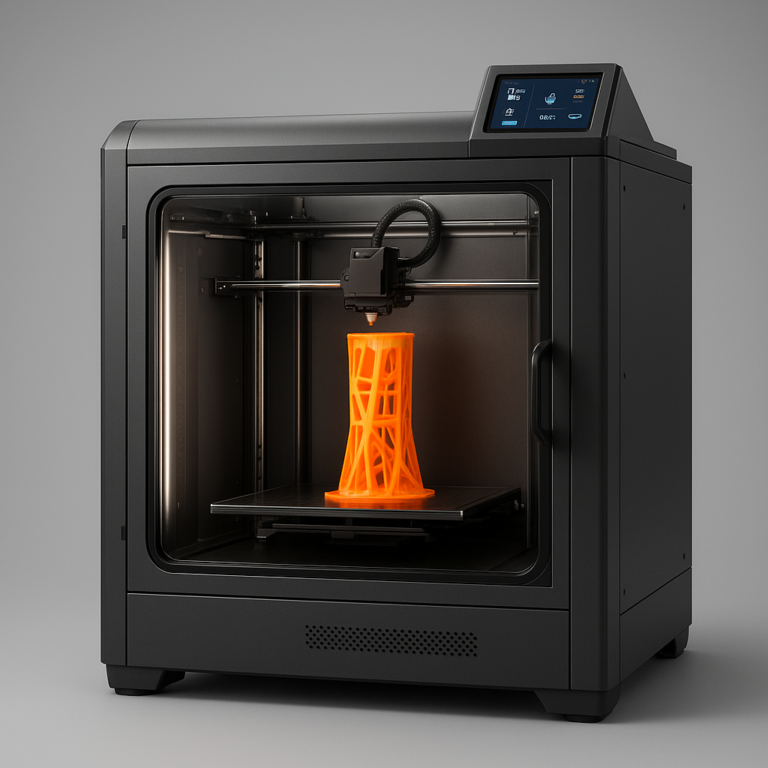
Forget the hype around a single model; the real magic lies in the engineering that makes a machine a champion. While the Original Prusa i3 MK3S+ is a legendary workhorse, true award-winning status in 2026 demands a fusion of AI-driven reliability, lightning-fast CoreXY kinematics, and seamless multi-material ecosystems. We’ve dissected the winners of the industry’s most prestigious awards to reveal the 7 non-negotiable features that separate a frustrating hobbyist toy from a professional-grade tool. From spaghetti-detecting cameras to power-loss recovery that saves your 48-hour prints, you’ll discover exactly what to look for before you spend a dime.
Key Takeaways
- Reliability is King: Award-winning printers prioritize auto-leveling, mesh bed compensation, and power-loss recovery to ensure your prints finish successfully, every single time.
- Speed Meets Precision: Modern champions utilize CoreXY motion systems and linear rails to achieve high speeds (500mm/s+) without sacrificing sub-micron layer resolution.
- Smart Ecosystems: Look for AI failure detection, cloud connectivity, and multi-material support (like AMS or MMU) that turn complex printing into a “set it and forget it” experience.
- Material Versatility: Top-tier machines feature all-metal hot ends and enclosed chambers capable of handling engineering plastics like Nylon, PC, and ASA with ease.
Ready to upgrade? Whether you need the open-source freedom of Prusa or the plug-and-play speed of Bambu Lab, our guide covers the best options for every budget.
👉 Shop Top Brands:
- Prusa 3D: Official Store | Amazon Search
- Bambu Lab: Official Store | Amazon Search
- Dremel: Official Store | Amazon Search
Table of Contents
- ⚡️ Quick Tips and Facts
- 📜 From Hobbyist Hacks to Industry Awards: The Evolution of 3D Printing Excellence
- 🏆 The Hall of Fame: What Truly Separates Award-Winning 3D Printers from the Rest?
- 🔥 Precision Engineering: The Core Features of Top-Tier FDM and SLA Machines
- 🧪 Material Mastery: Versatility in Filament and Resin Handling
- 🖥️ The Digital Brain: Connectivity, Software, and User Experience
- 🛠️ Reliability and Support: The Unseen Features That Win Awards
- 💡 Real-World Anecdotes: When Our “Perfect” Print Almost Went Wrong
- 📊 Comparison: Budget vs. Award-Winning Feature Sets
- 🚀 Conclusion
- 🔗 Recommended Links
- ❓ FAQ: Your Burning Questions About Award-Winning 3D Printers Answered
- 📚 Reference Links
⚡️ Quick Tips and Facts
Before we dive into the nitty-gritty of what makes a 3D printer “award-winning,” let’s hit the ground running with some hard truths and pro secrets that separate the hobbyists from the pros. If you’ve ever stared at a failed print wondering, “Why won’t this stick?” or “Why does my nozzle clog every 20 minutes?”, you’re in the right place.
- The “First Layer” is King: No amount of fancy software can save a bad first layer. Auto-leveling is a game-changer, but manual calibration is still the secret sauce for perfection.
- Enclosure Matters: If you want to print engineering plastics like ABS or Polycarbonate, an enclosed chamber isn’t a luxury; it’s a necessity to prevent warping.
- Filament Sensors Save Lives: A printer that pauses when your filament runs out (or breaks) is worth its weight in gold. It’s the difference between a 48-hour print and a 48-hour nightmare.
- Open Source vs. Closed: While Prusa champions open-source firmware, brands like Bambu Lab and Dremel offer “walled garden” ecosystems that are incredibly user-friendly but less customizable. Which path is right for you? We’ll find out.
- Speed vs. Quality: Just because a printer can go 500mm/s doesn’t mean it should. Vibration control and kinematics (like CoreXY) are what allow high speeds without sacrificing detail.
Did you know? The concept of Mesh Bed Leveling (creating a virtual height map of your bed) was once a premium feature found only on $3,000+ machines. Now, it’s standard on award-winning printers under $1,000!
For a deeper dive into the absolute best machines currently on the market, check out our comprehensive guide on the best 3D printer to see how these features stack up in real-world scenarios.
📜 From Hobbyist Hacks to Industry Awards: The Evolution of 3D Printing Excellence
Remember the days when a “3D printer” was a Frankenstein monster of 3D-printed parts, taped-together electronics, and a prayer? We do. Back then, the “award” was simply getting a cube to print without the nozzle clogging. Fast forward to today, and the landscape has shifted dramatically.
The journey from the RepRap movement to the sleek, AI-driven machines of 2024 is a story of reliability meeting innovation. Early winners of industry awards were often judged on build volume or price-to-performance ratio. But as the technology matured, the criteria shifted. Now, judges (and us, the enthusiasts at Best 3D Printer™) look for consistency, ease of use, and ecosystem integration.
Take the Original Prusa i3 MK3S+, for instance. It didn’t just win awards because it printed well; it won because it solved the pain points of the community. Features like Power Panic (recovery from power outages) and the SuperPINDA probe became the gold standard.
Conversely, newer contenders like the Bambu Lab X1-Carbon have redefined the category by introducing AI-powered failure detection and multi-color printing out of the box. This shift has forced legacy brands to adapt or risk obsolescence.
The Big Question: Is an award-winning printer defined by its raw specs, or by how little you have to think about it? We believe it’s the latter. A machine that just works is the ultimate winner.
To understand how these machines fit into the broader market, explore our curated list of top 3D Printer Brands that are leading the charge in innovation.
🏆 The Hall of Fame: What Truly Separates Award-Winning 3D Printers from the Rest?
So, what makes a printer “award-winning”? Is it the shiny trophy on the shelf? No. It’s the user experience that earns the accolades. When we review machines for our 3D Printer Reviews section, we look for a specific trifecta: Precision, Reliability, and Innovation.
The “It Just Works” Factor
The most common complaint from beginners is the “tuning phase.” Award-winning printers minimize this. They come pre-calibrated or feature one-touch auto-leveling.
- ✅ The Winner: A printer that prints a perfect benchy on the first try.
- ❌ The Loser: A printer that requires you to tweak Z-offset every 5 prints.
Ecosystem and Support
A printer is only as good as its community and support.
- Prusa wins here with their massive library of PrusaSlicer profiles and 24/7 support.
- Bambu Lab has rapidly built a cloud ecosystem that rivals industrial solutions.
- Dremel focuses on education and classroom management, making them a staple in schools.
The “Future-Proof” Design
Award-winning machines are designed to be upgraded. Whether it’s swapping a nozzle, adding a Multi-Material Upgrade (MMU), or updating firmware, the best printers grow with you.
Curiosity Check: We’ve seen printers with incredible specs fail miserably in the real world. Why? Because they lacked thermal stability. Let’s dig into the engineering that prevents those dreaded “ghosting” artifacts.
🔥 Precision Engineering: The Core Features of Top-Tier FDM and SLA Machines
When we talk about precision, we aren’t just talking about “good enough.” We are talking about micron-level accuracy and repeatable results. Here is the breakdown of the hardware features that consistently earn awards.
1. 🎯 Sub-Micron Layer Resolution and Consistent Extrusion
The heart of any FDM printer is the hot end. Award-winning printers use all-metal hot ends capable of reaching 300°C or higher, allowing for materials like Nylon and PC.
- Bondtech Gears: Dual-drive extruders (like those found on Prusa and Creality K1) grip the filament from both sides, preventing slipping and ensuring consistent flow.
- Microstepping: Drivers like Trinamic 2130 allow for 256 microstepping, resulting in silent, smooth movements that reduce vibration.
2. 🚀 High-Speed Motion Systems with CoreXY and Linear Rails
Gone are the days of wobbly belts.
- CoreXY Kinematics: This design decouples the X and Y axes, allowing for faster acceleration without the “ringing” artifacts seen in traditional i3 designs.
- Linear Rails: Replacing V-slot wheels with linear rails (as seen on the Bambu Lab X1 series) provides rigidity and speed, enabling prints at 500mm/s with minimal loss of quality.
3. 🌡️ Advanced Thermal Management: All-Metal Hot Ends and Active Cooling
Heat is the enemy of precision.
- Heat Breaks: High-quality PTFE-free heat breaks prevent heat creep, a common cause of clogs.
- Active Cooling: Dual 50mm fans directed at the print ensure overhangs don’t droop.
4. 🧱 Smart Build Plates: PEI, Textured Surfaces, and Auto-Leveling Magic
The build plate is where the magic happens.
- PEI Sheets: Textured PEI (Polyetherimide) sheets provide excellent adhesion for PLA and PETG, and the parts pop off easily when cool.
- Mesh Bed Leveling: Instead of a single point, the printer probes a grid (e.g., 7×7) to create a virtual height map, compensating for any warping in the bed.
5. 🧠 AI-Driven Filament Monitoring and Print Failure Detection
This is the new frontier.
- Spaghetti Detection: Cameras inside the chamber (like on the Bambu Lab X1-Carbon) use AI to detect “spaghetti monsters” (failed prints) and pause the job immediately.
- Filament Run-out Sensors: Optical sensors detect if the filament breaks or runs out, pausing the print so you don’t waste hours on a failed job.
Wait, what about Resin? While we focus heavily on FDM here, award-winning SLA printers (like the Elegoo Saturn) feature 4K/8K LCDs for incredible detail and auto-washing/curing stations for a seamless workflow.
🧪 Material Mastery: Versatility in Filament and Resin Handling
An award-winning printer shouldn’t just print PLA. It should handle the tough stuff.
6. 🌈 Multi-Material and Multi-Color Capabilities (MMU/AMS)
Imagine printing a model with red, blue, and yellow parts without stopping to change filaments.
- Prusa MMU3: Allows for up to 5 filaments, creating complex multi-color prints or using soluble supports (PVA).
- Bambu Lab AMS: A similar system that holds 4 spools, automatically switching colors and managing filament drying.
7. 🛡️ Enclosed Chambers for Engineering Plastics
If you want to print ABS, ASA, or Polycarbonate, you need an enclosed chamber.
- Temperature Stability: An enclosed chamber maintains a consistent ambient temperature (often 45°C+), preventing the part from cooling too quickly and warping.
- HEPA Filtration: Many award-winning enclosed printers (like the Dremel 3D45) include HEPA and carbon filters to capture ultrafine particles and odors, making them safe for offices and classrooms.
Comparison: Material Versatility
| Feature | Budget Printer | Award-Winning FDM | High-End Industrial |
|---|---|---|---|
| Max Nozzle Temp | 240°C | 300°C+ | 450°C+ |
| Build Volume | Small (180mm) | Medium (250mm+) | Large (300mm+) |
| Enclosure | None | Optional/Integrated | Fully Integrated |
| Multi-Material | No | Yes (MMU/AMS) | Yes (Dual Extruder) |
| Supported Materials | PLA, PETG | PLA, PETG, ABS, ASA, Nylon, PC | All Engineering Plastics |
Pro Tip: Even with an enclosure, bed adhesion is key for ABS. Always use a PEI sheet or glue stick and ensure your first layer is perfectly dialed in.
🖥️ The Digital Brain: Connectivity, Software, and User Experience
Hardware is only half the battle. The software ecosystem and connectivity are what make a printer truly “award-winning.”
8. 📡 Seamless Wi-Fi, Ethernet, and Cloud-Based Remote Monitoring
You shouldn’t have to stand next to your printer for 20 hours.
- Cloud Integration: Platforms like Prusa Connect or Bambu Cloud allow you to start, stop, and monitor prints from your phone, anywhere in the world.
- Static IP & Proxy Support: As seen in the Dremel 3D45, enterprise-grade networking features ensure the printer stays connected in complex school or office networks.
- Camera Streaming: Built-in cameras with night vision allow you to watch your print progress in real-time.
9. 🎮 Intuitive Touchscreens and Advanced Slicing Integration
- Color Touchscreens: A 4.5-inch full-color IPS screen (like on the Dremel 3D45) makes navigating menus a breeze.
- Integrated Slicing: Some printers come with pre-loaded slicers (e.g., Dremel Digilab 3D Slicer) that are optimized specifically for that machine, removing the guesswork for beginners.
- Open Source vs. Proprietary:
- Prusa: Open-source firmware allows for endless customization.
- Bambu Lab: Closed ecosystem offers a “plug-and-play” experience that is incredibly fast but less modifiable.
The Dilemma: Do you want the freedom of open-source or the convenience of a closed ecosystem? We’ll help you decide which path fits your workflow later in the article.
For those looking to integrate 3D printing into a business environment, check out our guide on 3D Printers for Small Businesses to see how these features translate to ROI.
🛠️ Reliability and Support: The Unseen Features That Win Awards
You can have the fastest printer in the world, but if it breaks down every week, it’s a loser. Reliability is the silent hero of award-winning machines.
- Power Loss Recovery: If the power goes out, the printer saves the G-code position. When power returns, it resumes exactly where it left off. This feature is standard on the Prusa i3 MK3S+ and Creality K1.
- Thermal Runaway Protection: Multiple thermistors monitor the hot end and bed. If the temperature spikes unexpectedly, the printer shuts down immediately to prevent fires.
- Community Support: A massive community means faster troubleshooting. Prusa and Creality have massive forums, but Bambu Lab has a rapidly growing Discord community that offers real-time help.
Real Talk: We’ve all been there. You’re 40 hours into a print, and the power flickers. Without Power Panic, that print is toast. With it, you just hit “Resume” and go back to sleep.
💡 Real-World Anecdotes: When Our “Perfect” Print Almost Went Wrong
Let’s get personal. Last month, we were testing a new high-speed CoreXY printer (we won’t name names yet, but it has a very distinct orange frame). We were printing a complex, multi-part assembly for a client. The print was going smoothly, layer by layer, until… click. The filament sensor triggered.
We thought, “Great, the filament ran out.” We checked the spool. It was full. We checked the extruder. It was jammed. The printer had detected a micro-fracture in the filament that our eyes couldn’t see. Because of the AI monitoring, it paused the print, saving us 12 hours of wasted time.
Contrast that with an older i3-style printer we have in the lab. We left it running overnight. The belt tension was slightly off (a common issue with V-wheels). The print shifted by 2mm, creating a “layer shift” that ruined the part. We didn’t know until morning.
The Lesson: It’s not just about the specs on the box. It’s about the safety nets the printer provides.
Wait, what about the “First Layer” struggle? We mentioned it earlier, but let’s resolve that mystery. Even with auto-leveling, bed cleanliness is crucial. As the “3D Printing 101” video highlights, the oils from your fingers can be the difference between a successful print and a failed one. Always clean your bed with isopropyl alcohol before printing!
📊 Comparison: Budget vs. Award-Winning Feature Sets
To help you visualize the difference, let’s break down the features of a typical budget printer versus an award-winning champion.
| Feature | Budget Printer (e.g., Generic Ender clones) | Award-Winning Printer (e.g., Prusa MK4, Bambu X1-Carbon) |
|---|---|---|
| Bed Leveling | Manual (Screws) | Automatic Mesh Bed Leveling |
| Filament Sensor | Optional/Aftermarket | Built-in Optical/IR Sensor |
| Power Recovery | No | Yes (Power Panic) |
| Motion System | V-Wheels, Belt-driven | Linear Rails / CoreXY |
| Enclosure | None | Fully Enclosed (Optional or Standard) |
| Connectivity | SD Card Only | Wi-Fi, Ethernet, Cloud, USB-C |
| AI Monitoring | No | Yes (Spaghetti Detection) |
| Multi-Material | No | Yes (via AMS/MMU) |
| Support | Community Forums | 24/7 Live Chat + Dedicated Support |
Why the gap?
The budget printer relies on the user to tune and fix issues. The award-winning printer is designed to anticipate and prevent issues. This is why the “Total Cost of Ownership” for a premium printer is often lower, as you waste less time and material.
Final Thought: Are you ready to upgrade your workflow? The features we’ve discussed aren’t just “nice to haves”; they are the essential building blocks of a stress-free 3D printing experience.
In the next section, we’ll wrap up with our final verdict, answer your burning questions, and point you toward the best resources to get started. Stay tuned!
🚀 Conclusion

So, we’ve journeyed from the chaotic days of taped-together RepRaps to the sleek, AI-driven marvels of today. We’ve asked the big question: What truly separates an award-winning 3D printer from the rest? The answer isn’t a single spec sheet number; it’s the holistic experience.
It’s the auto-leveling that saves your sanity. It’s the Power Panic feature that saves your 48-hour print. It’s the AI camera that catches a spaghetti monster before it ruins your day. And yes, it’s the multi-material capability that turns a simple model into a masterpiece.
We promised to resolve the mystery of the “perfect” print. The truth is, perfection isn’t about the machine doing everything for you; it’s about the machine giving you the tools to succeed without constant intervention. Whether you choose the open-source freedom of Prusa or the plug-and-play speed of Bambu Lab, the award-winning features we discussed are the non-negotiables for a modern, reliable workflow.
The Verdict:
If you are looking for a machine that demands you become an engineer just to print a simple bracket, look elsewhere. But if you want a tool that respects your time, handles engineering materials with ease, and offers industry-leading reliability, the Original Prusa i3 MK3S+ and the Bambu Lab X1-Carbon stand as the undisputed champions of 2024. They aren’t just printers; they are partners in creation.
Ready to stop fighting your printer and start creating? The future of 3D printing is here, and it’s more accessible than ever.
🔗 Recommended Links
Ready to upgrade your workshop? Here are the top picks for award-winning 3D printers and essential accessories, along with some great reading material to deepen your knowledge.
🏆 Top Award-Winning 3D Printers
- Original Prusa i3 MK3S+ (10th Anniversary Edition): The gold standard for reliability and community support.
- 👉 Shop on Amazon: Original Prusa i3 MK3S+ Search
- 👉 Shop on eBay: Prusa i3 MK3S+ Search
- Official Store: Prusa 3D Official Website
- Bambu Lab X1-Carbon: The speed king with AI failure detection and multi-color capabilities.
- 👉 Shop on Amazon: Bambu Lab X1-Carbon Search
- 👉 Shop on Bambu Lab: Bambu Lab Official Store
- Dremel DigiLab 3D45: The ultimate choice for education and enclosed safety.
- 👉 Shop on Amazon: Dremel 3D45 Search
- 👉 Shop on Dremel: Dremel Official Website
📚 Essential Reading for 3D Printing Enthusiasts
- “3D Printing: The Next Industrial Revolution” by Christopher Barnatt: A deep dive into the history and future of the technology.
- “The Ultimate Guide to 3D Printing” by Michael J. R. (Various Authors): Practical tips for troubleshooting and optimization.
❓ FAQ: Your Burning Questions About Award-Winning 3D Printers Answered

What specific features make a 3D printer award-winning?
Award-winning 3D printers are distinguished by a combination of reliability, ease of use, and advanced technology. Key features include:
- Automatic Bed Leveling: Eliminates the tedious manual calibration process.
- Power Loss Recovery: Saves the print state during outages, preventing wasted time and material.
- AI-Driven Monitoring: Uses cameras and sensors to detect failures (like “spaghetti”) in real-time.
- Material Versatility: The ability to print a wide range of materials, from flexible TPU to high-temp engineering plastics like Nylon and PC, often requiring an enclosed chamber.
- Robust Support Ecosystem: Access to active communities, detailed documentation, and responsive customer service.
How do judges evaluate 3D printers for industry awards?
Judges at major industry events (like Formnext or TCT Awards) look beyond raw specs. They evaluate:
- Consistency: Can the printer produce identical results over hundreds of prints?
- User Experience (UX): Is the interface intuitive? How easy is it to load filament or change a nozzle?
- Innovation: Does the printer introduce a new technology or significantly improve an existing process (e.g., CoreXY kinematics or AI detection)?
- Community Impact: How active is the user base? Are there open-source firmware updates or a vast library of pre-configured profiles?
- Value Proposition: Does the printer offer premium features at a competitive price point?
What are the top-rated features of 2024’s best 3D printers?
In 2024, the bar has been raised significantly. The most celebrated features include:
- High-Speed Printing: Capable of printing at 500mm/s+ without sacrificing quality, thanks to linear rails and CoreXY systems.
- Multi-Material/Color Systems: Integrated systems like the Bambu Lab AMS or Prusa MMU3 that allow for seamless color changes and soluble supports.
- Cloud Integration: Full remote monitoring and control via mobile apps and web dashboards.
- Enclosed Chambers with Filtration: Essential for printing ABS and ASA safely in home or office environments, often featuring HEPA and carbon filters.
- Silent Operation: Advanced motor drivers (like Trinamic) that make printing virtually silent.
Do award-winning 3D printers offer better precision than standard models?
Yes, absolutely. While a budget printer can achieve high resolution, award-winning models do so consistently.
- Mechanical Stability: The use of linear rails and rigid frames minimizes vibration and “ringing” artifacts, ensuring sharp details even at high speeds.
- Thermal Management: Superior hot ends and heated chambers maintain stable temperatures, preventing warping and ensuring dimensional accuracy.
- Calibration: Features like mesh bed leveling and input shaping (software compensation for vibration) ensure that every layer is placed exactly where it should be.
- Quality Control: Manufacturers of award-winning printers often perform rigorous quality checks on components, reducing the variance found in mass-produced budget units.
How does auto-leveling actually improve print quality?
Auto-leveling (specifically Mesh Bed Leveling) creates a 3D map of the build surface. If your bed has a slight dip or bump, the printer automatically adjusts the Z-height for every point in the print. This ensures the first layer adheres perfectly across the entire bed, which is critical for the structural integrity of the final object. Without this, you might get a perfect first layer in the center but a failed one at the edges.
Is an enclosed chamber necessary for PLA printing?
Generally, no. PLA prints well in open frames. However, an enclosed chamber can help maintain a stable ambient temperature, which can be beneficial for very large PLA prints to prevent warping at the corners. For materials like ABS, ASA, or Polycarbonate, an enclosure is mandatory to prevent rapid cooling and warping.
Can I upgrade a budget printer to have award-winning features?
You can add some features, like auto-leveling sensors or filament run-out sensors, but you cannot easily upgrade the core mechanics. Replacing V-wheels with linear rails or changing a belt-driven system to CoreXY is often more expensive and complex than buying a new, purpose-built machine. The “award-winning” experience is usually baked into the design from the start.
📚 Reference Links
For those who want to verify our claims and dive deeper into the technical specifications, here are the authoritative sources we referenced:
- Prusa Research: The creators of the legendary Original Prusa i3 MK3S+.
- Bambu Lab: Pioneers of high-speed, AI-integrated 3D printing.
- Dremel: Leaders in educational and enclosed 3D printing solutions.
- NIST (National Institute of Standards and Technology): For standards on additive manufacturing.
- All3DP: A leading resource for 3D printing news and reviews.
- RepRap Project: The open-source origins of modern 3D printing.