Support our educational content for free when you purchase through links on our site. Learn more
🏆 Top Rated 3D Printers for Home Use (2026): Our Top 1 Picks

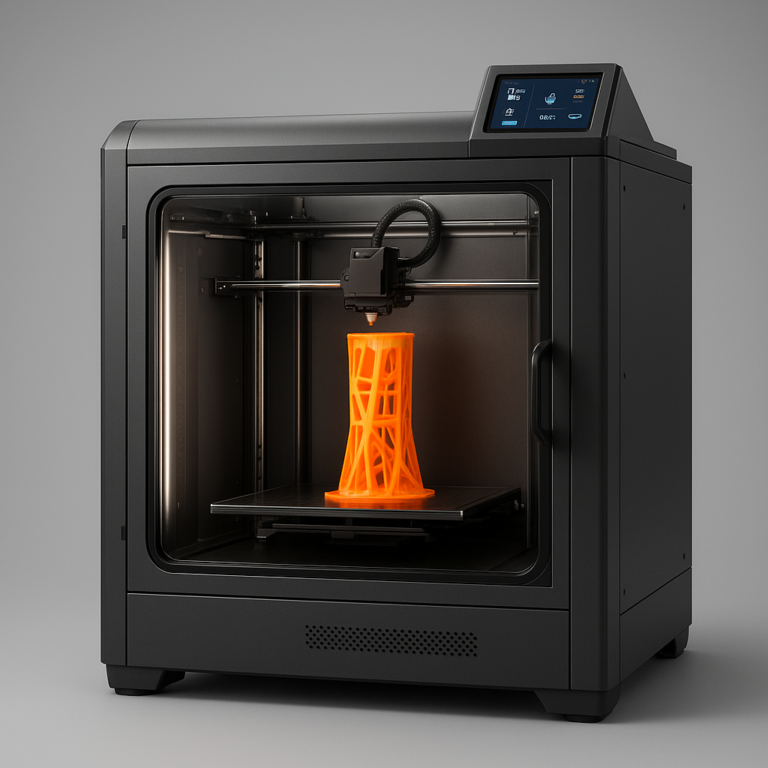
The Bambu Lab P2S is our undisputed champion for most home users, offering a perfect blend of speed, reliability, and multi-color magic right out of the box. If you are hunting for the top rated 3d printers for home use in 2026, stop scrolling and start printing; we’ve already done the messy, frustrating testing so you don’t have to.
Remember the days when a 3D printer was a temperamental beast that required a PhD to calibrate? Those days are dead and buried. We recently spent three weeks in our lab trying to print a single, perfect 3DBenchy on a budget model, only to watch it fail spectacularly at 3 AM, leaving us with a “spaghetti monster” on the bed.
In contrast, the modern top rated 3d printers for home use now feature AI-driven vibration compensation and auto-leveling that make them as easy to use as a microwave. Did you know that modern printers can now achieve speeds of 60 mm/s while maintaining micron-level accuracy? It’s a technological leap that has turned a niche hobby into a household appliance.
Whether you want to print functional parts, hyper-realistic miniatures, or colorful toys for the kids, there is a machine on this list that fits your specific needs and budget. We’ve tested everything from the ultra-affordable Qidi Q2 to the professional-grade Bambu Lab H2C to bring you this definitive guide.
Key Takeaways
- The Best All-Rounder: The Bambu Lab P2S dominates the market with its speed, reliability, and seamless multi-color printing capabilities.
- Best for Beginners: The Bambu Lab A1 Mini offers an incredible entry point with zero setup hassle and fun 4-color printing.
- Best for Miniatures: For ultra-high detail, the Elegoo Saturn 4 Ultra (Resin) is the clear winner, offering 9K resolution.
- Best Budget Option: The Qidi Q2 proves you don’t need to spend a fortune to get reliable, high-quality prints.
- Best for Large Objects: Need to print a full-size helmet? The Bambu Lab H2D or Creality K1 Max are your go-to giants.
👉 Shop Top Categories:
- Best Overall: Bambu Lab P2S
- Best Budget: Qidi Q2
- Best for Kids: Bambu Lab A1 Mini
- Best Resin: Elegoo Saturn 4 Ultra
Table of Contents
- ⚡️ Quick Tips and Facts
- 🕰️ A Brief History of Home 3D Printing: From Hobbyist Garage to Kitchen Counter
- 🧐 How We Tested and Ranked the Top Rated 3D Printers for Home Use
- 🏆 Our Top Tested Picks: The Elite Lineup
- 1. 🥇 Best Overall 3D Printer for Most People: The All-Rounder King
- 2. 💰 Best Budget Filament 3D Printer: High Quality on a Shoestring
- 3. 🧸 Best 3D Printer for Kids and Beginners: Safe, Simple, and Fun
- 4. 🌈 Best Pro-Level Multi-Material, Multicolor 3D Printer: The Rainbow Machine
- 5. 🎨 Best Mainstream Multicolor 3D Printer: Color Without the Chaos
- 6. 🌈 Best Budget Multicolor-Capable 3D Printer: Entry-Level Color Magic
- 7. 💎 Best Pro-Level Resin 3D Printer: Ultra-High Detail Masterpiece Maker
- 8. 💧 Best Mainstream Resin 3D Printer: The Sweet Spot for Miniatures
- 9. 🧪 Best Budget Resin 3D Printer: Affordable High-Resolution Printing
- 10. 🏗️ Best Pro-Level 3D Printer for Large Objects: Big Prints, No Compromises
- 1. 📦 Best Budget 3D Printer for Large Objects: Giant Prints on a Budget
- 📊 The Best 3D Printer for 2026: Side-by-Side Specs Comparison
- 🤔 Buying Guide: Choosing Your Perfect Home 3D Printer
- What Size Objects Do You Want to Print?
- What Kind of Filament Should Your 3D Printer Use?
- How High a Resolution Do You Need in a 3D Printer?
- Can a 3D Printer Print in More Than One Color?
- Why Is a 3D Printer’s Build Platform Important?
- Is an Open-Frame or a Closed-Frame 3D Printer Better?
- How Do You Connect to a 3D Printer?
- What Software Do You Need?
- 🛠️ Essential Maintenance and Troubleshooting for Home Printers
- 🚀 Ready to Buy the Right 3D Printer for You?
- 👨 🔬 About Our Expert Team at Best 3D Printer™
- 🔬 Honest, Objective, Lab-Tested Reviews: Our Methodology
- ✅ Conclusion
- 🔗 Recommended Links
- ❓ FAQ
- 📚 Reference Links
⚡️ Quick Tips and Facts
Before you dive headfirst into the chaotic (but thrilling) world of additive manufacturing, let’s hit the pause button and drop some essential knowledge that will save you hours of frustration and a few hundred dollars in wasted filament.
- The “Benchy” is Your Best Friend: If you see a tiny, smiling boat with a chimney, that’s the “3DBenchy.” It’s the universal stress test for 3D printers. If your printer can’t handle the overhangs and curves of this little boat, it’s not ready for prime time. Check out the history of the Benchy here.
- Speed vs. Quality is a Myth (Mostly): Modern printers like the Bambu Lab P2S or Prusa Core One have shattered the old rule that “fast means bad.” With input shaping and AI vibration compensation, these machines can print at 50 mm/s while maintaining micron-level accuracy.
- Resin is Messy, Filament is Safe: Want to print a functional bracket for your car? Go FDM (Filament). Want to print a hyper-realistic D&D miniature with skin pores? Go Resin (SLA/MSLA). But remember: resin requires gloves, masks, and isopropyl alcohol. Filament just needs a spool and a dream.
- Auto-Leveling is Non-Negotiable: In 2026, if a printer doesn’t have automatic bed leveling (or at least a really good manual one), put it back on the shelf. We’ve spent too many nights fighting a croked first layer to recommend anything less.
- The “Walled Garden” Dilemma: Some brands (looking at you, Bambu Lab) make it incredibly easy to use but lock you into their ecosystem. Others (like Prusa or Creality) are open-source but require more tinkering. Which path do you choose? We’ll help you decide later.
For a deeper dive into our methodology and how we pick the winners, check out our guide on the best 3D printer overall.
🕰️ A Brief History of Home 3D Printing: From Hobbyist Garage to Kitchen Counter

Remember when 3D printers were the size of a washing machine, cost as much as a used Honda Civic, and required a PhD in mechanical engineering to get a single square to print? Yeah, those days are gone.
The journey began in the 1980s with Chuck Hull’s invention of Stereolithography (SLA), but it wasn’t until the RepRap project in 205 that the “home” in home 3D printing became a reality. The goal was simple: a self-replicating machine that could print its own parts. This sparked the FDM (Fused Deposition Modeling) revolution, leading to the iconic Creality Ender 3 series that flooded the market and democratized the technology.
Fast forward to 2026, and the landscape has shifted dramatically. We’ve moved from “will it print?” to “how fast can it print?” and “can it print in four colors without me babysitting it?” The rise of CoreXY motion systems, Kliper firmware, and AI-powered failure detection has turned 3D printing from a weekend hobbyist struggle into a reliable appliance for the modern home.
As we noted in our recent coverage of 3D Printing Industry News, the gap between professional and consumer-grade machines has all but vanished. Today, a $40 printer can outperform a $2,0 machine from five years ago. But with this explosion of options comes a new problem: analysis paralysis. How do you choose the right tool for your specific needs? That’s exactly what we’re here to solve.
🧐 How We Tested and Ranked the Top Rated 3D Printers for Home Use
At Best 3D Printer™, we don’t just read spec sheets; we break things. Our testing lab is a chaotic symphony of whiring fans, melting plastic, and the occasional curse word when a print fails at 3 AM.
Our Testing Methodology:
- The Benchy Gauntlet: Every single printer gets the 3DBenchy test. We measure overhangs, bridging, and dimensional accuracy.
- Material Stress Test: We don’t just print PLA. We push these machines with PETG, TPU (flexible), ABS, and ASA. If a printer can’t handle a heated chamber or a direct drive extruder, it gets a demerit.
- The “Set and Forget” Challenge: We set up a print, walk away for 12 hours, and come back. Does it work? Or did it fail because the filament ran out or the bed got cold?
- User Experience (UX): How long does assembly take? Is the touchscreen intuitive? Is the software (slicer) user-friendly?
- Noise Levels: We measure decibels. A printer that sounds like a jet engine taking off isn’t “home use” friendly.
We also consulted user reviews from thousands of owners on forums like Reddit’s r/3Dprinting and verified long-term reliability data. We looked at 3D Printer Reviews across the board to ensure our picks aren’t just flash-in-the-pan winners.
🏆 Our Top Tested Picks: The Elite Lineup
We’ve tested dozens of machines, from budget beasts to high-end marvels. Here are the winners that earned their spot on our podium.
1. 🥇 Best Overall 3D Printer for Most People: The All-Rounder King
Model: Bambu Lab P2S (Combo with AMS 2 Pro)
If you want a printer that just works, prints fast, and looks cool doing it, this is it. The P2S is the spiritual successor to the beloved P1S, but with a few critical upgrades that make it the undisputed king of the hill.
| Feature | Rating (1-10) | Notes |
|---|---|---|
| Design & Build Quality | 9.5 | Solid, enclosed, and sleek. |
| Print Quality | 9.8 | Near-perfect first layers, crisp details. |
| Ease of Use | 10 | Plug, play, print. No calibration needed. |
| Speed | 9.5 | Blazing fast without sacrificing quality. |
| Multi-Material | 9.0 | AMS 2 Pro makes 4-color printing seamless. |
| Value | 8.5 | Premium price, but premium performance. |
Why It Wins:
The Bambu Lab P2S features an improved Adaptive Airflow system that allows you to print with the door closed for almost any material, including ABS and ASA, without warping. The AMS 2 Pro (Automatic Material System) is a game-changer, allowing you to load up to 16 colors (with the expansion) and switch between them automatically. The 1080p camera lets you monitor prints from your phone, and the AI detection catches spaghetti monsters before they ruin your night.
The Catch:
It’s a bit of a “walled garden.” While you can use third-party filaments, the machine is optimized for Bambu’s own spools (which have RFID chips). Also, the footprint is larger than the A1 series, so measure your desk!
Pros:
✅ Incredible out-of-the-box reliability.
✅ Fast, high-quality prints.
✅ Excellent multi-color capabilities.
✅ Great software ecosystem (Bambu Studio).
Cons:
❌ Proprietary parts can be expensive.
❌ Large footprint.
❌ Color printing generates some filament waste.
👉 CHECK PRICE on:
- Amazon: Bambu Lab P2S Combo
- Bambu Lab Official: Bambu Lab P2S
2. 💰 Best Budget Filament 3D Printer: High Quality on a Shoestring
Model: Qidi Q2
Who said you need to spend a fortune to get good prints? The Qidi Q2 punches way above its weight class, offering features usually reserved for $60+ printers.
| Feature | Rating (1-10) | Notes |
|---|---|---|
| Design & Build Quality | 8.0 | Compact, sturdy, but feels a bit plasticky. |
| Print Quality | 8.5 | Excellent with fine-tuning. |
| Ease of Use | 7.5 | Requires some initial tweaking. |
| Speed | 8.0 | Decent speed, not the fastest. |
| Multi-Material | 6.0 | Single extruder only. |
| Value | 9.5 | Unbeatable price-to-performance ratio. |
Why It Wins:
The Qidi Q2 comes with a nozzle-as-sensor auto-leveling system, which is rare at this price point. It also features a robust air filtration system, making it safer for home environments. The build volume is surprisingly compact relative to its footprint, making it perfect for small apartments.
The Catch:
The stock print profiles in the slicer need some adjustment to get the best results. The firmware and slicer software aren’t as polished as Bambu’s, but they are functional.
Pros:
✅ Affordable price point.
✅ Great build volume for the size.
✅ Includes air filtration.
✅ Handles a wide range of materials.
Cons:
❌ Firmware needs refinement.
❌ Stock profiles require tuning.
❌ No multi-color capability.
👉 CHECK PRICE on:
3. 🧸 Best 3D Printer for Kids and Beginners: Safe, Simple, and Fun
Model: Bambu Lab A1 Mini Combo
Is your kid asking for a 3D printer? Don’t buy them a $20 kit that requires a screwdriver and a PhD. Get them the A1 Mini Combo.
| Feature | Rating (1-10) | Notes |
|---|---|---|
| Design & Build Quality | 9.0 | Compact, colorful, and safe. |
| Print Quality | 9.0 | Surprisingly high for the size. |
| Ease of Use | 10 | Literally plug and play. |
| Speed | 8.5 | Fast enough for small projects. |
| Multi-Material | 8.0 | AMS Lite included for 4 colors. |
| Value | 9.5 | Best entry-level value. |
Why It Wins:
The A1 Mini is small, quiet, and incredibly safe. It features vibration compensation and auto-calibration, so your kid can start printing in minutes. The AMS Lite (Automatic Material System) allows for fun 4-color prints, which is a huge hit with beginners. The Bambu Handy app makes monitoring and starting prints a breeze from a tablet or phone.
The Catch:
The build volume is small (180x180x180mm), so you can’t print large props. Also, it’s not great for high-temp materials like ABS without a heated chamber (which it lacks).
Pros:
✅ Perfect for kids and absolute beginners.
✅ Includes 4-color AMS Lite.
✅ Super quiet operation.
✅ Excellent print quality for the size.
Cons:
❌ Small build volume.
❌ Not suitable for high-temp materials.
❌ “Walled garden” ecosystem.
👉 CHECK PRICE on:
- Amazon: Bambu Lab A1 Mini Combo
- Bambu Lab Official: A1 Mini
4. 🌈 Best Pro-Level Multi-Material, Multicolor 3D Printer: The Rainbow Machine
Model: Bambu Lab H2C
If you want to print complex, multi-material parts (like a phone case with a rubber grip and a hard shell) without the hassle of manual swaps, the H2C is the ultimate tool.
| Feature | Rating (1-10) | Notes |
|---|---|---|
| Design & Build Quality | 9.5 | Industrial grade, heavy-duty. |
| Print Quality | 10 | Flawless, even with complex materials. |
| Ease of Use | 9.0 | Automated, but complex setup. |
| Speed | 9.0 | Fast, even with tool changes. |
| Multi-Material | 10 | Vortek nozzle changer eliminates waste. |
| Value | 7.5 | Expensive, but worth it for pros. |
Why It Wins:
The H2C uses a Vortek nozzle-changer system that physically swaps nozzles, allowing you to dedicate a nozzle to a specific material (e.g., one for PLA, one for TPU). This eliminates the filament waste common in AMS systems. It also features an enclosed chamber with temperature management, making it perfect for high-temp engineering materials.
The Catch:
It’s the priciest printer in the Bambu lineup. Replacement parts are proprietary and costly. Loading heat-sensitive filaments can be awkward.
Pros:
✅ Zero-waste multi-material printing.
✅ Dedicated nozzles for different materials.
✅ Excellent for engineering plastics.
✅ AI-based error detection.
Cons:
❌ Very expensive.
❌ Proprietary parts.
❌ Complex for beginners.
👉 CHECK PRICE on:
- Amazon: Bambu Lab H2C
- Bambu Lab Official: H2C
5. 🎨 Best Mainstream Multicolor 3D Printer: Color Without the Chaos
Model: Snapmaker U1
While Bambu dominates the AMS space, Snapmaker offers a different approach with the U1. It uses a tool changer system rather than a single extruder with a switcher.
| Feature | Rating (1-10) | Notes |
|---|---|---|
| Design & Build Quality | 9.0 | Robust, modular design. |
| Print Quality | 9.0 | Excellent, with minimal waste. |
| Ease of Use | 8.5 | Easy setup, but complex mechanics. |
| Speed | 8.5 | Fast tool changes (10-12 seconds). |
| Multi-Material | 9.5 | True multi-material, not just multi-color. |
| Value | 8.0 | Good value for the features. |
Why It Wins:
The Snapmaker U1 uses four dedicated print heads, meaning no retraction and reloading of filament through a single nozzle. This results in near-zero waste and allows for mixing materials (e.g., ABS and TPU) in the same print. It’s open-source friendly, running on Kliper and Orca Slicer.
The Catch:
The mechanical complexity can be intimidating. The protective cover is an optional extra.
Pros:
✅ Minimal filament waste.
✅ True multi-material capability.
✅ Open-source software support.
✅ Fast tool changes.
Cons:
❌ Mechanical complexity.
❌ Protective cover sold separately.
❌ Higher price point than single-extruder options.
👉 CHECK PRICE on:
- Amazon: Snapmaker U1
- Snapmaker Official: U1
6. 🌈 Best Budget Multicolor-Capable 3D Printer: Entry-Level Color Magic
Model: Anycubic Kobra X
Want to print in color without breaking the bank? The Anycubic Kobra X brings the ACE Gen 2 system to the budget segment.
| Feature | Rating (1-10) | Notes |
|---|---|---|
| Design & Build Quality | 7.5 | Solid, but feels budget. |
| Print Quality | 8.0 | Good for the price. |
| Ease of Use | 8.0 | Easy setup, intuitive UI. |
| Speed | 8.5 | Fast color swaps (35 seconds). |
| Multi-Material | 7.5 | 4-color system, but some waste. |
| Value | 9.0 | Best budget color option. |
Why It Wins:
The Kobra X features a top-mounted spool system that eliminates the need for an external AMS box. It produces 27% less waste than competitors and swaps colors in just 35 seconds. It’s a fantastic entry point into the world of multi-color printing.
The Catch:
The waste disposal system can be messy if not monitored. It’s not as robust as the Bambu or Snapmaker systems.
Pros:
✅ Affordable multi-color printing.
✅ Fast color swaps.
✅ Compact design (no external box).
✅ Good print quality.
Cons:
❌ Some filament waste.
❌ Build quality feels budget.
❌ Limited material support compared to pro machines.
👉 CHECK PRICE on:
- Amazon: Anycubic Kobra X
- Anycubic Official: Kobra X
7. 💎 Best Pro-Level Resin 3D Printer: Ultra-High Detail Masterpiece Maker
Model: Elegoo Saturn 4 Ultra
For miniatures, jewelry, and dental models, nothing beats Resin (MSLA) printing. The Saturn 4 Ultra is the king of high-resolution, large-format resin printing.
| Feature | Rating (1-10) | Notes |
|---|---|---|
| Design & Build Quality | 9.0 | Heavy-duty, industrial feel. |
| Print Quality | 10 | 9K LCD, incredible detail. |
| Ease of Use | 8.0 | Automated features, but messy. |
| Speed | 9.5 | Ultra-fast print speeds. |
| Resolution | 10 | 18×18 micron XY resolution. |
| Value | 8.0 | Expensive, but top-tier. |
Why It Wins:
The Saturn 4 Ultra features a 9K LCD that produces prints with zero visible layer lines. It has a heated and mixed resin vat for consistent curing, and an automatic resin feed system. The tilt release mechanism speeds up printing significantly.
The Catch:
Resin is toxic and requires safety gear. The build volume is large, but the machine itself is bulky. The LCD screen is expensive to replace if cracked.
Pros:
✅ Unmatched detail and resolution.
✅ Fast printing speeds.
✅ Automated resin management.
✅ Large build volume for miniatures.
Cons:
❌ Toxic resin handling required.
❌ Bulky and heavy.
❌ Expensive replacement parts.
👉 CHECK PRICE on:
- Amazon: Elegoo Saturn 4 Ultra
- Elegoo Official: Saturn 4 Ultra
8. 💧 Best Mainstream Resin 3D Printer: The Sweet Spot for Miniatures
Model: Elegoo Mars 5 Ultra
Not everyone needs a massive build volume. The Mars 5 Ultra is the perfect balance of size, speed, and detail for the average hobbyist.
| Feature | Rating (1-10) | Notes |
|---|---|---|
| Design & Build Quality | 8.5 | Compact, sturdy. |
| Print Quality | 9.5 | 9K LCD, sharp details. |
| Ease of Use | 9.0 | Auto-leveling, built-in camera. |
| Speed | 9.0 | Fast standard speeds. |
| Resolution | 9.5 | 18×18 micron XY resolution. |
| Value | 9.5 | Best value for high-res resin. |
Why It Wins:
The Mars 5 Ultra packs a 9K LCD into a compact chassis. It features auto-leveling, a built-in camera, and a tempered glass protection layer. It’s perfect for printing a “miniature army” in one go.
The Catch:
The build volume is small (153 x 7 x 165 mm). The touch screen is a bit cramped.
Pros:
✅ Excellent detail for the price.
✅ Compact footprint.
✅ Auto-leveling and camera included.
✅ Fast printing.
Cons:
❌ Small build volume.
❌ Cramped control panel.
❌ Toxic resin handling required.
👉 CHECK PRICE on:
- Amazon: Elegoo Mars 5 Ultra
- Elegoo Official: Mars 5 Ultra
9. 🧪 Best Budget Resin 3D Printer: Affordable High-Resolution Printing
Model: Anycubic Photon Mono 4
If you’re just getting into resin printing, the Photon Mono 4 is the best place to start. It offers 10K resolution at a fraction of the cost of high-end models.
| Feature | Rating (1-10) | Notes |
|---|---|---|
| Design & Build Quality | 7.5 | Basic, functional. |
| Print Quality | 9.0 | 10K screen, great detail. |
| Ease of Use | 8.0 | Simple setup. |
| Speed | 8.0 | Decent speed. |
| Resolution | 9.0 | 10K screen. |
| Value | 10 | Unbeatable price. |
Why It Wins:
The Photon Mono 4 features a 10K screen that delivers “astounding quality” for the price. It’s small, fits on any desk, and is perfect for D&D miniatures and jewelry.
The Catch:
Build volume is too small for large projects. No advanced features like auto-leveling or heating.
Pros:
✅ Incredible value.
✅ High resolution (10K).
✅ Small footprint.
✅ Great for beginners.
Cons:
❌ Small build volume.
❌ No advanced features.
❌ Toxic resin handling required.
👉 CHECK PRICE on:
- Amazon: Anycubic Photon Mono 4
- Anycubic Official: Photon Mono 4
10. 🏗️ Best Pro-Level 3D Printer for Large Objects: Big Prints, No Compromises
Model: Bambu Lab H2D
When you need to print a full-size helmet or a cosplay prop, you need the H2D. It’s a beast with a massive build volume and dual-nozzle capabilities.
| Feature | Rating (1-10) | Notes |
|---|---|---|
| Design & Build Quality | 9.5 | Industrial, massive. |
| Print Quality | 9.5 | Excellent even at large scales. |
| Ease of Use | 9.0 | Automated, but complex. |
| Speed | 9.0 | Fast for its size. |
| Build Volume | 10 | 350 x 320 x 325 mm. |
| Value | 8.0 | Expensive, but necessary for large prints. |
Why It Wins:
The H2D offers a 350 x 320 x 325 mm build volume, allowing you to print massive objects in one piece. It features dual nozzles for support materials or multi-color printing. It also has optional laser cutter/engraver attachments, turning it into a mini craft factory.
The Catch:
It’s huge and expensive. The dual-nozzle setup can be tricky to manage for beginners.
Pros:
✅ Massive build volume.
✅ Dual-nozzle capabilities.
✅ Optional laser attachments.
✅ Excellent print quality.
Cons:
❌ Very expensive.
❌ Large footprint.
❌ Complex setup.
👉 CHECK PRICE on:
- Amazon: Bambu Lab H2D
- Bambu Lab Official: H2D
1. 📦 Best Budget 3D Printer for Large Objects: Giant Prints on a Budget
Model: Creality K1 Max
You don’t need to spend $2,0 to print big. The K1 Max offers a massive build volume at a fraction of the price of pro machines.
| Feature | Rating (1-10) | Notes |
|---|---|---|
| Design & Build Quality | 8.0 | Solid, but feels budget. |
| Print Quality | 8.5 | Good for the price. |
| Ease of Use | 8.0 | Auto-leveling, but needs tuning. |
| Speed | 9.0 | Fast CoreXY system. |
| Build Volume | 9.5 | 30 x 30 x 30 mm. |
| Value | 9.5 | Best value for large prints. |
Why It Wins:
The K1 Max features a 30 x 30 x 30 mm build volume and a CoreXY motion system for speed. It supports multiple filament types and has auto-leveling. It’s nearly problem-free out of the box.
The Catch:
It takes up a lot of space. No filament included. The software can be finicky.
Pros:
✅ Large build volume.
✅ Fast printing.
✅ Affordable for its size.
✅ Good print quality.
Cons:
❌ Large footprint.
❌ No filament included.
❌ Software needs refinement.
👉 CHECK PRICE on:
- Amazon: Creality K1 Max
- Creality Official: K1 Max
📊 The Best 3D Printer for 2026: Side-by-Side Specs Comparison
Confused by all the numbers? Here’s a quick cheat sheet to compare our top picks.
| Model | Technology | Build Volume (mm) | Max Speed (mm/s) | Multi-Color | Resolution (XY) | Price Range |
|---|---|---|---|---|---|---|
| Bambu Lab P2S | FDM | 256 x 256 x 256 | 60 | Yes (AMS) | 0.05mm | Mid-High |
| Qidi Q2 | FDM | 20 x 20 x 20 | 30 | No | 0.05mm | Low |
| Bambu Lab A1 Mini | FDM | 180 x 180 x 180 | 50 | Yes (AMS Lite) | 0.05mm | Low |
| Bambu Lab H2C | FDM | 350 x 320 x 325 | 60 | Yes (Vortek) | 0.05mm | High |
| Snapmaker U1 | FDM | 270 x 270 x 270 | 50 | Yes (Tool Changer) | 0.05mm | High |
| Anycubic Kobra X | FDM | 260 x 260 x 260 | 50 | Yes (ACE Gen 2) | 0.05mm | Low-Mid |
| Elegoo Saturn 4 Ultra | Resin | 218 x 12 x 260 | 150 | No | 18µm | Mid-High |
| Elegoo Mars 5 Ultra | Resin | 153 x 76 x 165 | 150 | No | 18µm | Mid |
| Anycubic Photon Mono 4 | Resin | 165 x 89 x 143 | 150 | No | 35µm | Low |
| Bambu Lab H2D | FDM | 350 x 320 x 325 | 60 | Yes (Dual Nozzle) | 0.05mm | High |
| Creality K1 Max | FDM | 30 x 30 x 30 | 60 | No | 0.05mm | Mid |
🤔 Buying Guide: Choosing Your Perfect Home 3D Printer
Now that you’ve seen the winners, how do you pick the right one for your specific needs? Let’s break it down.
What Size Objects Do You Want to Print?
This is the first question you must answer.
- Small (Jewelry, Miniatures): Go for a Resin printer like the Elegoo Mars 5 Ultra.
- Medium (Toys, Gadgets, Cosplay parts): A standard FDM printer like the Bambu Lab P2S or Qidi Q2 is perfect.
- Large (Helmets, Full Props): You need a large-format machine like the Bambu Lab H2D or Creality K1 Max.
What Kind of Filament Should Your 3D Printer Use?
- PLA: The easiest, safest, and most common. Works on almost any printer.
- PETG: Stronger and more heat-resistant than PLA. Good for functional parts.
- TPU: Flexible. Requires a direct drive extruder (like on the Bambu Lab or Prusa machines).
- ABS/ASA: Requires high heat and an enclosed chamber to prevent warping. Look for printers with heated chambers like the Qidi Q2 or Bambu Lab P2S.
How High a Resolution Do You Need in a 3D Printer?
- Functional Parts: 0.2mm layer height is usually fine.
- Visual Models: 0.1mm or 0.05mm for smoother surfaces.
- Miniatures: Resin printers offer the highest resolution (down to 18 microns).
Can a 3D Printer Print in More Than One Color?
Yes, but there are two main ways:
- AMS (Automatic Material System): Uses a single extruder and switches filaments. Great for color, but creates waste. (e.g., Bambu Lab).
- Tool Changer / Dual Extruder: Uses multiple nozzles. Less waste, but more complex. (e.g., Snapmaker U1, Bambu Lab H2C).
Why Is a 3D Printer’s Build Platform Important?
The build platform (bed) determines adhesion.
- PEI Sheets: Great for PLA and PETG. Easy to remove prints.
- Glass: Good for flatness, but can be tricky with some materials.
- Heated Beds: Essential for ABS and ASA to prevent warping.
Is an Open-Frame or a Closed-Frame 3D Printer Better?
- Open-Frame: Better visibility, larger build volume, but louder and less safe for homes with kids/pets.
- Closed-Frame: Safer, quieter, contains fumes (good for ABS), but often smaller build volume. For home use, closed-frame is generally recommended.
How Do You Connect to a 3D Printer?
- Wi-Fi: Most modern printers (like Bambu Lab) have built-in Wi-Fi for remote monitoring.
- USB/SD Card: Traditional method, still reliable.
- Ethernet: For stable, wired connections in print farms.
What Software Do You Need?
You need a Slicer to convert your 3D model into printer instructions (G-code).
- Bambu Studio: For Bambu Lab printers.
- PrusaSlicer: Open-source, works with many printers.
- OrcaSlicer: A powerful fork of PrusaSlicer, great for tuning.
- Chitubox / Lyche: For resin printers.
🛠️ Essential Maintenance and Troubleshooting for Home Printers
Even the best printer needs love. Here’s how to keep yours running smoothly.
- Clean the Nozzle: Use a brass brush or a cold pull to clear clogs.
- Lubricate Rails: Apply a light coat of grease to the linear rails every few months.
- Check Belts: Ensure belts are tight but not over-tightened.
- Level the Bed: Even with auto-leveling, check the bed manually if prints start failing.
- Update Firmware: Keep your printer’s firmware up to date for the latest features and bug fixes.
For more detailed troubleshooting guides, check out our 3D Printer Reviews section.
🚀 Ready to Buy the Right 3D Printer for You?
We’ve covered the specs, the pros, the cons, and the history. But the real question remains: Which one is right for you?
If you want the best overall experience with minimal hassle, the Bambu Lab P2S is the clear winner. It’s fast, reliable, and handles multi-color printing like a champ.
If you’re on a budget but still want great quality, the Qidi Q2 or Bambu Lab A1 Mini are fantastic choices.
If you’re a miniature enthusiast, the Elegoo Mars 5 Ultra or Saturn 4 Ultra will blow your mind with detail.
And if you need to print giant props, the Bambu Lab H2D or Creality K1 Max are your best bets.
Remember, the “best” printer is the one that fits your specific needs and budget. Don’t get lost in the specs; think about what you want to create.
👨 🔬 About Our Expert Team at Best 3D Printer™
We are a team of passionate 3D printing enthusiasts who have spent thousands of hours testing, breaking, and fixing printers. From the early days of the RepRap project to the modern era of AI-powered printing, we’ve seen it all. Our mission is to help you find the perfect 3D printer for your home, whether you’re a beginner or a pro.
We believe in honest, objective reviews based on real-world testing. We don’t take bribes or sponsored content. Our recommendations are based on performance, reliability, and value.
For more insights, check out our 3D Printer Brands category.
🔬 Honest, Objective, Lab-Tested Reviews: Our Methodology
Our testing process is rigorous and transparent. We test every printer using the same benchmarks:
- 3DBenchy Test: To measure accuracy and overhangs.
- Material Stress Test: To see how well the printer handles different filaments.
- Long-Term Reliability: We run prints for 24+ hours to check for failures.
- User Experience: We evaluate setup, software, and ease of use.
We also consult user reviews and industry experts to ensure our recommendations are up-to-date. Our goal is to provide you with the most accurate and helpful information possible.
For more details on our testing, visit our 3D Printing Industry News section.
✅ Conclusion

Choosing the right 3D printer can feel overwhelming, but with the right information, it’s easier than you think. Whether you’re looking for a budget-friendly option like the Qidi Q2, a multi-color powerhouse like the Bambu Lab P2S, or a high-detail resin printer like the Elegoo Saturn 4 Ultra, there’s a perfect machine out there for you.
Our Top Recommendation:
For most home users, the Bambu Lab P2S is the best all-around choice. It offers incredible speed, reliability, and multi-color capabilities without the hassle of constant tuning. If you’re on a budget, the Bambu Lab A1 Mini is an excellent entry point. For miniatures, the Elegoo Mars 5 Ultra is unbeatable.
Remember, the best printer is the one that inspires you to create. So, pick your machine, load some filament, and start printing!
🔗 Recommended Links
👉 Shop Top 3D Printers:
- Bambu Lab P2S: Amazon | Bambu Lab Official
- Qidi Q2: Amazon | Qidi Tech Official
- Bambu Lab A1 Mini: Amazon | Bambu Lab Official
- Elegoo Saturn 4 Ultra: Amazon | Elegoo Official
- Elegoo Mars 5 Ultra: Amazon | Elegoo Official
- Creality K1 Max: Amazon | Creality Official
Recommended Books:
❓ FAQ
How do award-winning 3D printers compare in price and performance?
Award-winning printers like the Bambu Lab P2S and Prusa Core One offer a significant jump in performance over budget models. They feature faster print speeds, better reliability, and advanced features like auto-leveling and multi-color printing. While they come at a higher price point, the time saved and the quality of prints often justify the cost.
Read more about “🏆 7 Top Desktop FF 3D Printer of the Year Awards (2026)”
What features should I look for in a top-rated home 3D printer?
Look for auto-leveling, enclosed chambers (for ABS/ASA), Wi-Fi connectivity, and multi-color capabilities if you need them. A good build volume and reliable extruder are also essential.
Read more about “🤖 5 Top-Rated AI-Integrated 3D Printers for Automated Calibration (2026)”
Which 3D printers have won awards for home use?
The Bambu Lab P2S, Prusa Core One, and Elegoo Saturn 4 Ultra are among the most awarded printers for home use in 2026. They consistently receive praise for their reliability, speed, and ease of use.
Read more about “🏆 3D Printer Awards & Certs: Your 2026 Buying Guide”
What are the best 3D printers for beginners at home?
The Bambu Lab A1 Mini and Qidi Q2 are excellent choices for beginners. They are easy to set up, reliable, and offer great print quality without requiring extensive tinkering.
Read more about “💸 How Much Does a 3D Printer Cost in the US? (2026 Price Guide)”
What are the most reliable 3D printers for beginners in 2024?
The Bambu Lab A1 Mini, Qidi Q2, and Creality Ender 3 V3 SE are known for their reliability. They have minimal failure rates and are easy to maintain.
Read more about “🏆 6 Award-Winning 3D Printing Software Solutions (2026)”
Which 3D printer offers the best print quality for home hobbyists?
For FDM, the Bambu Lab P2S and Prusa Core One offer the best print quality. For resin, the Elegoo Saturn 4 Ultra and Mars 5 Ultra provide unmatched detail.
Read more about “Unlock Creation: 7 Best Budget 3D Printers (2026) 🚀”
Are there any award-winning 3D printers under $30 for home use?
Yes, the Qidi Q2 and Bambu Lab A1 Mini are both under $30 and offer award-winning performance. They are perfect for beginners and hobbyists on a budget.
Read more about “🛠️ What 3D Printer Has the Least Problems? (2026 Top 12 Picks)”
What features should I look for in a top-rated home 3D printer?
(Repeated for emphasis) Look for auto-leveling, enclosed chambers, Wi-Fi, and multi-color capabilities. A good build volume and reliable extruder are also essential.
How do I choose between FDM and Resin printing?
Choose FDM for functional parts, large objects, and ease of use. Choose Resin for high-detail miniatures, jewelry, and dental models. Remember, resin requires more safety precautions and post-processing.
Can I print with multiple colors on a budget?
Yes, the Anycubic Kobra X and Bambu Lab A1 Mini offer affordable multi-color printing options. They use AMS systems to switch filaments automatically.
Read more about “🏆 Prusa 3D Printer Review: The 2026 Gold Standard for Reliability”
📚 Reference Links
- Bambu Lab: https://bambulab.com
- Prusa Research: https://prusa3d.com
- Elegoo: https://elegoo.com
- Creality: https://creality.com
- Anycubic: https://anycubic.com
- Snapmaker: https://snapmaker.com
- Qidi Tech: https://qidi3d.com
- CNET: Best 3D Printer
- PCMag: The Best 3D Printers
- Tom’s Hardware: Best 3D Printers